
Infrastructure
Malaga music auditorium shifts focus towards conferences as the city seeks to make the project profitable
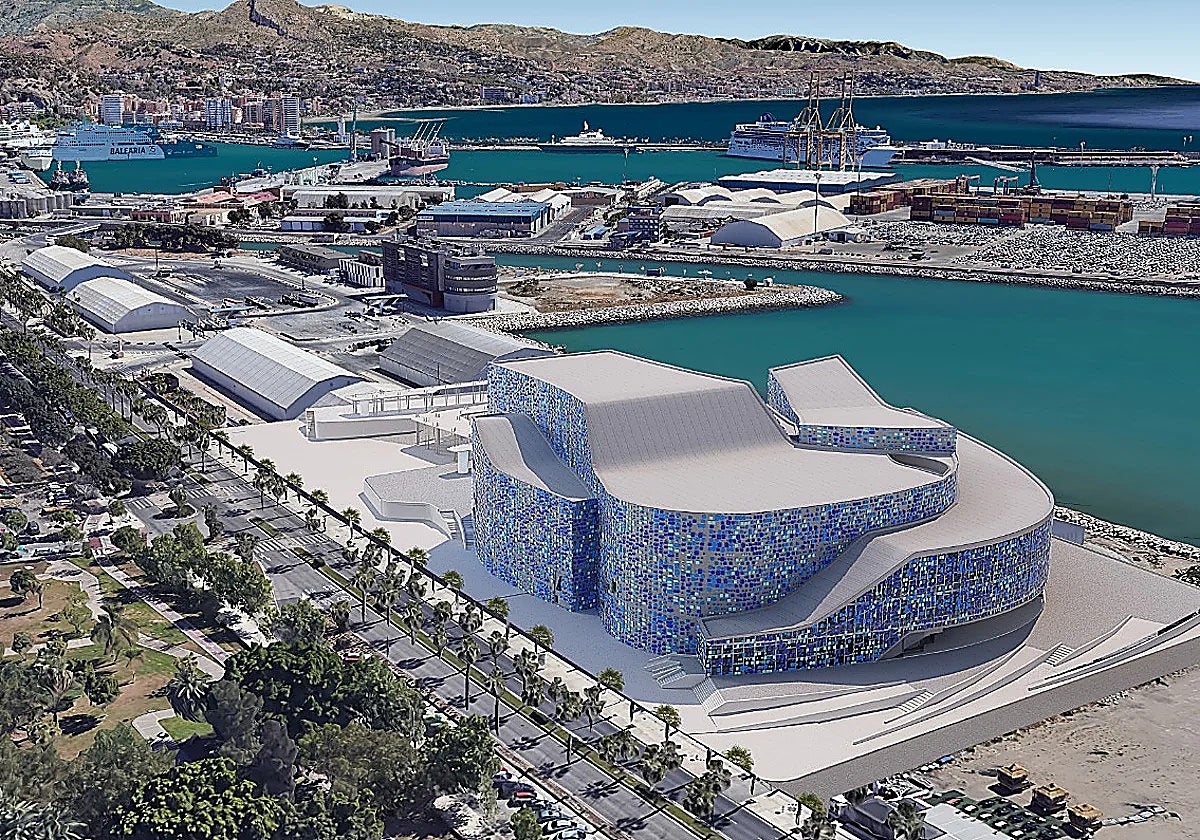
Municipal company Promálaga plans to prioritise conferences and convert the auditorium's entrance hall into an exhibition space
Paco Griñán
The Ministry of Culture's refusal to participate in the Malaga music auditorium project has fortunately not halted its construction, for which nine companies have already expressed interest.
Mayor Francisco de la Torre has highlighted this project as a "key" piece of infrastructure for Malaga in the coming years. The lack of state funding (45 million of the 209 million euros of construction cost), however, has impacted the project to such an extent that its cultural origins have become secondary to the decision to transform it into a new convention centre for the city.
SUR has learned that the venue will still host Malaga Philharmonic Orchestra (OFM) concerts and opera productions. However, Procultura (the municipal cultural body that currently stages these performances at the Cervantes theatre) will have to pay to use the new venue, whether through a rental fee, hire charge or another payment mechanism.
At present, it does not incur those additional costs at the Cervantes.
Related story
-
Infrastructure
Paco Griñán
The controversial decision to grant direct management of the future auditorium to Promálaga reflects the council's attempt to make the building financially sustainable. The idea is that revenue from conferences will offset the losses typically associated with classical music concerts and opera performances.
However, the move has raised questions about the venue's identity. A building originally conceived as one of Malaga's flagship cultural institutions and expected to be run by Procultura, will instead come under the control of a municipal company specialising in conferences rather than performing arts.
As a result, every concert or opera organised by Procultura at the new auditorium will carry an additional venue hire cost. Although the exact charging model has yet to be decided, the new expense will inevitably increase production costs.
Mayor Francisco de la Torre said his immediate priority was "getting the project under way" and insisted that the future management arrangements would be "easy to resolve".
He nevertheless acknowledged that the building would naturally generate operating costs. He compared the situation to the Cervantes theatre, explaining that anyone who hires the venue must also pay for its use.
In practice, any municipal department wishing to use facilities managed by another council department or municipal company already pays a hire charge. That means Procultura would also have to factor this cost into future productions.
For opera performances, the bill could be substantial, as the auditorium would need to remain occupied for more than a week before each production for stage construction, rehearsals and technical preparations.
Project changes
The council's change of direction also creates architectural challenges.
The opera house was designed exclusively as a cultural venue, with no provision for conferences. In fact, the preliminary consultation for its construction, which closed only days ago, made no mention of convention or exhibition use. The official project documentation defines its sole purpose as hosting concerts, performances and other cultural events.
SUR understands that Promálaga has already proposed altering the original design. Plans include converting the main entrance hall into an exhibition area during conferences, while some rehearsal rooms and backstage support spaces intended for cultural activities would instead become auxiliary facilities for trade fairs and conventions.
Because the tender process is now close to launching and architects Agustín Benedicto and Federico Soriano updated the technical design just over a year ago, any significant changes would either have to wait until construction is under way or be introduced through design modifications during the build, adding further costs to the current 209-million-euro budget.
Ironically, the shift towards using the building as a conference venue was largely developed by Ignacio Román, the former director-general of Fycma. He left the municipal company in June to head a telecommunications firm in Puerto Rico before the plans could be implemented.
Despite his departure, the council has pressed ahead with its revised strategy and confirmed that Promálaga, which falls under the innovation department, will manage the auditorium.
The decision further complicates the management of Malaga's major cultural venues. The Cortijo de Torres auditorium, which hosts pop, rock and Latin music concerts and festivals, belongs to Malaga Deportes y Eventos, while the Cervantes and Echegaray theatres, the Albéniz cinema and the future Neoalbéniz are all managed by Procultura.
The music auditorium had originally been expected to join Procultura's portfolio. Instead, culture has become secondary to commercial considerations, with every event organised by the culture department likely to incur a venue hire charge.
The result is a final irony: the city's own opera productions and Malaga Philharmonic Orchestra concerts will become more expensive because the city council will effectively have to pay itself to use its own building.
Read dedicated local reporting for Malaga city
![[]](http://static.vocstatic.com/voc26/latest/assets/images/favicon/surinenglish/apple-touch-icon-57x57.png)