
Transport
Malaga city to put 1,000 public electric bikes on its streets by the end of the year
The local ruling team has approved putting the service out to tender for 33 million, with a ten-year contract, as well as a budget amendment of almost six million euros


Málaga
Malaga city is going to offer 1,000 public electric bikes this December, provided the process goes smoothly (January 2027 at the latest).
Transport councillor ... Trinidad Hernández made the announcement during a press conference on Tuesday.
The city council will also make 100 charging stations available across the city.
In a few days' time, the city council will publish the tender documents for the service. Roughly speaking, bidders will charge an average of three million euros a year.
Related story
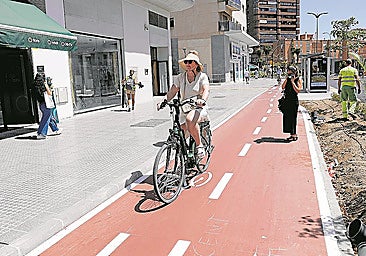
The city council promises to be very strict regarding the supervision of the service, directly managed by the public transport service (EMT).
EMT season ticket holders will be entitled to 15 to 20 minutes of free travel per day: an arrangement which, Hernández believes, could also be negotiated with other transport operators.
How much will the service cost? The council has not yet set the final fares because it must approve them as a public tariff. However, the project's draft proposals suggest charging 0.35 euros for the first 30 minutes under the monthly subscription or 0.30 with an annual subscription.
Between 31 and 60 minutes, the cost would rise to 0.70 euros for monthly subscribers and 0.60 euros for annual subscribers. After the first hour, users would pay five euros for each additional hour, regardless of the type of subscription.
Another option under consideration would charge ten euros for a monthly subscription or 40 for an annual one. Hernández told SUR that these figures remain provisional and will be refined once the relevant municipal reports have been completed and the council's finance department has reviewed them.
Hernández said bids will be assessed using a scoring system that allocates 70 points to objective criteria and 30 points to qualitative assessments.
The EMT will impose strict quality standards and financial penalties if the operator fails to meet them, reducing payments accordingly. Hernández said that direct supervision by EMT and a rigorous payment system are essential if the city wants to avoid the decline and deterioration that affected Malaga's previous public bike scheme.
The contract covers not only the 1,000 bicycles and 100 charging stations, but also detailed technical requirements. Each bicycle must have a 250-watt motor limited to 25 kilometres per hour, together with GPS tracking, QR codes for traceability and a remote locking system. Each station will provide around 20 docking points. The operator must also supply the digital platform that will manage the system, as well as workshops, storage facilities and a customer service centre.
At the same meeting, the council also approved a second budget amendment worth almost six million euros (5.97 million), although the full council must still give it final approval. The package includes 1.6 million euros for district road resurfacing works, 123,000 euros for EMT's budget, further allocations to district councils and cultural services and 492,000 for operational services. Of that amount, 205,000 euros will cover higher water costs following the lifting of drought restrictions, allowing beach showers to operate again and public gardens to be irrigated.
Another major item in the budget amendment allocates 1.6 million euros to the municipal company Más Cerca. The council will inject the funds into the company so that its workforce can move onto Malaga city council's collective agreement for municipal employees, following a ruling by the High Court of Justice of Andalucía (TSJA) and a subsequent order from the Spanish Supreme Court.
The amendment also sets aside 183,000 euros for the municipal cleaning company to cover this year's pay rise for its workforce, in line with the salary increases approved by the Spanish government.
![[]](http://static.vocstatic.com/voc26/latest/assets/images/favicon/surinenglish/apple-touch-icon-57x57.png)