
Infrastructure
Malaga improves urban bike lanes before launching public rental service
The first bikes should be available this year
Chus Heredia
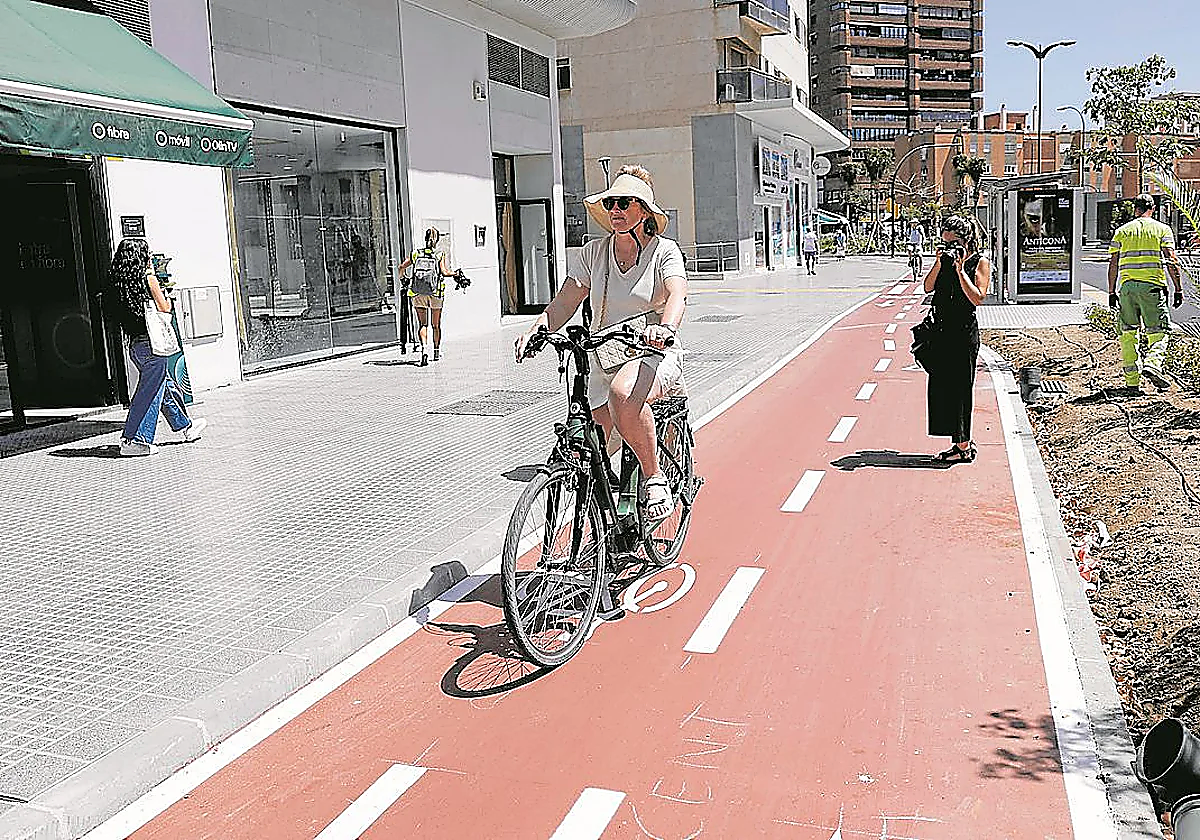
Malaga is working on improving its bicycle network before launching the public service. The city council has awarded Señalizaciones de la Guardia a contract worth almost 500,000 euros to develop and maintain the bike transport system and integrate it into the urban landscape.
The work will include civil engineering, signage, traffic lights, street lighting, street furniture and the replacement of utilities.
The specifications detail the permitted demolitions according to the urban space. On pavements, the contractors can remove paving slabs; on kerbs, they can remove the kerbs alongside the adjoining pavements; and on roads, they can strip away the different surface layers, including the pavement, sub-base and subgrade.
In green spaces or planters, the plans call for structural demolition and earth excavation, while in former parking areas workers must mill or remove the concrete surface.
Construction differences according to lane location
Construction methods vary depending on the bike lane's location. If it's on the roadway, it requires prior excavation. If it runs along the sidewalk, it requires removing the existing sidewalk, installing curbs, asphalt and synthetic mortar with paint.
This is a new step towards having a public bike-sharing service for the first time, following the failure of the private system. The plan is to have the first bikes available for rent this year.
The implementation report concludes that the service will be rolled out gradually over three years, starting in 2026. Malaga city council is committed to adding up to 1,000 electric bicycles and 100 stations to the service in three phases: 300 bikes and 30 stations in 2026-2027; 520 bicycles and 52 stations in 2028; and 180 bicycles and 52 stations in 2029.
The document also states that the city council will design and scale the network to accommodate a maximum of 2,000 bicycles and 200 stations in order to meet future demands and needs, following the first ten years.
In regards to the budget, an initial outlay will cover the acquisition and implementation of the resources to operate this electric bicycle scheme in conjunction with the service stations, including their installation, construction work and software and hardware, among other things.
According to the study, the budget for the start-up and operation of the service during the ten years amounts to 6,640,638.18 euros (with a multi-year cost between the years 2026, 2027 and 2028). The report foresees up to 2000 bicycles and 200 station points, which will potentially enter the service from 2029 onwards.
Subscription models
The report establishes two subscription models: a monthly subscription for ten euros per month and an annual subscription for 40 euros per year. Regarding usage fees, the first 30 minutes will cost 35 cents for the monthly subscription and 30 cents for the annual subscription. From minute 31 to 60, the cost will be 70 cents for the monthly subscription and 60 for the annual subscription. After 60 minutes, the cost will be five euros per hour, applicable to both subscription nodels.
The stations, pending full confirmation, could be in the Centro, Este, Cruz del Humilladero, Carretera de Cádiz and Teatinos districts, taking into account population density and existing cycling infrastructure.
The studies have yielded an average annual demand ranging from 379 in the first year (2027) to 1,361 in the tenth year (2036) for monthly passes and 6,439 in the first year and 23,139 for annual passes. The report estimates first-year revenue of 261,350 euros.
Cost estimates over ten years, including cleaning, repairs and maintenance, spare parts, insurance, depreciation, etc., stand at 25,774,116 euros. Finally, the municipal contribution for the maintenance of this public service after ten years will amount to 11,482,858 euros (excluding government subsidies) or 10,452,826 (including).
![[]](http://static.vocstatic.com/voc26/latest/assets/images/favicon/surinenglish/apple-touch-icon-57x57.png)