
Urban planning
Malaga residents determine fate of parking spaces and bike lanes in El Palo seafront refurbishment project
The city council has launched a survey with four options to decide how to carry out the remodelling that has been in the planning stages for ten years
Jesús Hinojosa
Malaga
The project to remodel the El Palo seafront promenade has yet to get off the ground, after a decade of preliminary studies, administrative reports and plan drafting. It is currently waiting for the outcome of the public consultation process Malaga city council launched in March.
The municipal urban planning department has had the design for this project under consideration for four years. However, the local ruling team put it on hold, partly due to public debate sparked by the potential reduction of parking spaces and private vehicle traffic on Calle Quitapenas and Calle Banda del Mar.
Related story
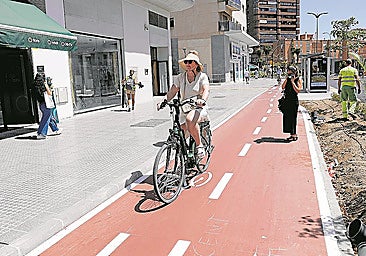
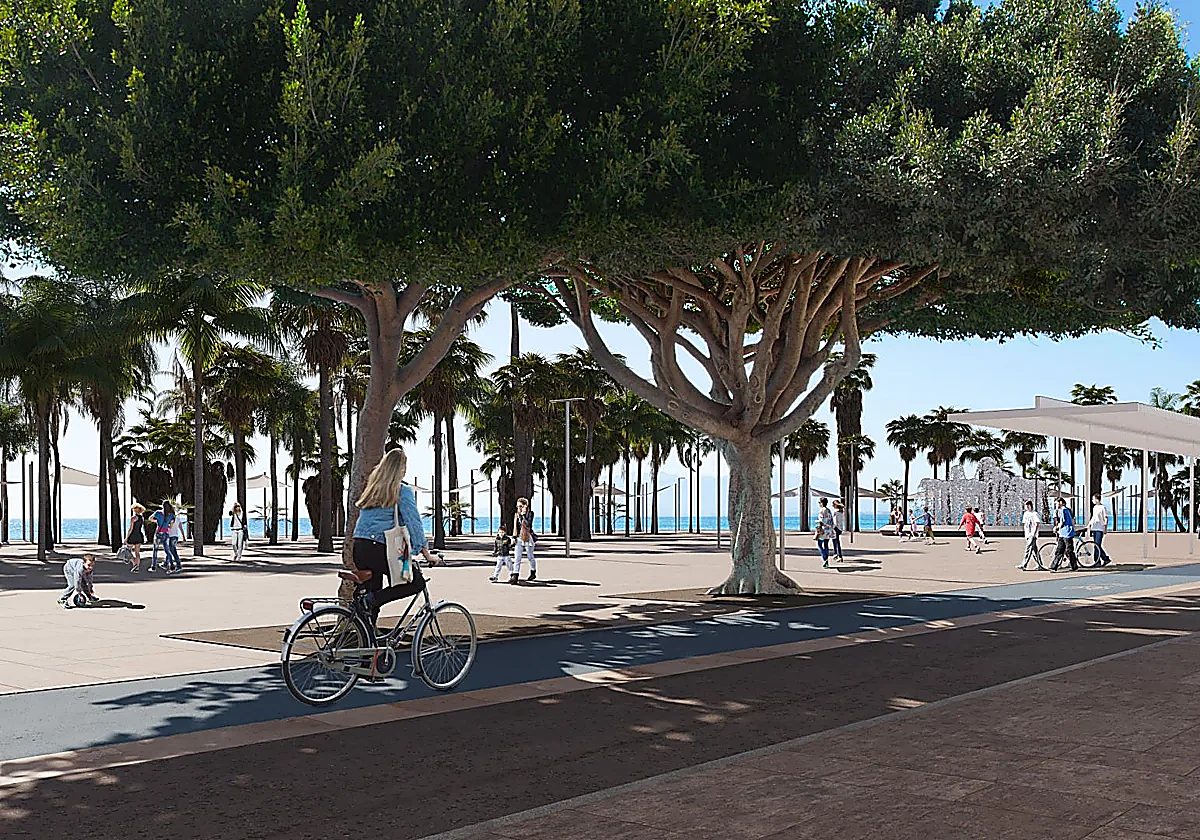
The project aims to decrease vehicle traffic on both roads "by reducing the number of parking spaces and replacing them with a bike lane". The bike lane, in turn, will reduce bicycle traffic in the pedestrian area, ensuring "greater safety".
To achieve this, the proposal involves sacrificing parking spaces, allowing for a uniform width at the same level, with a 6.5-metre pedestrian walkway, alongside a 2.5-metre bicycle lane and a 3.5-metre roadway.
The project specifies that the surface parking spaces that would be lost would move to the north sidewalk of the road, provided it has a minimum width of two metres. "This maintains a significant number of parking spaces compared to the existing ones," the urban planning department says.
The local ruling team, however, have opened the question about how to arrange pedestrian spaces along the El Palo promenade. They are developing workshops, forums, stree initiatives and in-person and online surveys to ask residents what they prefer.
These surveys present four options for voting. One is to pedestrianise the entire promenade, removing road traffic and parking spaces, allowing access only to residents' vehicles and emergency vehicles. Another is a variation of the first, in which, in addition to the pedestrian area (at the expense of eliminating all traffic and parking), there will be a bike lane. A third maintains the road for cars, adding the bike lane in the space of the parking spaces, as shown in the project. The fourth is to leave everything as it is.
In a few weeks, residents will know the results of the survey. The process concludes on 16 March with a forum at the SAFA-ICET centre at 6pm. Prior to that, a walk with residents will take place, starting from the Jaboneros bridge at 10.30am on 9 June.
The original urban planning project involves a budget of 14.3 million euros and a 23-month execution period. The city council plans to finance half of the budget with a grant from the Andalusian regional government. According to urban planning councillor Carmen Casero, any modifications will appear in the design this summer, so that the city council can put the works out to tender in the last quarter of the year.
The refurbishment of the El Palo seafront promenade, which will continue the work the city council is carrying out on the Pedregalejo promenade, will run from the Jaboneros stream to the Chanquete beach. To maintain a consistent design, the plan introduces a new uniform surface made of large rectangular paving slabs, combined in some areas with natural stone.
The project also includes several pergola sections to provide shade. Each pergola will stand 4.25 metres high and five metres wide and will consist of aluminium ribs spaced every 25 centimetres.
The project's section on vegetation explains that the current ficus trees "cause problems because their roots lift the ground, leading to significant damage to the promenade surface and creating obstacles that cause pedestrians to fall". It also states that "the extensive root systems damage the foundations of nearby homes". It adds that the ficus trees "also interfere with restaurant terraces" and notes that "at times they support lighting structures linked to the occupation of terraces with tables and chairs along the seafront".
Urban planning states that the ficus trees "strongly constrain any renovation of the promenade as currently designed". It adds that "a fully renewed design would require their partial removal". The technical designers therefore support a change to the vegetation plan. They propose keeping ficus trees only between the Jaboneros and Gálica streams and moving some palm trees to nearby squares. The plan also includes circular corten steel planters around both ficus and palm trees.
The project also aims to expand public use of the promenade squares. It refers to fixed hospitality terraces and proposes their demolition. It states that "these terraces, along with permanent installations, also extend into areas near the beach, leaving very little space for pedestrian movement". It adds that this additional occupation also creates circulation problems due to cyclists using the promenade.
![[]](http://static.vocstatic.com/voc26/latest/assets/images/favicon/surinenglish/apple-touch-icon-57x57.png)