
Traffic
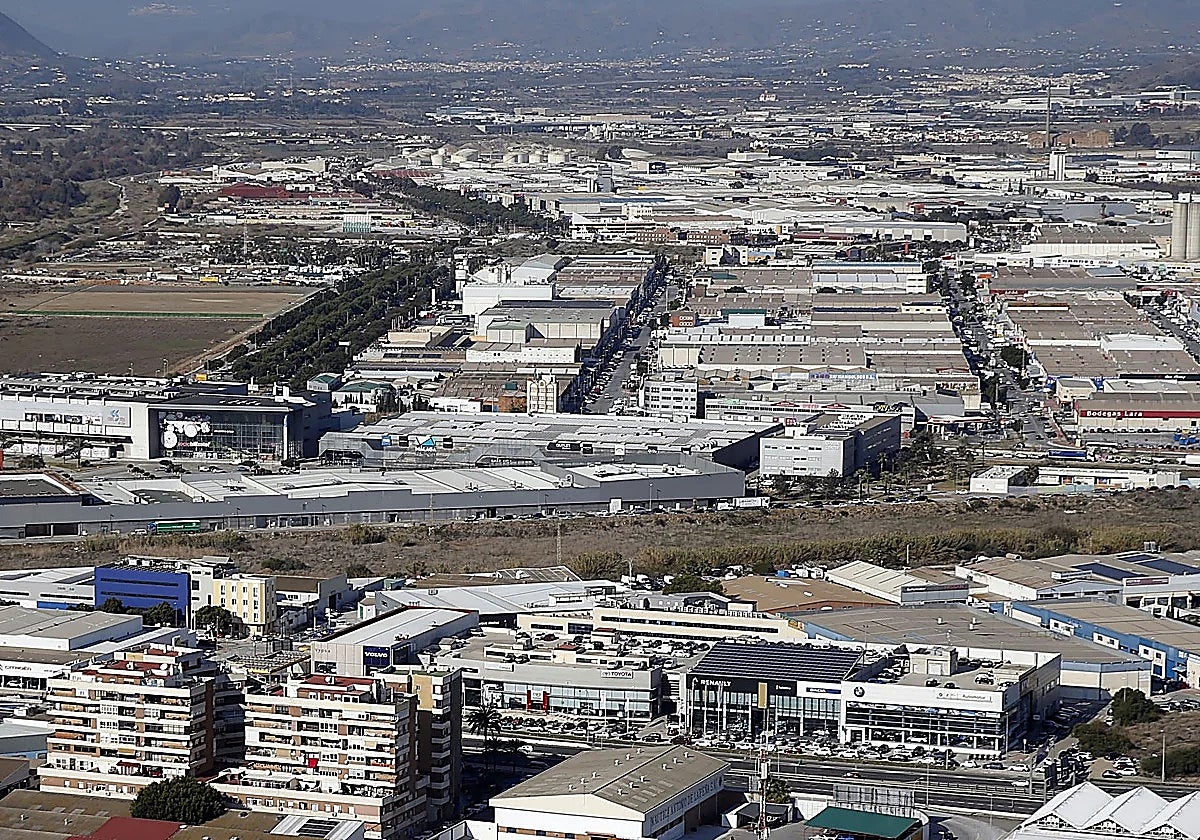
Malaga plans to reorganise traffic 'street by street' in the Guadalhorce industrial park
The study will analyse bus lines, trains, bike lanes and new connections to residential developments
Chus Heredia
Malaga aims to put an end to the nightmare of driving through the Guadalhorce industrial park, a major demand of the local business community.
The city council's urban planning department has approved the technical specifications for contracting assistance in preparing a study on traffic, transport, reorganisation and signage.
This project aims to comprehensively diagnose the current state of transport in the industrial area and propose an action plan focused on correcting deficiencies and optimising road operations.
The contract has a tender budget of 50,532.60 euros, excluding IVA, and the winning company will have a maximum of six months to prepare and deliver all the material.
Street-by-street assessment
The municipal study will not be limited to a superficial vehicle count, but will require a detailed, street-by-street assessment of the existing infrastructure in the industrial park.
According to the technical specifications, the consultancy must be structured around several mandatory areas of analysis, beginning with the design of a detailed traffic model that characterises both access points and internal traffic flows in order to test various management alternatives.
This will involve defining project hours, creating traffic volume inventories, conducting traffic counts, developing origin-destination matrices and estimating future growth.
A manoeuvrability study of the most problematic points will ensure the safe operation of heavy vehicles. Regarding parking, an inventory of available spaces, an analysis of actual demand and an assessment of illegal parking will propose a definitive management plan.
Sustainable transport
Active and sustainable transport will also play a central role in this assessment. Safe pedestrian routes will ensure that workers and visitors can move around on foot with complete safety along internal roads and access points to the area.
Similarly, the feasibility of the cycle lanes will undergo evaluations, suggesting any necessary modifications to ensure their functionality.
Regarding public transport, the study will analyse EMT bus lines, commuter buses, the metro, rail and taxi or ride-hailing services in order to optimise collective accessibility.
Intermodality
Under analysis will also be road safety and the urban distribution of goods, including loading and unloading operations. To ensure the accuracy of the assessment, the successful bidder will have to hold technical coordination meetings with various traffic, transport and infrastructure departments.
The future traffic reorganisation of the Guadalhorce industrial park must include a mandatory assessment of the feasibility and implementation, either individually or in combination, of three major strategic infrastructure projects.
First, direct access routes from the MA-20, MA-21 and MA-22 motorways. Second, the extension of Calle Joaquín Vargas to Avenida Ortega y Gasset will undergo studies, carefully evaluating its connectivity with the A-7 and A-357 motorways. Finally, the feasibility of a north-south connection linking the Sánchez-Blanca sector, known as Distrito Zeta will resolve the railway crossing with a grade-separated interchange.
The work will be carried out in two phases. The first phase will consist of a transport consultancy to diagnose the current situation and plan traffic management. The second phase will focus on engineering proposals, where preliminary technical solutions will be developed, including signage, site plans and the corresponding cost estimate for the future works.
Given the complexity of the subject matter, the urban planning department requires that the winning company assign a highly qualified team to the project, including a civil or industrial engineer and a traffic modelling specialist.
Read dedicated local reporting for Malaga city
![[]](http://static.vocstatic.com/voc26/latest/assets/images/favicon/surinenglish/apple-touch-icon-57x57.png)