
Housing
Malaga mayor declares housing and tourist flat regulation 'major challenge'
In reviewing his last three years in office, De la Torre highlighted the suspension of the automatic change of use from long-term housing to tourist to protect residents
Matías Stuber
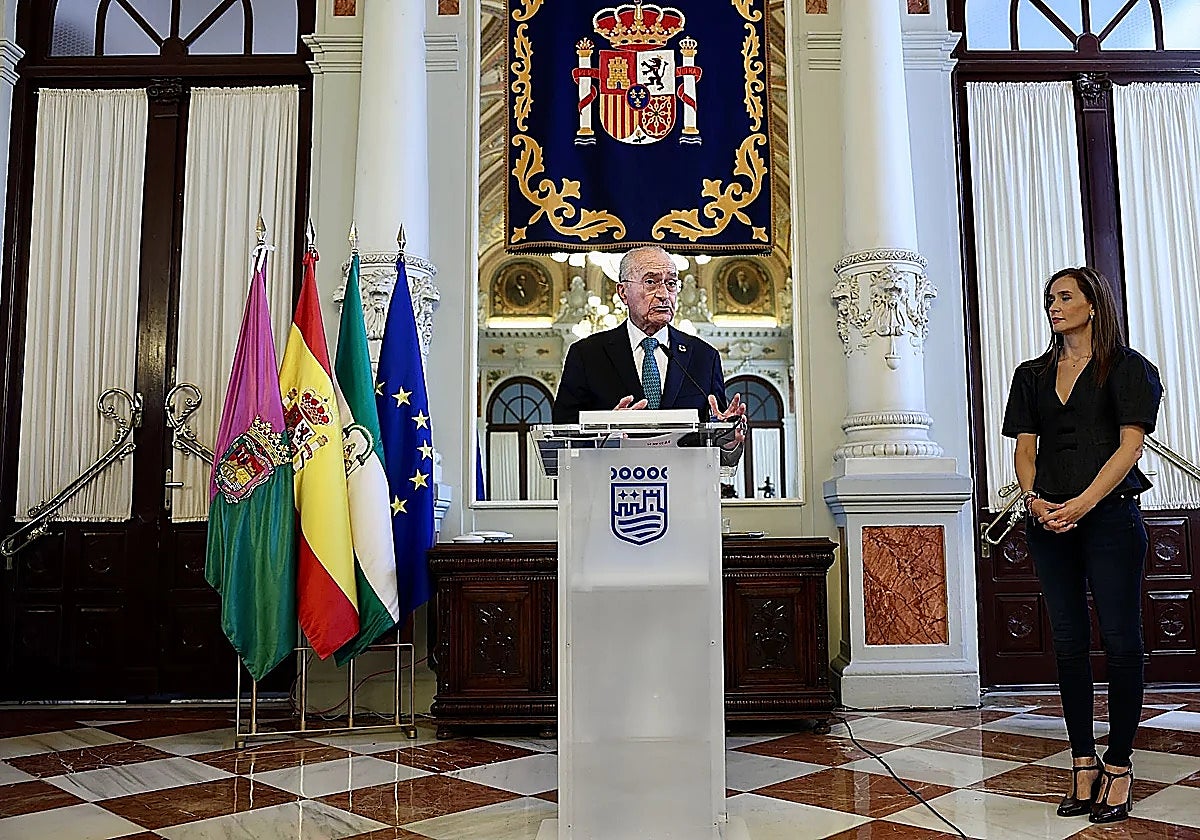
Mayor of Malaga Francisco de la Torre gave a comprehensive overview of his last three years in office on Wednesday.
De la Torre presented an 18-page press release, packed with data. According to the mayor, the report paints a picture of consistent and powerful political action.
De la Torre openly admitted that housing and the regulation of tourist flats have become the "greatest challenge" Malaga is currently facing.
Related story
-

Housing
Cristina Vallejo
The mayor stressed that guaranteeing access to housing and regulating the tourism model requires not only legal certainty, but also intense public-private coordination, the involvement of all institutions and the resolution of key technical problems such as electric grid shortages that have paralysed some urban expansion plans.
The mayor placed special emphasis on the city's housing plan. Through public-private partnerships, the city council is developing a total of 5,183 new subsidised housing units (VPO), of which 4,192 will be for rent and 1,199 for sale.
In addition, 107 housing units are currently out for tender in the Lagunillas area, designed specifically for elderly people with accessibility issues and another 2,774 properties are in the planning stage, including plots of land designated for public facilities.
To bring this supply to market, the mayor recalled that authorities have already held allocation draws for 1,294 homes and announced that they will hold a new draw in the coming months for another 903 beneficiaries. This progress complements the private sector, which has received 4,275 building permits in recent years to construct more than 6,500 homes, backed by an investment of 900 million euros.
Closely linked to the housing issue, Francisco de la Torre stressed the city council's strong approach to regulating tourist flats. He said this trend has grown quickly in Malaga because of the city's strong appeal, the slow pace of hotel development and the limits of Spain's housing law, which, he said, does not give owners enough security to return empty homes to the rental market.
He also highlighted a key new measure in this policy, which will come into force in the coming days: the city will stop allowing the automatic change of use from residential to tourist accommodation. He described this as a firm step to protect the city's housing stock for local residents during a period of housing pressure.
Beyond housing and tourism, which dominated most of the speech, the three-year review also highlighted other achievements in city management and the local economy.
The city council has spent 8.9 million euros refurbishing buildings, which has benefitted more than 3,300 families. It has also invested 3.9 million to install lifts in 8,334 homes, a move the mayor called "revolutionary" for elderly residents who previously lived in flats without lift access.
On the financial side, Malaga has delivered record budgets of more than one billion euros per year. It has also kept the lowest tax levels among Spanish cities with over 500,000 residents and has reduced municipal debt.
The report also highlights progress on major projects such as the new auditorium, which now has an approved final design and secured funding; studies for the agreed redevelopment of La Rosaleda stadium; the addition of 179 waste collection vehicles; the rollout of the brown organic waste bin system; and the milestone of becoming the first major Spanish city with 100 per cent LED street lighting, which saves around four million euros a year.
Track the Andalusian property and real estate market
![[]](http://static.vocstatic.com/voc26/latest/assets/images/favicon/surinenglish/apple-touch-icon-57x57.png)