
Infrastructure
Malaga envisions the green and sustainable city of the future
The Greencities exhibition hosted discussions and innovative proposals for the development of urban spaces on Tuesday and Wednesday
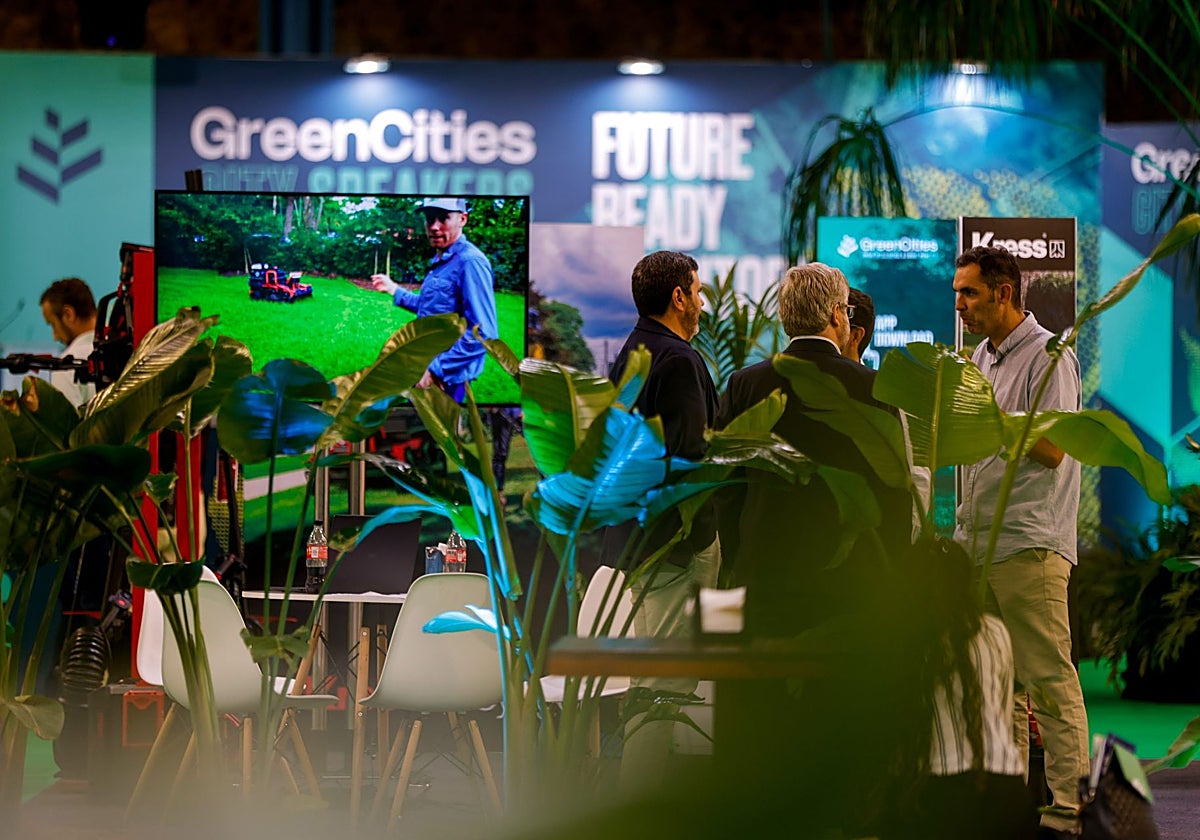

Rafael Sánchez from the organising committee for Greencities, the two-day trade fair at the Fycma (Palacio de Congresos) in Malaga, made a statement on ... Tuesday that sums up very well the concerns weighing on those responsible for urban planning.
"Cities must have a purpose," he said.
How to fulfil this aspiration and find answers to the questions that arise while searching for that purpose were the main topics of the event on Tuesday and Wednesday.
Related story
Through talks, workshops and round-table discussions, the event highlights what the city of the future might look like, perhaps the Malaga of tomorrow.
Regional minister of public works Mario Muñoz-Atanet spoke of the need to reduce reliance on private cars and to create a metropolitan public transport network.
The city that was taking shape on this first day of Greencities looked like this: the houses are colourful and environmentally friendly; children play in the landscaped patios; just round the corner there are offices, health centres and restaurants; there are hardly any cars, as most of them are not allowed in the new districts and parking spaces are only available on the outskirts of the area.
Already back in the 90s, the city council imagined what the city would be like if traffic did not take centre stage. At the time, it was a bold strategy. Today, Barrio Francés, for example, is a benchmark for urban planning.
And yet, it is just one more piece in the jigsaw of preparing cities for the transport of tomorrow.
The city of tomorrow is also an alternative model to the city of the last century. In those days, particularly in the 1950s and 1960s, urban planners went to great lengths to make their cities serve the car. Driven by a desire for freedom and encouraged by a powerful motoring lobby, wide avenues, car parks and urban motorways sprang up. Those who could afford it moved to the suburbs, generating even more traffic.
It is now clear that this was a mistake. At least, that is the opinion of many of the experts who attended Greencities. The streets of our cities are gridlocked. So too are the buses and trains that are supposed to relieve that congestion.
Greencities, therefore, writes off the car-centric city as a thing of the past.
Muñoz-Atanet talked about the need to improve public transport, something that is now a real priority for the Andalusian regional government. "Car-free transport is only possible in a city with good public transport," he said.
Less road traffic only encourages people to get about on foot, hop on a bike or use public transport.
Urban "researchers" believe that the suburbs also need action. Two-thirds of the European population now live on the outskirts, far from their workplaces and cultural and leisure facilities. This has consequences: every person who commutes to work spends an average of between 12 and 14 hours a month in the car.
Ultimately, public transport would also benefit from less road traffic and more passengers. The experts at Greencities believe that buses and trains will become even more important in the future. Only they are capable of channelling traffic between different districts in an unbeatably efficient manner.
However, it is unclear how this expansion will happen. Pedestrians need more space, cyclists are calling for bike lanes and there are no plans to ban cars from the city altogether.
On top of that, there is simply no room for more roads or bus lanes. This paradox is clear on a daily basis in Malaga, where many clash with the harsh reality of a lack of space.
For example, at Greencities there is a company developing two-seater helicopters for 49,000 euros. The company promises that 15 hours of theory are enough for even a complete novice to fly this aircraft.
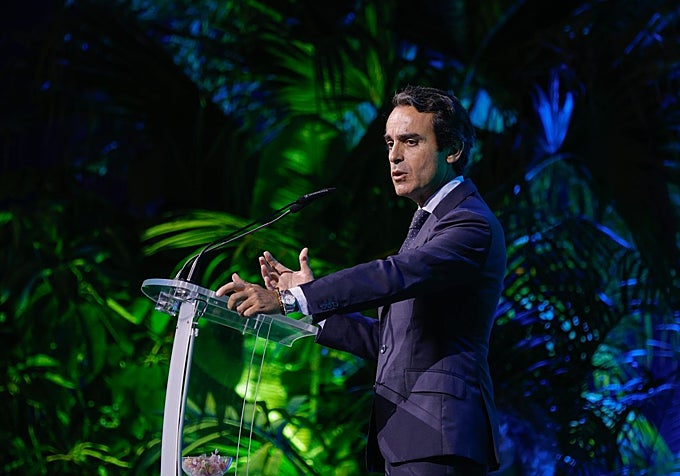
There are also companies developing capsules that travel along a magnetic track capable of accelerating the vehicles to speeds of up to 250 kilometres per hour. According to their creators, timetables, waiting times and overcrowded carriages will be a thing of the past: hen passengers want to get off at a stop, they simply press a button to move to a lower deceleration lane.
Meanwhile, the rest of the capsules continue at high speed along the main track, eliminating one of the biggest time-wasters in current public transportation: the constant stops and starts at each station.
"These are really more niche solutions," a sociologist specialising in transport told SUR. "I believe that public transport in the future will be similar to what we have today, although quieter, cleaner and, above all, more flexible."
Rapid bus routes could play an important role. Thanks to electric propulsion, these buses would produce no emissions. They could run in convoy during peak hours without even needing bus lanes, as, through intelligent traffic light management, they would always be given priority over other vehicles.
![[]](http://static.vocstatic.com/voc26/latest/assets/images/favicon/surinenglish/apple-touch-icon-57x57.png)