
Water welfare
Malaga city to produce 35 kilos of ozone every hour to treat tap water
Municipal water company Emasa plans to triple the generation of the gas at the El Atabal treatment plant, which will allow the production of 'fine' water of lower quality at the source
Chus Heredia
The El Atabal desalination plant was the only project of the 2001 national hydrological plan that Malaga province actually undertook. Initially designed to eliminate the high salinity of resources such as those from the Guadalhorce river, it has become a valuable tool for refining water treatment over time, following numerous expansions and adjustments.
During droughts, for example, not only do reserves decrease, but water quality also deteriorates. Groundwater resources can somewhat make up for the shortage and conventional sources also suffer. Higher concentrations of heavy metals and other contaminants appear. At this point, the action of ozone is crucial and its power will be tripled thanks to the eight-month work Dinotec will put into it.
The cost of this project is 1.54 million euros and the execution period is eight months.
European funding
European funds will sponsor 85 per cent of the funding for this project, which municipal water company Emasa is developing.
The Atabal treatment plant has a capacity of 9,000 cubic metres per hour. It is prepared for higher demand, as it currently handles 2,500 litres per second and Malaga rarely exceeds 1,650 litres per second. With ozone treatment, it currently only reaches 3,600 cubic metres per hour. The system will be expanded from one line to three.
Quality
"Due to the drought and the current state of the reservoirs that supply water to the water treatment plant, the concentrations of some physicochemical and biological parameters have increased, as well as the presence of undesirable substances. The need to eliminate these substances to guarantee the supply of drinking water to the population requires adopting measures to ensure that the water complies with the specifications of royal decree 3/2023 of 10 January, which establishes the technical and health criteria for the quality of drinking water, its control and supply. The aim is to act primarily on the existing pre-oxidation system, expanding the ozone generation and dosing system at the water treatment plant," the technical specifications of the tender state.
"The proposed solution consists of the installation of two new ozone generation units that produce 12.79 kilograms per hour each (+/- five per cent), with a cooling water of 10C, which would allow a dose of three ppm [parts per million] for a flow rate of 9,000 cubic metres per hour, keeping the currently installed equipment as a reserve for the new equipment," the document states.
"Ozone is an oxidant with a greater oxidising power than chlorine. It does not produce compounds harmful to health. It oxidises iron and manganese, which can then be retained and coagulated. Furthermore, ozone does not leave chlorinated byproducts and eliminates colour, taste and odour," the technical document states.
The El Atabal plant generates ozone using 99.9 per cent oxygen, which makes it necessary to store it in liquid form for proper handling throughout the process.
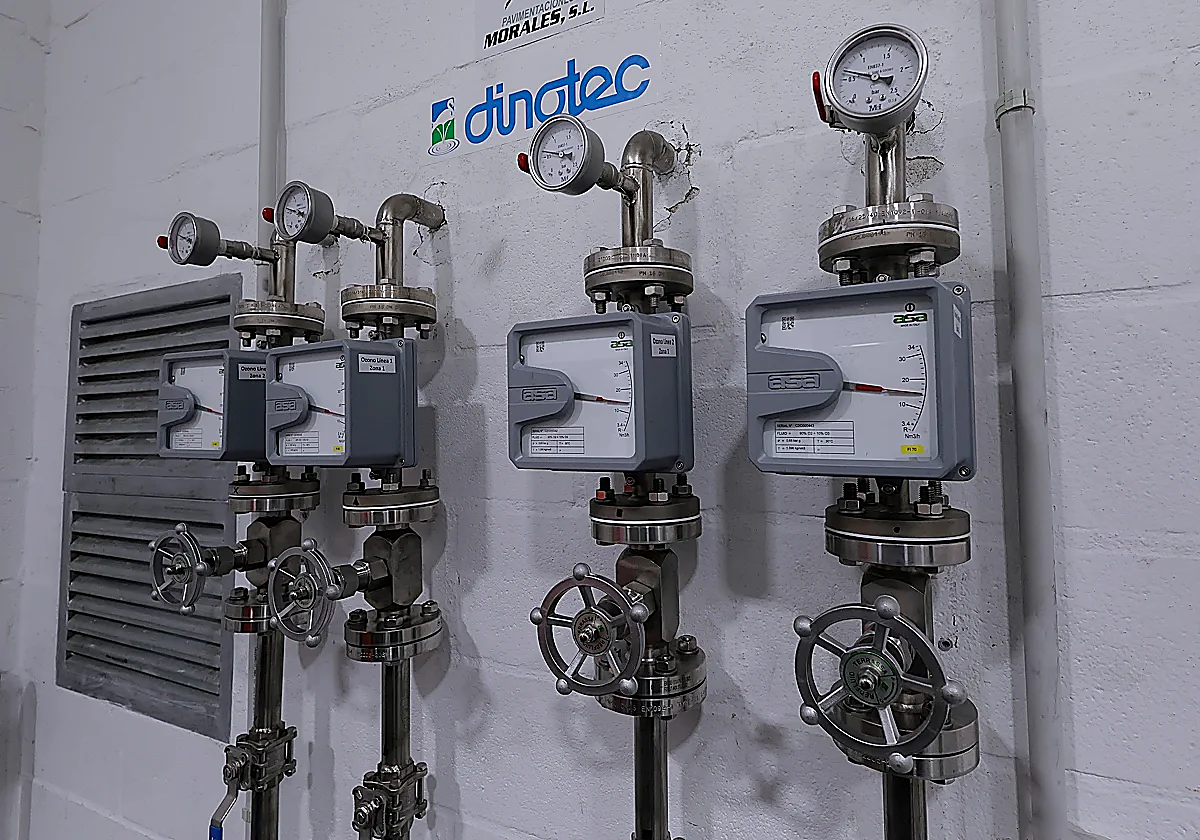
Joint venture Dinotec-Pavimentaciones Morales carried out the ozone installation in early 2024, for 1.4 million euros.
Currently, the Atabal plant can produce eleven kilograms of ozone per hour. In addition to its ability to sanitise water, the use of ozone increases the lifespan of reverse osmosis membranes for desalination (which are an expensive component), reduces the use of chemicals in water treatment, decreases corrosion and blockages in pipes and improves the overall taste of the water.
![[]](http://static.vocstatic.com/voc26/latest/assets/images/favicon/surinenglish/apple-touch-icon-57x57.png)