
Air transport
Malaga Airport tests new flight paths for second runway in emergency drills
An Enaire test aircraft validates the approach and departure manoeuvres of runway 12-30, which until now could not be used due to the Canal Sur antenna and which will open in 2028 for contingency purposes

Málaga
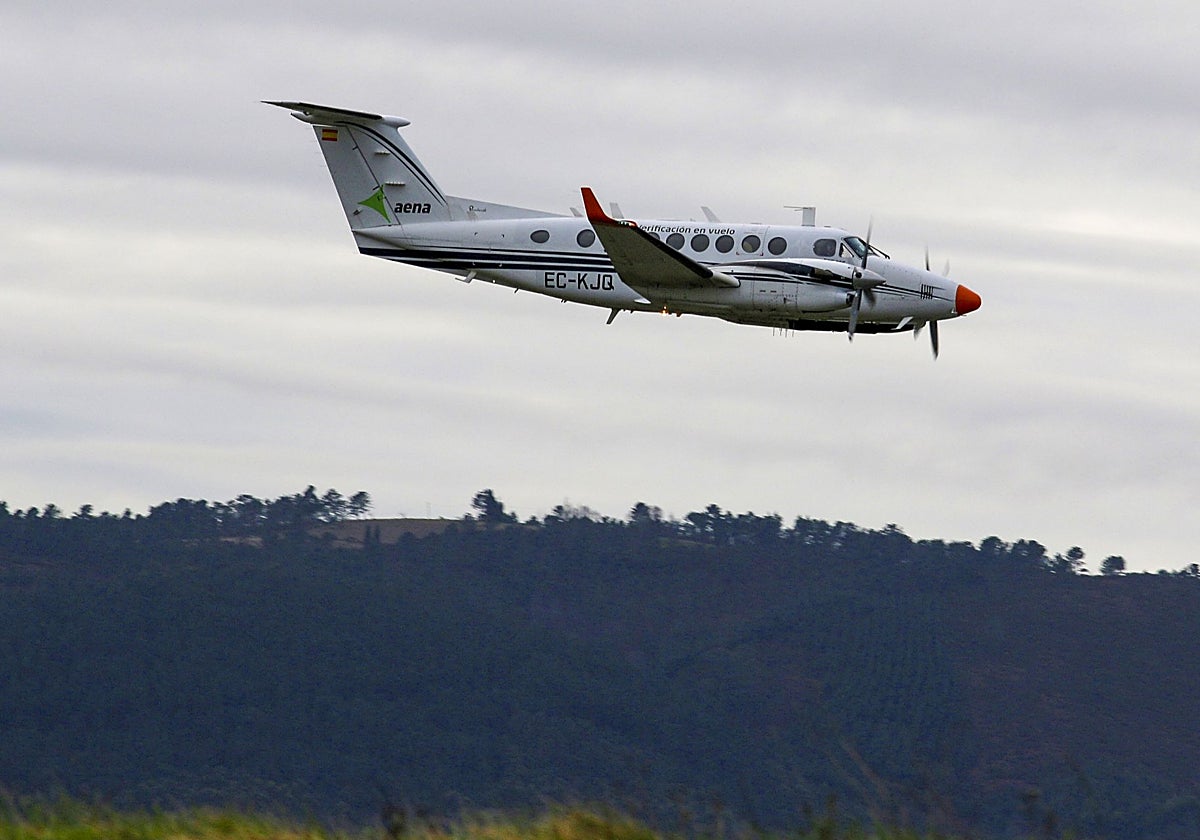
A small aircraft has been making some unusual passes over the runways at Malaga Airport in recent days, flying at low altitude without actually landing. ... This is not a diverted commercial flight or a failed landing attempt, but rather a test aircraft deployed by Enaire (the national air navigation authority) tasked with checking the accuracy of what are known as 'airways'.
In addition to carrying out routine safety checks, the aircraft is performing validation flights to enable, for the first time, take-off and landing manoeuvres on the section of the second runway (12-30), which until now could not be activated due to the Canal Sur communications tower.
This operation represents a key technical step for Malaga Airport, as it will provide an alternative in the event of an emergency, contingency or temporary closure of the main runway. These new routes will not come into service until around 2028.
Above all, their use will be strictly exceptional, with the aim of protecting the natural environment at the mouth of the Guadalhorce.
The aircraft, a Beechcraft 300 Super King currently operating in Malaga, is equipped with a wide range of high-precision sensors. Its usual function is to check the integrity of signals from ground-based radio aids (such as ILS or VOR systems) and satellite signals (GBAS), which aeronautical engineers use to design the flight paths that aircraft follow to keep the airspace safe and orderly.
This aircraft usually carries out verification flights three or four times a year in Malaga, and periodically across Spain's entire airport network, to certify that the manoeuvres for runways 12, 13 and 31 comply with safety standards. However, on this occasion, it is also carrying out the strategic mission of validating manoeuvres that have not been tested before.
End to Canal Sur's antenna
The calibration aircraft is therefore validating the new departures from runway 12 and the approaches to runway 30. Until now, these operations could not be carried out due to the location of the Canal Sur antenna, which has recently been lowered by several metres.
Following this week's tests with the GBAS satellite system, a further series of validation flights is scheduled for Thursday and Friday to verify the approach manoeuvres to runway 30 using the RNP and VOR systems.
Once this in-flight phase has been successfully completed, the project will have to go through a lengthy administrative process before it can become operational. The manoeuvres will have to pass both the environmental impact assessment and the airspace and Aesa (state aviation safety agency) authorisations. The timeframe for its definitive commissioning is around 2028.
The control tower in Malaga wants to reassure the public regarding the environmental impact these manoeuvres might have on Guadalmar and the natural area around the mouth of the Guadalhorce. These new flight paths will not be used in the airport's day-to-day operations.
Its design is intended solely as a contingency plan. In aviation, aeroplanes always land and take off into the wind and when westerly and onshore winds blow in Malaga, aircraft approach from the sea and land on runway 31 (the old one). At present, if that runway were to be blocked due to an incident or construction work, there would be an alternative.
Consequently, with the validation process taking place this week, Malaga will ensure that, from 2028 onwards, runway 30 could be brought into operation as a safety backup in the event of any unforeseen circumstances at the main airfield, safeguarding the infrastructure's operational capability, while ensuring a controlled environmental impact.
