
Travel
New passport control system for non-EU passengers blamed for long queues at Malaga Airport
Passengers have complained that they had to wait more than an hour to get through on Thursday, while airport management has admitted that 'there were, occasionally, longer waiting times than normal'

Malaga
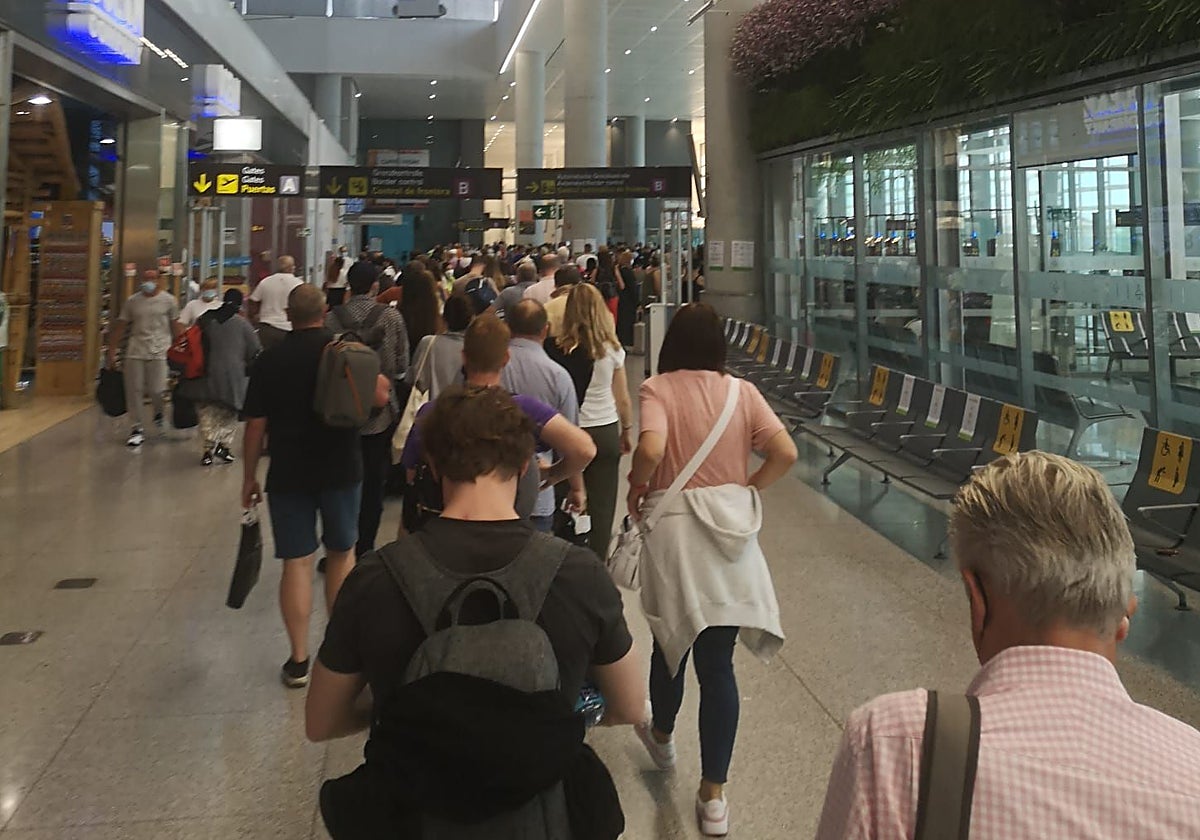
Since the process of adapting to the new EU border control model at Malaga Airport began on 20 October, the situation has been running fairly smoothly. Until Thursday, when an accumulation of passengers mainly bound for the UK made dozens of people wait more than an hour to get through passport control. According to frequent passengers, the process normally takes a maximum of 15 to 30 minutes.
People contacted SUR to warn the general public about the situation. Many feared that they would be stuck and unable to board their flight on time due to the long queues. Affected passengers call for more staff and resources at border control so that such complications can be avoided in the future. "This cannot happen in a first-class tourist airport like the Costa del Sol's," they stated.
The airport's management admitted that "there were, occasionally, longer waiting times than normal" on Thursday. While the source was unable to clarify the length of the delay or the exact causes, the latter is most certainly due to the implementation of the new EU border control. Although the new process has been running smoothly until now, Malaga Airport says that it is normal for there to be some inconveniences when a new system is being implemented, as with any adjustment period.
"The EES (entry/exit system) has been in place since 20 October and it has been developing normally, although there may be some congestion at certain times," the national government office in Malaga stated.
Brexit has complicated travel for Britons and they 'are not always aware that they are no longer in EU territory'
The same source pointed out that the delays concern, above all, British citizens due to Brexit, as they "are not always aware that they are no longer in EU territory", which obliges them to go through border control like passengers from any other non-EU country. "People ought to be informed on this issue."
What is the EES system?
Despite the initial inconvenience, the airport highlights the benefits of the new system, especially for regular passengers. In addition, it provides more security for EU countries.
Europe has given a 180-day deadline for full implementation, which will end on 10 April 2026. The so-called entry-exit system (EES) is an automated computerised procedure that registers entry and exits from the Schengen area by third-country nationals. The Ministry of the Interior is investing 83 million euros to adapt all Spanish border posts to the new technical requirements. The National Police will continue being in charge of passport control.
The EES records passport data, photo, fingerprints, date and place of entry or exit. It replaces the traditional manual stamping of passports with a digital record. For this purpose, border posts are equipped with specific computer equipment that scans data and records it automatically.
During this six-month transition period, the EES will coexist with the traditional manual stamping of passports, which will disappear once the former is fully operational. The new process aims to shorten passport control times and allow detection of persons who have exceeded the maximum duration of their authorised stay. In the case of frequent passengers, biometric data is collected only the first time so that they can cross borders faster and more smoothly.
![[]](http://static.vocstatic.com/voc26/latest/assets/images/favicon/surinenglish/apple-touch-icon-57x57.png)