
Malaga Ibis hotel fire
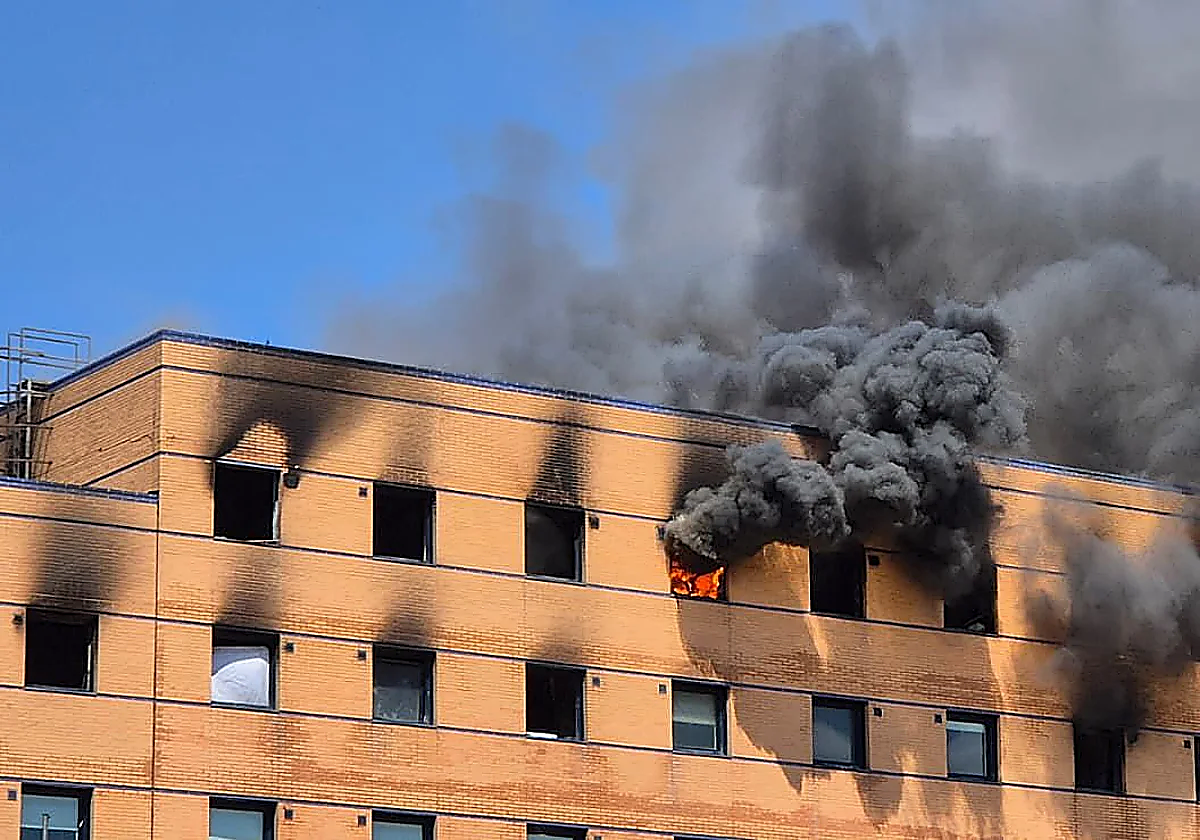
Flames reignite on Ibis hotel's last floor on tenth day of fire
The slow combustion of the timbers in the floor and the multiple confined elements make the work of firefighters very arduous
Chus Heredia
The Ibis hotel in Malaga is under a spell, burning for the tenth day since the start of the fire on 25 May. By midday on Wednesday, the flames that reignited on Tuesday had created a terrifying scene of a building at the mercy of nature.
As the city council said on Tuesday, the fire will keep devouring the building until there's no more risk of combustion.
Entry is impossible due to the collapse of the floor slabs and the city council will not risk the lives of firefighters for a building that cannot survive.
The question on everyone's mind is why this fire seems to burn so perpetually.
Urban planning and science
The forensic police and urban planning technicians will only be able to enter once the fire completely consumes the building and stops burning. Once inside, they will be able to draw conclusions about the causes of the incident and the future of the building.
The incident has completely cancelled all plans to add three more floors to the hotel.
The fire has appeared in the news with several highlights: the rescue of a drunk guest who hadn't heard the evacuation alarm; the dangerous accident in which a firefighter fell through the floor; the ever-burning materials of the building; and the capacity of the fire to keep reigniting.
The incident involving the firefighter forced crews to change their strategy and target the fire from outside, in order to ensure the safety of the teams.
The flames breached the fire compartments in a matter of minutes, spread to the hotel, penetrated the floors and exited through the roof. The soundproofing materials, the woodwork and the hundreds of metres of false ceilings and confined spaces have made the extinguishing task significantly more difficult.
Thermal cameras
Thermal imaging cameras, which are normally a valuable tool in firefighting operations, proved of limited use in this case.
These devices produce images with colours that change according to temperature. When crews work inside a building, they allow firefighters to quickly identify hidden hotspots, rapidly rising temperatures or smoke. Firefighters then use a pike pole to break through suspended ceilings or other surfaces and extinguish the flames or cool the area as required.
The inability to use thermal cameras has forced firefighters to only spray water through the windows and break only small fragments of the facade that bulge.
![[]](http://static.vocstatic.com/voc26/latest/assets/images/favicon/surinenglish/apple-touch-icon-57x57.png)