
What to do
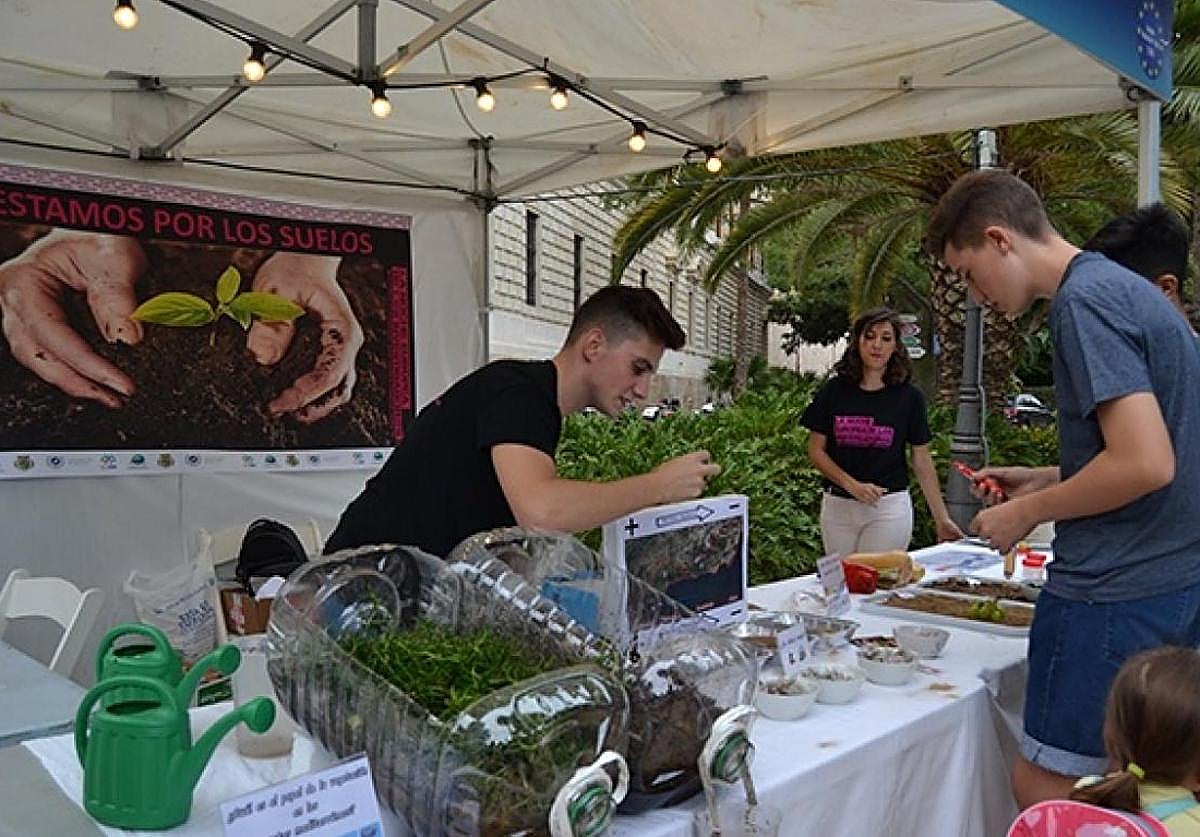
Malaga city hosts 350 scientists and 73 events on European Researchers' Night this Friday
The initiative is taking place along the Paseo del Parque, the Eduardo Ocón grounds and the Rectorado de la Universidad

Málaga
Science takes centre stage in Malaga this Friday with the European Researchers' Night, which brings together 350 researchers and offer 73 activities for people of ... all ages.
The initiative, which Andalucía has been hosting since 2012, is a project of the European Commission that takes place simultaneously in some 400 European cities, with the aim of raising awareness of scientific progress and its impact on everyday life.
Experiments, workshops, demonstrations, hands-on activities, science trails, theatre performances and stand-up comedy are just some of the events Malaga has organised this year.
In addition, the Aqualab 2026-2027 initiative will host events at iconic venues such as the Paseo del Parque, the Eduardo Ocón grounds and the university's Rectorado where researchers will bring their work to the public.
The activities begin in the early afternoon and continue until just before midnight. The Museo Andaluz de la Educación in Alhaurín de la Torre complements the initiative with its own activities.
The Malaga programme will also offer science trails through the historic centre, exploring subjects including the effects of overtourism, constitutionalism through the city's streets and the history of women.
Fundación Descubre coordinates European Researchers' Night across Andalucía. In 2026, the event celebrates its 15th year in the region and expects more than 80,000 people to take part in events across Andalucía.
Researchers will lead 3,647 activities across the eight provinces, while organisers have planned 950 activities in total. This makes European Researchers' Night the region's biggest simultaneous science event and one of the largest of its kind in Spain.
Organisers have already held around 77 activities throughout September ahead of Friday's main programme, while another 47 will take place online.
Eclipses take centre stage
Eclipses and water provide the two main themes for this year's European Researchers' Night.
The eclipse activities form part of the Trio of Eclipses: an exceptional series of three consecutive natural phenomena that people in Spain can observe between 2026 and 2028, with Andalucía taking centre stage in 2027. The activities aim to bring astronomy closer to people of all ages through direct and interactive experiences.
Water will also feature prominently throughout the programme, with activities highlighting its importance in areas including health, food, energy, technology, the environment, land use and culture.
This year's Andalusian event will also work with European Researchers' Nights in Sweden, Malta, the UK, Italy, Ireland, Portugal and Croatia. Antonio García Acedo, the Andalusian regional government's delegate for universities, industry, energy and innovation in Malaga, thanked researchers for helping to "bring science closer to the public in a practical and enjoyable way".
He also said that "research and development promotes social progress and well-being and has a close link with the competitiveness of the regional economy". He added that "over the past two terms, the Andalusian government has been implementing policies aimed at consolidating an economy increasingly based on knowledge".
![[]](http://static.vocstatic.com/voc26/latest/assets/images/favicon/surinenglish/apple-touch-icon-57x57.png)