
Endesa cuts power to 450 homes in Malaga's La Palmilla district after finding widespread electricity theft
Residents with legitimate electricity contracts say they have been left without essential appliances after safety measures triggered by unauthorised connections affected entire apartment blocks

Malaga
Almost 450 homes in Malaga's Palma-Palmilla district have been without electricity for several days in the middle of summer, after Endesa cut supplies ... during an inspection campaign that uncovered widespread illegal connections to the network.
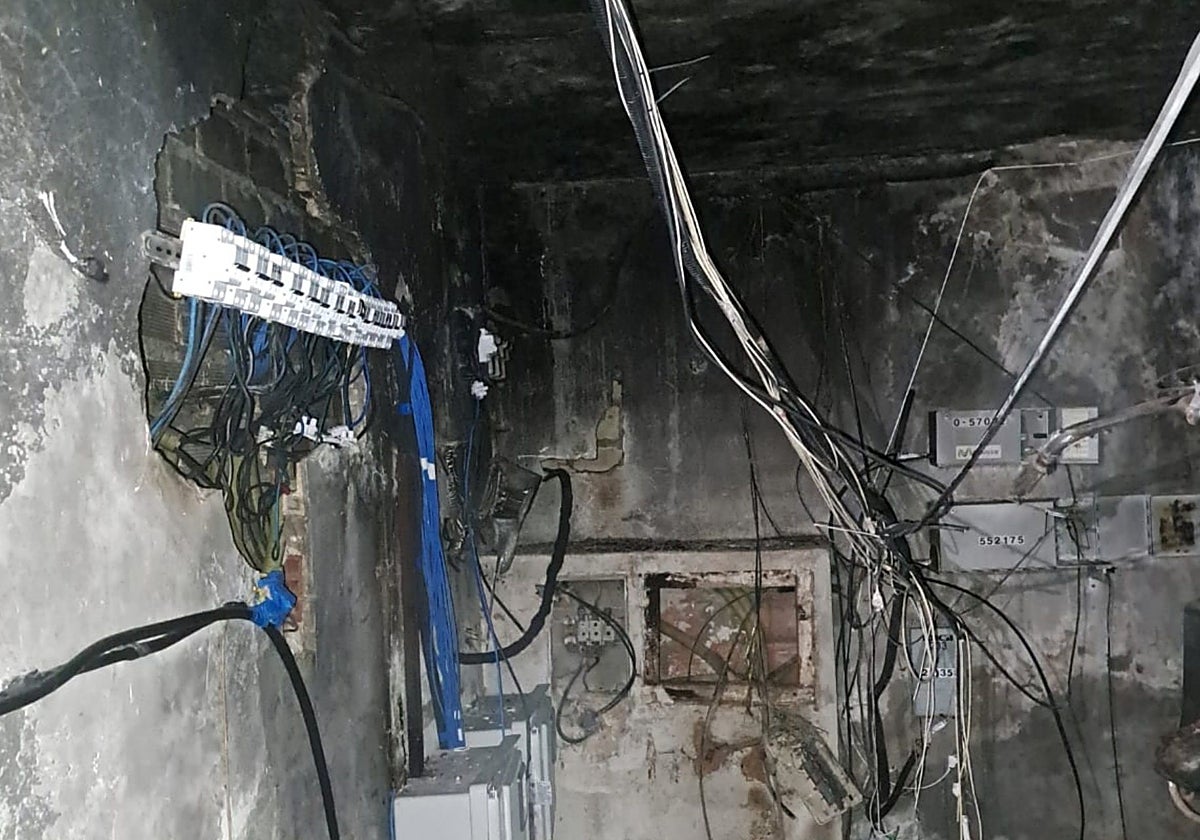
Accompanied by police, technicians inspected several apartment blocks and found that illegal hook-ups were the norm, accounting for 78 per cent of the supplies checked, according to the distributor.
Citing fire prevention and public safety, Endesa disconnected electricity to the affected buildings and, in some cases, removed the service connections linking them to the network to stop the illegal hook-ups recurring.
'An extreme and unsustainable situation'
Affected residents have contacted SUR to describe what they call "an extreme and unsustainable situation" caused by continuous and arbitrary power cuts.
"This energy crisis is hitting extremely hard in the middle of a heatwave, putting the health and lives of the most vulnerable groups directly at risk: babies and young children suffering unbearably high temperatures, elderly and dependent people, and residents who rely on machines connected to the mains to survive," they said.
They are demanding "an urgent solution and an immediate end to the abusive cuts". "The lack of electricity isn't just an inconvenience. It's a serious humanitarian problem that violates fundamental rights," they said in a statement.
Carlos Torres, coordinator of the Proyecto Hogar Palma-Palmilla community programme, told SUR that illegal connections had gradually become normalised in the neighbourhood because residents believed there were no consequences.
Although he accepted Endesa's safety concerns, he argued the company should have given advance notice before cutting supplies to around 450 homes on streets such as Calle Cabriel, Calle Eume and Calle Concejal Pedro Ruz García.
Affected residents describe “an extreme and unsustainable situation” that is causing a “serious humanitarian problem” for hundreds of people
"They've gone in heavy-handed," he said. "Weeks before this happened, without knowing Endesa was planning it, we'd already put up posters around the neighbourhood reminding people to regularise their electricity supplies. In the end this is what's happened, and once again it's families with a completely legal meter who've been left without power."
He added that vulnerable families were now left "without even a fan or a fridge" in the height of summer.
A fraud rate of 78 per cent
Endesa said it had carried out several operations throughout July, working with state security forces, against what it called widespread fraud in the area "for the safety of the installations and the people living around them", in which it detected a fraud rate of 78 per cent.
"Tampered installations carry a high risk of electrocution and fire, because they bypass all the safety protections electrical systems are required to have," e-distribución, Endesa's network subsidiary, said.
According to the company, its technicians attended the area repeatedly, accompanied by National Police officers, to repair faults caused by these illegal connections, and found that the network had been tampered with by third parties, without authorisation, to reconnect supplies that had been cut off during the anti-fraud operations.
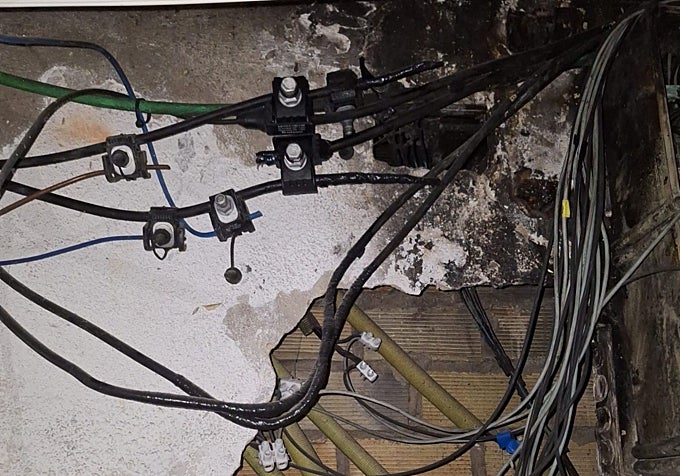
It's an open secret that cannabis plantations lie behind many cases like this. In Granada, inspections carried out by Endesa in the northern part of the city found that cannabis cultivation accounts for around half of all illegal electricity connections.
Legal households caught in the crossfire
"This has left residents in the area who have nothing to do with the problem without a supply," the company acknowledged.
In other words, people whose illegal connections had been cut reconnected themselves to the meters of neighbours with legal supplies, causing those to fail too. "We're in contact with them, asking them to regularise the situation and the installations to make sure they're safe," Endesa said.
Endesa has admitted the situation is very complicated because "there's a lot of fraud, and the people committing it don't care that it affects everyone else". The company says it's dealing with every call from affected residents, though Torres said it usually takes four or five days to respond because its technicians refuse to visit the area without police protection.
"We're reconfiguring the lines to strengthen the supply, but that just means people keep reconnecting illegally," e-distribución said. It also encouraged residents to report illegal connections anonymously through the company's website.
No owners' associations to manage the fallout
The situation is complicated by the fact that many buildings still don't have a legally constituted owners' association, although the town hall continues to encourage residents to set one up. "We've asked Endesa not to mistreat people whose contracts are in order," Torres said, "but the problem is that there are no owners' associations, and in some blocks the company has even taken away the service connections so the illegal hook-ups can't happen again."
Torres acknowledged the company's approach had been "hasty in how it was carried out". "It could have been done differently, so it didn't have to come to this extreme, where residents can't even plug in a fan," he said. Even so, he said the power cuts had prompted many residents in the area to begin regularising their supplies.
![[]](http://static.vocstatic.com/voc26/latest/assets/images/favicon/surinenglish/apple-touch-icon-57x57.png)