
Infrastructure
Baños del Carmen breakwater designed to increase beach size fivefold finishes first phase
The coastal authority has almost completed the above-water section of the dyke, which must be finished before the sand is brought in, but the pace of work depends on this autumn's storms
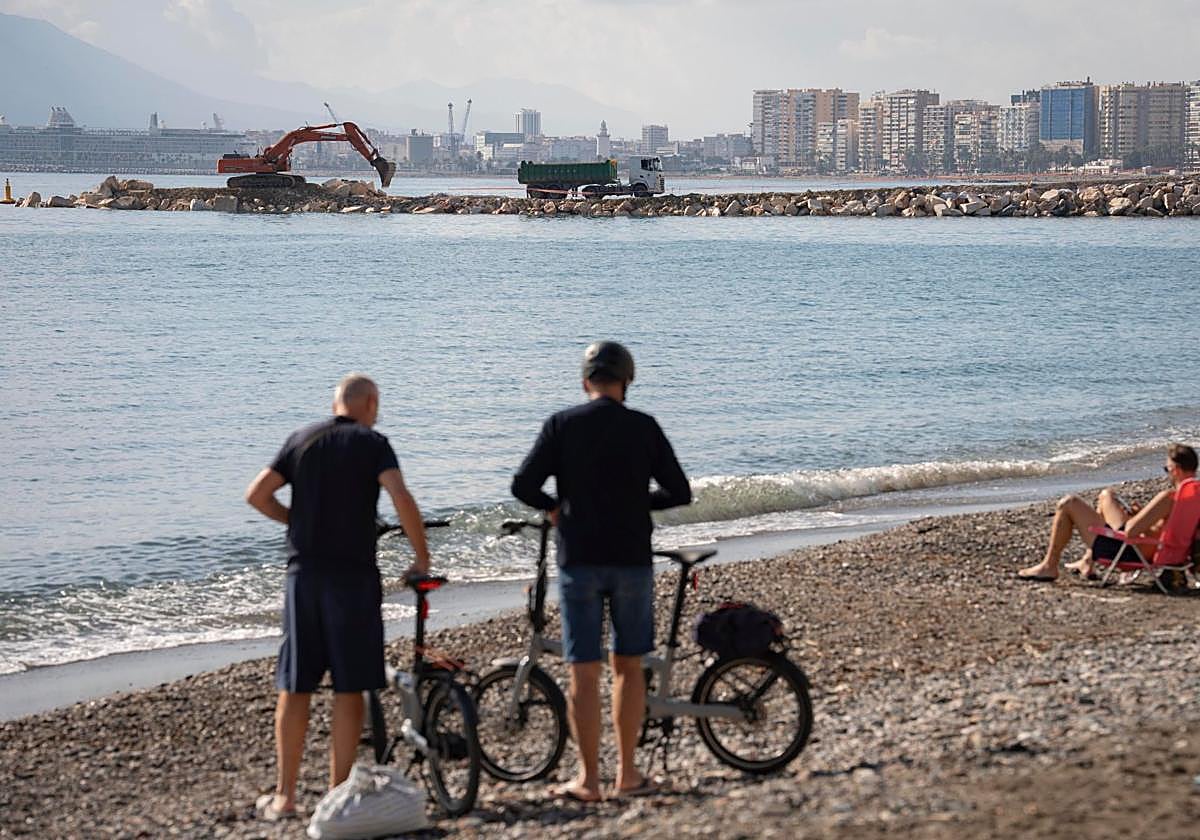

Work on the coastal protection scheme between Morlaco and Baños del Carmen is progressing well. Progress on the construction of the visible part of the semi-submerged breakwater, designed to increase the size of the sandy beach by approximately five times ... , is already apparent. Work began on 29 June and visible results are expected by spring.
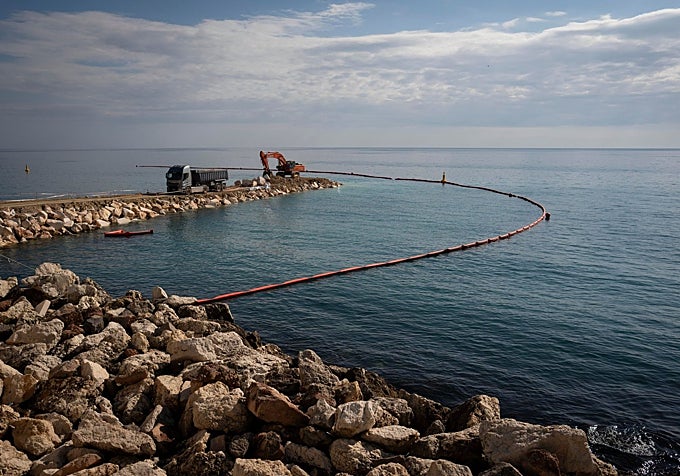
Work on the breakwater at El Morlaco is entering a decisive phase, with construction of the 100-metre-long above-water section nearing completion. Work is currently focused on completing the top section of the structure, which will allow work to begin on the bend in the oblique L-shaped breakwater so that the submerged section can be tackled.
Althought, in terms of linear length, approximately 50 per cent of the planned route has been completed, there is still a significant amount of work to be done overall. The construction of the submerged section will require a slower and more labour-intensive pace of work due to the large volume of material to be placed and the need to lay it in stages to adapt to the varying depths of the seabed. Despite the technical complexity and the minor incidents that are common with this type of infrastructure, the works remain on schedule.
In parallel with the construction of the breakwater, the project involves the delivery of a total of 70,000 cubic metres of sand for the regeneration and final finishing of the beach. The sedimentary material is stored in advance at a designated storage area in Baños del Carmen, although the spreading work will not begin until the breakwater is either fully completed or at a very advanced stage of construction.
The work complies with environmental protection requirements. Despite the constraints that delayed the initial start of the works, the aim remains firmly to complete everything before the summer. However, whether this timetable can ultimately be met depends on weather conditions during the winter months and the severity of possible storms.
This is a vital project, which has been on the back burner for decades, aimed at curbing the sea's onslaught in the area. As is well known, storms frequently batter the spa complex and erode the small beach.
Historical background
The aim, therefore, is to reverse the gradual loss of sand that the area has been suffering since the 1980s. The degradation of the beach has been caused by the disruption of sediment supply from nearby streams following the construction of the Pablo Ruiz Picasso promenade, as well as by the obstruction of coastal sediment transport caused by the breakwaters at Pedregalejo and El Palo.
In order to stabilise the coastline in the long term and avoid the need for regular restoration work following storms, the project proposes a comprehensive redevelopment of the section between Punta del Morlaco and the restaurant's forecourt.
The work, with a budget of nearly five million euros, has a completion period of nine months, meaning the new beach is set to open around April 2027.
The technical solution will increase the area of the beach fivefold, from the current 2,700 square metres to a total of 12,700. The average width of the beach will increase from ten to 37 metres.
Sediment retention will be achieved through the construction of a new 193-metre-long breakwater starting at El Morlaco, which is already taking shape. This structure will consist of an initial above-water section and a final submerged section, at depths of -2.00 and -4.00 metres, specifically designed to encourage marine biological colonisation.
Environmental requirements
The project is governed by the guidelines set out in the environmental impact statement, which led to the selection of one option from among seven, with the aim of protecting local wildlife. Among the preliminary environmental measures, the relocation of 30 specimens of the endangered Patella ferrugínea limpet is particularly noteworthy.
Furthermore, workers have erected a protective fence around the terrestrial plant Limonium malacitanum, 145 metres from the construction site, and any work on the central rocky outcrop has been ruled out in order to protect the species Cystoseira tamariscifolia and Cymbula nigra.
With the aim of preventing suspended matter from affecting the submerged rocky outcrops surrounding the spa, the work includes the installation of anti-turbidity barriers under the supervision of specialist staff.
The project features reshaping and repair of the breakwater opposite the promenade, the demolition of the old paving on the access route from El Morlaco, the construction of a new rustic staircase integrated into the landscape using rockery and the adaptation of the main eastern entrance for people with reduced mobility, all in accordance with a plan to minimise disruption to beachgoers and the restaurant.
