
Environment
Malaga province residents stick to their guns and reject Guadalhorce water treatment plant
The residents, who successfully blocked the Edar Norte sewage treatment plant, outline their future plans and the legal battle they have pursued since 2020 against a project in what they describe a flood-prone area
José Rodríguez Cámara
The Edar Norte wastewater treatment plant, a 104-million-euro the Andalusian regional government had proposed for the Vega de Mestanza area between Malaga and Alhaurín de la Torre, will not go ahead, at least for now.
The plant, designed to serve Malaga city, Torremolinos, Alhaurín de la Torre, Alhaurín el Grande and Cártama, has faced firm, sustained opposition which the courts have backed.
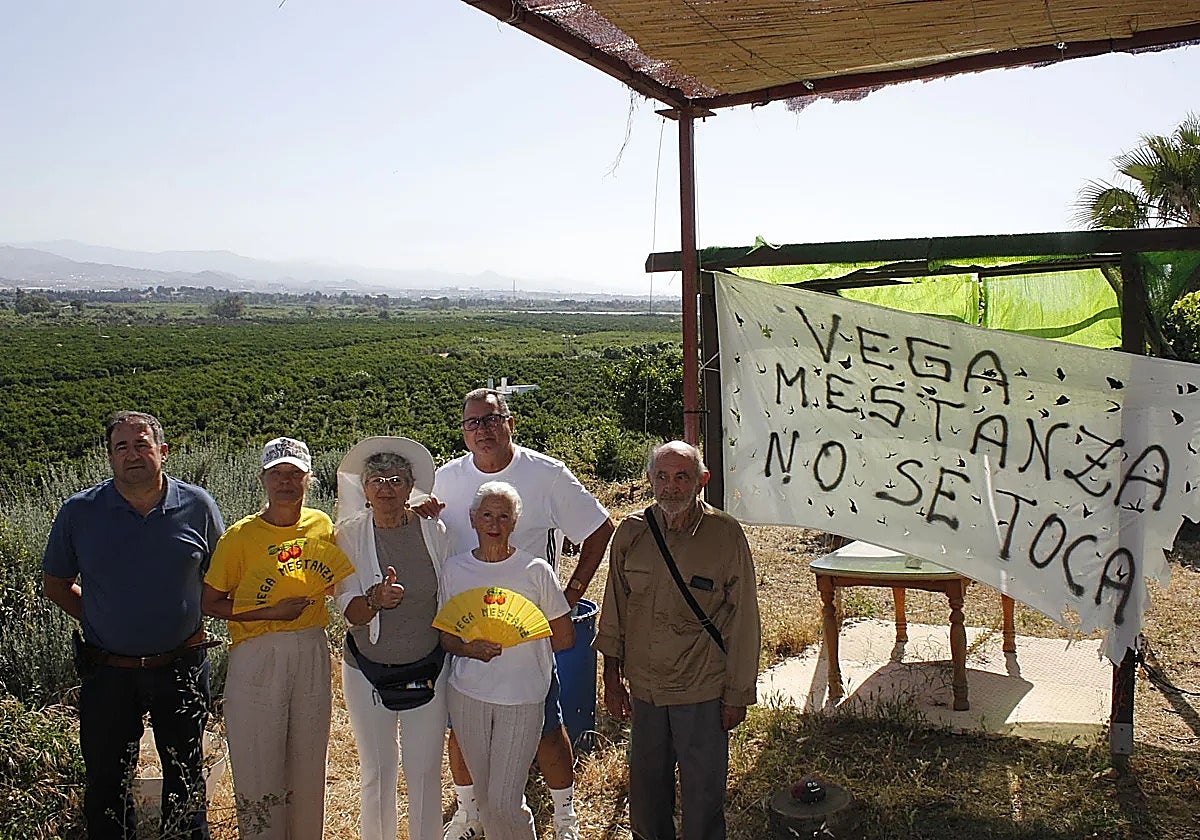
The challenge comes from a group of residents and landowners from what began as a rural settlement in Alhaurín de la Torre, founded in 1924 by José Mestanza Cruz and María Mestanza Luque. The area now includes around 100 homes and an estimated 20,000 trees, according to members of the Mestanza family, now in its fifth generation, who decided to take legal action to stop the plant.
The courts
The Andalusian High Court of Justice (TSJA) ruled on 26 June 2025 in favour of an appeal the Mestanza and Lomas de Cantarranas association had lodged, striking down the preliminary project. This past May, it also annulled the compulsory purchase orders.
Related story
-
Water welfare
Chus Heredia
Spain's Supreme Court, which the Andalusian regional government appealed to, upheld the lower court's ruling and rejected the appeal.
However, the legal fight, which began in 2020, continues. "We still have ongoing legal cases and criminal proceedings," Juan Santos Mestanza, president of the residents' association leading the case, said. "We won't feel safe until we see the treatment plant well away from here. We will stay vigilant," he stated.
The residents' main argument against the Edar centres on its location in a flood-prone area, which they say breaches planning law. They also point to its proximity to homes, among other concerns.
Broadly speaking, their legal strategy has targeted every stage of the planning process, which they argue has been fundamentally flawed from the outset.
The face of the resistance
The Supreme Court ruled on the plant on 28 May 2026. "That day marked 45 years since my father died. I was thinking about him when I heard the news," Mari Carmen Mestanza said.
In the Guadalhorce Valley, if anyone leads resistance to the project, it is her: a retired teacher with strong communication skills and an active presence on social media. She has opposed the plant for more than a decade. "I will not leave my home," she stated.
"I will stay with these trees. They don't deserve to die alone," she said in a YouTube video from 30 May 2025.
That video reignited a campaign which had previously received little attention. She discovered by chance, while out with her mother at a supermarket, that around 400 citrus trees would need to be felled just to begin construction.
That moment proved decisive. Volunteers set up camp along the riverbank, day and night, staging peaceful protests to block excavators from entering.
The movement grew. What had once been dismissed as a "handful of people" gained momentum, attracted media attention and drew environmental campaigners from across Spain.
At its peak, however, the riverbank vigil involved no more than 50 people, roughly the same number as the riot police present, although they never intervened. The confrontation remained verbal.
The work halts
Around two weeks after the appeal for support that summer, the contracted companies halted work.
The decision came amid rising tensions, including incidents linked to the dispute such as the burning of machinery belonging to a subcontractor (an act still under investigation) and alleged threats against workers.
"Our campaign has always been peaceful and that episode caused us serious harm," Juan Santos Mestanza firmly said. "We have never laid a finger on anyone."
Support grows
One of the people who joined the campaign is Cathy Gross. "I met Mari Carmen when she was filing objections to the project. Her story struck me and she told me: 'Come and see the valley, it speaks better than I do.' I decided I wanted to help, because I thought what they planned was outrageous."
Gross later brought in her mother, Catherine Germann, who said: "Those of us who are fortunate, because of where we were born, our education or where we live, have a duty to give something back to society. Defending the valley is an example of what I value most, especially in Malaga, which I have considered my adopted home since 1970."
Legal strategy
"One politician told me: 'Get yourself a good lawyer.' Another said only a judge could stop this. A senior justice official suggested we look for a lawyer from north of Despeñaperros," Mestanza said.
The family eventually found legal representation through an internet search, which led them to Abraira, a lawyer based in Gijón who had previously represented residents in another long-running legal battle against a sewage plant in Asturias.
"He sent technicians and immediately realised the project made no sense. We told him he was exactly the lawyer we needed, even though we could not afford his full fee. In the end, he agreed," they said.
Since then, around 400 people have contributed towards legal costs over the past six years.
![[]](http://static.vocstatic.com/voc26/latest/assets/images/favicon/surinenglish/apple-touch-icon-57x57.png)