
Environment
Going green: Malaga and the Costa del Sol plant more trees to combat the heat
Marbella, Mijas, Estepona, Rincón and the city have seen a significant increase in their tree cover in recent years, providing more shade in built-up areas
Ainhoa Viegas and Ignacio Lillo
Urban trees and green spaces have gone from being a largely decorative feature - sidelined during the years of rapid urban development in the late 20th ... and early 21st centuries - to becoming a vital element of towns and cities.
The heat is becoming more intense every year, and the shade and cool provided by tree canopies are one of the measures most recommended by scientists to mitigate climate change.
Against this backdrop, the province's main local authorities are prioritising green spaces, and their budgets include ever-increasing allocations for tree planting and maintenance.
This has been confirmed by this newspaper in a survey in which it asked each local authority about its tree cover. The study confirms that Marbella is the 'greenest' city, and together with Mijas, Rincón de la Victoria and Malaga, these are the municipalities that have seen the greatest increase in their tree cover in recent years. However, the city still falls short (in terms of the per-capita ratio recommended by the EU).
Another important issue is the distribution in terms of population. The city has the largest area of woodland, at 7.7 million square metres. However, when this figure is divided amongst its residents, a different picture emerges: Malaga has 13.4 square metres per inhabitant, a far cry from the 29.7 square metres per inhabitant in Marbella (the best ratio in the province).
112,200
trees in Malaga city
Malaga city has the highest number of trees planted in its urban area: 112,200, and has seen the greatest growth in percentage terms, with an increase of almost 75 per cent between 2017 and 2026.
Malaga city has the highest number of trees planted: 112,200, and has seen the greatest growth in percentage terms, with an increase of almost 75 per cent between 2017 and 2026, as it started from the lowest figure.
Looking at the trend over the last five years, Estepona has seen the greatest growth, with more than 9,000 trees added since 2021 (a 57 per cent increase). It is followed by Marbella, with 4,000, and Rincón de la Victoria, with 1,642 (+54 per cent). Mijas has increased its tree population by 36 per cent.
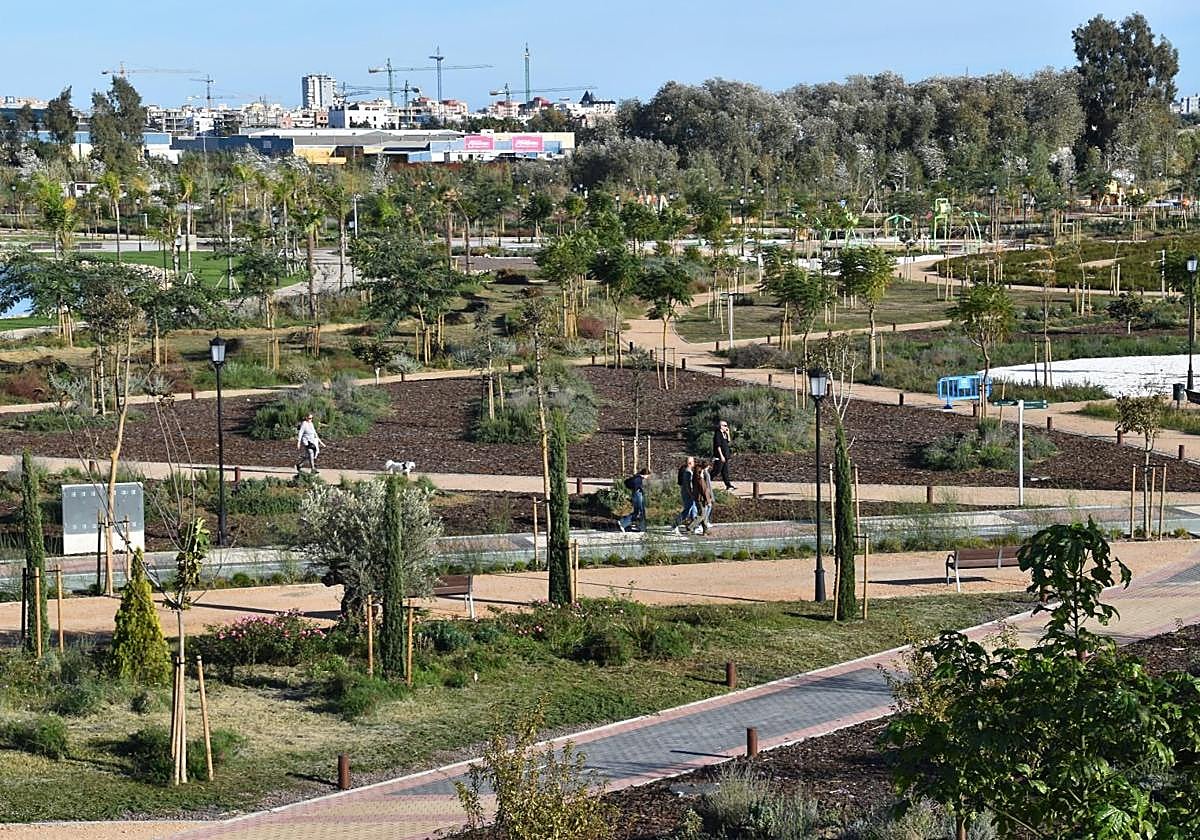
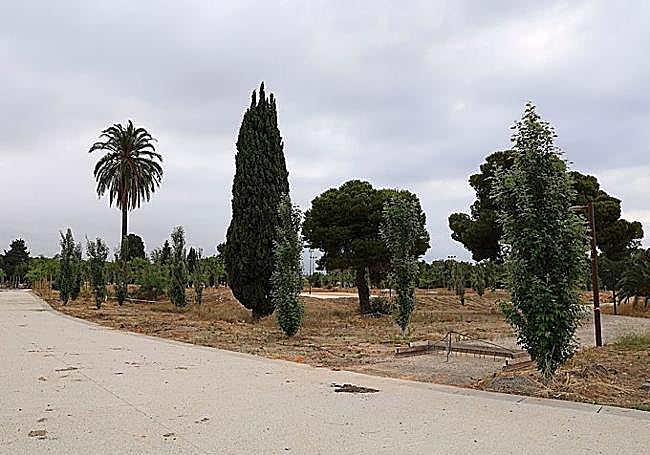
In all cases, there is a combined effort to plant trees and create new parks. Several municipalities are committed to large-scale expansion projects, such as Campamento Benítez in Malaga (280,000 square metres); the Gran Parque de Mijas (275,000); the second phase of the Parque del Mediterráneo in Rincón (30,000) or its namesake in Marbella (38,000).
The refurbishment of children’s play areas is another common improvement: Malaga has announced 40, Estepona 17 and Rincón 16.
275,000
square metres in the Gran Parque de Mijas
The main project on the Costa del Sol is the Gran Parque de Mijas, which is the largest urban green space in Andalucía, where 3,000 trees and 20,000 shrubs have been planted.
The AMJA, the Andalusian association of gardening businesses and professionals, has put figures on the overall situation: across Malaga, Marbella, Mijas, Vélez, Antequera and Estepona, the area dedicated to parks and gardens has grown by 42 per cent since 2020, when the Covid pandemic struck, highlighting the need for large recreational spaces.
That year, the total area stood at 13.6 million square metres; today it exceeds 19.3 million, an increase of 5.7 million over the past six years. According to the association, the trend varies greatly from one municipality to another, with growth ranging from 25 per cent to 200 per cent.
As far as citizens are concerned, there are two main demands: more green spaces, certainly, but also better management of what already exists. Various groups, such as the ‘Málaga por la regeneración’ community, are promoting local initiatives to demand more trees and shade to combat the extreme heat in local neighbourhoods. In this case, using an analysis based on solar radiation tools, the group has found that streets such as Héroe de Sostoa receive over 11 hours of direct sunlight a day, due to a lack of vegetation cover.
“Walking or cycling around Malaga during the warmer months has become a test of endurance for local residents, older people and children. It is not just a matter of comfort, but of public health and of adapting our city to the new climate reality,” the community states.
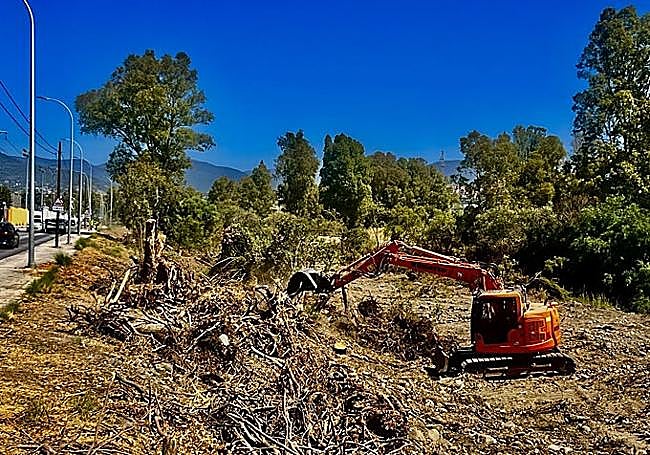
At the same time, neighbourhoods with mature trees or unsuitable species, such as eucalyptus, require greater monitoring, following the alarm caused by the falling of large branches in the city between August and September, four in the space of just one week. This situation has already prompted the city council to launch an urgent inspection programme to prevent such incidents.
Malaga city
The city of Malaga started out in a very poor position, lagging behind the other major Spanish cities. However, the situation has turned around and the census now stands at over 112,200 urban trees, following a 3.7 per cent increase between October 2024 and June 2026. During this period, the number has risen from 108,000 to the current 112,000, and 9,684 trees have been planted over the last seven planting campaigns, according to data provided by the city council.
29.7
square metres of green space per inhabitant in Marbella
Marbella is the city with the highest ratio of green spaces per inhabitant in the province: 29.7 square metres, ahead of Vitoria in the Basque Country (26.7) and well ahead of Madrid (15.7) and Seville (11.2).
These are spread across public roads, parks and school playgrounds, with an annual maintenance budget of around 18.5 million euros. In addition to this, there has been reforestation work in the parks of Gibralfaro (6,250 pine trees and other species) and El Morlaco (2,750), which together have seen the planting of 9,000 native Mediterranean species (carob trees, olive trees, cypresses) across the 27 parks and woodland trails, including Gibralfaro, San Antón, Cerrado de Calderón and La Victoria. Over the last four years, a further 35,000 saplings have been planted in woodland and peri-urban areas, with a survival rate of over 90 per cent.
Consequently, the ratio of green space per inhabitant has increased by almost 75 per cent between 2017 and 2026, rising from 7.67 to 13.4 square metres per inhabitant. The total area of green space stands at 7.7 million square metres and will continue to increase thanks to new projects, notably Campamento Benítez (28 hectares), featuring 1,000 trees and 43,000 shrubs. Other notable projects include the Frank Capra park in Teatinos; the Andrés Jiménez Díaz park in Puerto de la Torre; and the park on Calle Teba, on the Camino de San Rafael. Added to these is the recent approval of a new space, the Pope Francis park, situated next to the Carretera de Cádiz and Cruz del Humilladero.
Despite the progress made, Enrique Salvo, director of the Malaga University's Chair in Climate Change, ranks Malaga city as the worst in the region, far behind Marbella, Benalmádena and Torremolinos in terms of relative green space, and as a result, its residents are more exposed to sunlight, noise and pollution.
Marbella, leader
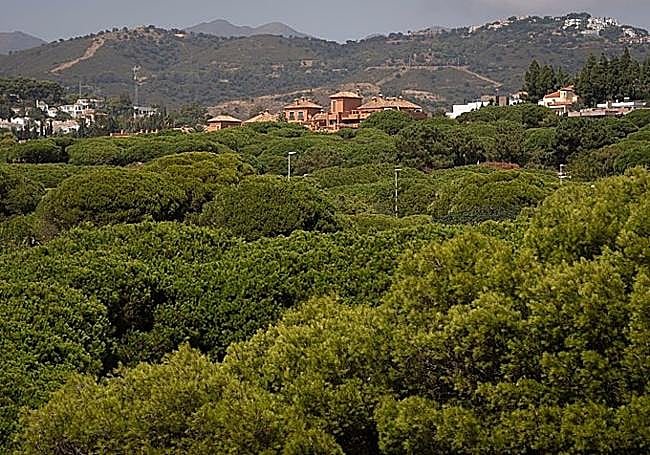
According to municipal data, Marbella is the town with the highest ratio of green spaces per inhabitant in the province: 29.7 square metres, ahead of Vitoria in the Basque Country (26.7) and well ahead of Madrid (15.7) and Seville (11.2). Over the last five years, more than 4,400 trees have been planted, including species such as the palm, the melia, the jacaranda, the chinaberry, the ceiba and various types of pine. Projects already completed include the Parque del Mediterráneo in El Pinillo, covering 38,000 square metres; the restoration of the area around the Benabolá stream, covering 40,000 square metres and featuring a 1.5-kilometre riverside path; and the reforestation of the Golden Mile, covering 7,000 square metres.
30
days of intense heat in 2030
According to climate projections for Malaga from the ‘AdapteCCa.es’ platform, the duration of heatwaves will increase over the coming decades: 30 days in 2030, 40 in 2040 and 51 in 2050.
Work is continuing on La Chumbera Park, situated on a 7,000-square-metre plot, and on the restoration of the River Guadaiza, involving work on 3.44 kilometres of the riverbed and 469 metres of new footpaths and walkways.
The differences lie in the details: Marbella is the only municipality that has made technology a central focus of its agenda, and has committed to technology applied to irrigation: almost ten hectares in San Pedro Alcántara are now equipped with remote management systems, and a further eight new green spaces have been incorporated into the automated irrigation systems.
Mijas, Andalucía’s great park
Mijas has a total of 1,649,585 square metres of green spaces, comprising urban, peri-urban and forest parks. The town council has planted 3,200 new trees since 2021, a 36 per cent increase on the previous tally, bringing the current total to 12,200. Of these, 9,200 are in urban areas, along streets and in peri-urban areas.
Although the town’s main environmental project is the Gran Parque, where 3,000 trees and 20,000 shrubs have been planted across an area of around 275,000 square metres, making it the largest urban green space in Andalucía. Furthermore, the woodland has been adapted to reduce its water consumption, which is limited to 350 cubic metres per month.
New planting schemes have been planned for the roundabout at the junction of Camino de Coín and Miguel Hernández, as well as around the perimeter of the large green space and two children’s play areas: one with a maritime theme in Butibamba Park, and another in a rustic style in El Esparragal.
Rincón de la Victoria
In Rincón de la Victoria, the focus is also on tree planting and expanding green spaces. Since 2021, 1,642 trees have been planted, and the annual campaign has doubled its pace compared with the previous year, with 700 new trees planted in public spaces. As a result, the total green space has increased by almost 54 per cent since 2021, rising from 259,424 to 398,972 square metres; the area dedicated to planters and flowerbeds has more than doubled.
During this period, 16 gardens have been created. The most notable project is the second phase of the Parque del Mediterráneo, which will add 30,000 square metres of woodland and gardens. The local council is also refurbishing the Parque Huerta Julián and the play areas at schools.
Estepona
Estepona has nearly 11.64 square metres of green space per inhabitant, with a total area of public green space exceeding 781,000 square metres (57 per cent more than a decade ago). Since 2011, the number of trees has increased by 21,897, of which more than 9,049 have been planted in the last five years alone, including species such as tipuana, jacaranda and ficus.
Notable new projects include La Boladilla park, covering 20,000 square metres, with 300 trees and two children’s play areas; and the Parque Central boulevard, on Avenida San Lorenzo, covering 22,000 square metres.
The challenge of global warming
Enrique Salvo, director of the Chair in Climate Change at Malaga University, warns that planting trees that provide shade along the streets is essential, and is the best means of building resilience against global warming. This is because, according to climate projections for Malaga compiled by the ‘AdapteCCa.es’ platform, the duration of heatwaves will increase over the coming decades: 30 days in 2030, 40 in 2040 and 51 in 2050.
In a recent study of Malaga’s Parque del Norte, eight out of the nine days analysed were classified as posing an "extreme heat hazard". In contrast, the shade provided by the trees reduced the heat index by more than 10 degrees. However, it is also important to bear in mind that not all species provide the same level of protection: according to the Chair’s director, the jacaranda, the plane tree, the paulownia and the American pepper tree are those that achieve the greatest reduction in temperature beneath their canopy, thanks to the evapotranspiration of their leaves. The oak, on the other hand, is among the least effective.
