
Crime
Malaga province 'child in trouble' scam: fake plea for help leads to four bank transfers totalling almost 3,000 euros
The provincial court has sentenced the defendant to one year and three months in prison and ordered him to compensate the victim with the sum defrauded, plus interest
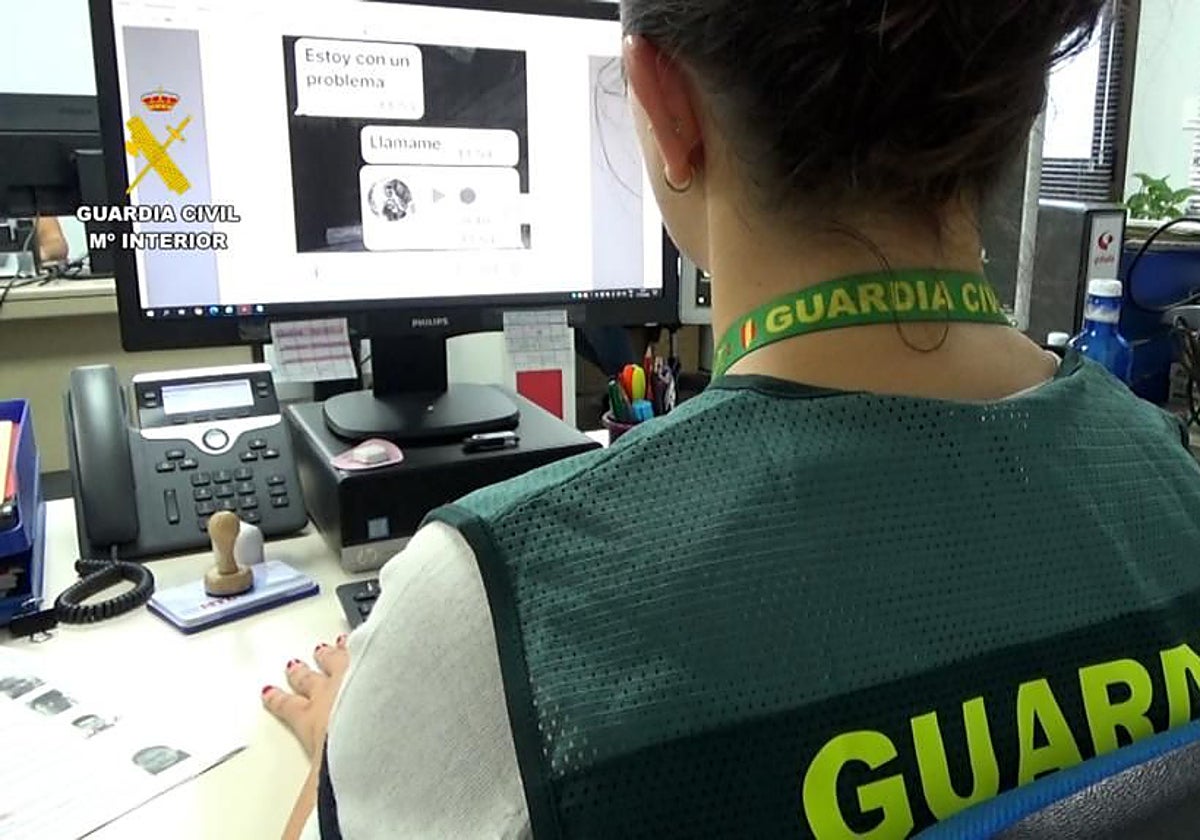

A father in Malaga province thought his pregnant daughter needed urgent financial help when someone claiming to be her sent him a message asking for ... money. He transferred 2,855 euros in four separate payments, only to discover that a fraudster had tricked him.
The police could not identify the person who sent the messages, but investigators traced the money to a bank account held by another man. On 10 June 2026, Malaga's provincial court found that man guilty of playing an essential role in the scam and sentenced him to 15 months in prison. The case began in November 2023 and has since gone through several years of legal proceedings.
The victim's daughter was pregnant and he knew she was having problems with her car. When he received a message asking for money on her behalf, he believed she needed help. The exchange began with a text message telling him that her mobile phone had broken and asking him to contact her on WhatsApp using another number. The person behind the messages then explained why he could not speak to her either.
The scam took place on 8 November 2023. The person posing as his daughter asked him for 2,855 euros and insisted that he send the money through instant bank transfers. The father made four payments from his account: one for 151.25 and three for 901.25 euros each. All four went into the same account at another bank, whose details the sender had supplied during their conversation. The sole account holder withdrew the entire amount "within a short time".
The police traced the account holder using the documents the father provided when he reported the fraud. However, investigators failed to identify the person who had sent the messages.
Despite that, the evidence about the bank transactions and the defendant’s involvement persuaded the provincial court to convict him of fraud as an essential accomplice. As well as the prison sentence, the court ordered him to pay the legal costs and compensate the victim with the full 2,855 euros, plus interest.
A work colleague
During the trial, the defendant admitted that all four payments had reached his account and that he had withdrawn the money. However, he claimed that a work colleague had asked him to let the money pass through his account because he needed it. He said he did not know where the money came from, had not asked about its origin and had helped his colleague without charging him.
He also said he had received payments in similar circumstances on three previous occasions and had already faced two other trials over comparable incidents. The court clarified that he had no criminal record resulting from a final conviction.
The judges noted that the defendant had provided very little information about the colleague he claimed had asked for his help. The details he gave did not allow the court to identify the person, and his defence team did not ask the court to hear from that colleague or any other witness who could confirm the story.
The court assessed his explanation alongside the father's testimony, the documents he had handed to the police and the defendant's own admissions about receiving the transfers and withdrawing the money. On the basis of that evidence, the judges concluded that he "could not have failed to suspect that the money transferred to him came from illegal activity".
The provincial court ruled that providing the bank account details and withdrawing all the money within a short period played a decisive part in completing the fraud. That was why it classified the defendant as an essential accomplice.
Under Spanish law, a person can also count as a perpetrator if they make an indispensable contribution to carrying out an offence. In this case, the account supplied by the defendant allowed the fraudsters to receive the money obtained through deception, even though investigators found no link between him and the phone used to contact the father.
The ruling also explains why the court could convict the defendant without establishing who ultimately benefited from the money. The intention to make a financial gain can involve securing an advantage either for oneself or for someone else. So even if the court accepted the defendant's claim that he acted for free, his involvement could still have helped a third party keep the money transferred by the victim.
Where did the money go?
The father told the court that he had tried to recover his money but that neither the bank nor his insurer would reimburse him because he had authorised the payments himself.
The provincial court distinguished between the transfers themselves, which no one had tampered with, and the deception that led the father to authorise them. The judges found that the person behind the messages had persuaded him to make the payments by pretending to be his daughter.
The father acted, they said, "in the absolute belief that he needed to meet a need of his own daughter". As he explained in court, that conviction led him to part with his money.
The prosecution had sought a two-year prison sentence for fraud. It had also proposed money-laundering as an alternative charge. However, the court classified the defendant's actions as fraud. It considered that receiving the payments and withdrawing the money formed part of the fraud itself.
The evidence presented at trial did not establish that he had subsequently carried out any transactions to conceal where the money came from or help another person involved in the scam evade the consequences of the crime.
The court never established where the money had ultimately gone.
When setting the sentence at 15 months, within the lower half of the penalty range for fraud, the judges took into account the amount stolen, the financial harm suffered by the father and the role played by the man who provided the bank account.
The court issued its ruling on 10 June 2026. It stated that the parties could appeal to the High Court of Justice of Andalucía.
