
Rare species
Two rare Atlas lion cubs born at Selwo Aventura wildlife park in Estepona
Scientific milestone achieved as part of European Endangered Species Programme to help protect feline subspecies extinct in wild since 1950s

Estepona
Global biodiversity has something to celebrate and the news comes from the Costa del Sol.
Selwo Aventura Park, in Estepona, has recorded the birth of ... two Atlas lion cubs (Panthera leo leo). This scientific and conservation milestone forms part of the European Endangered Species Programme (EEP), in which the Estepona park has been actively involved since its foundation.
The cubs are the offspring of Ghizléne - a lioness who arrived in the spring of 2025 from Plzeň Zoo in the Czech Republic - and Tayo, a male transferred from Hanover Zoo in Germany, who is of inestimable genetic value as he has a pedigree that is 100 per cent of this subspecies.
Native to North Africa and closely linked to the geography of the Atlas Mountains, these felines became extinct in the wild during the 1950s. The survival of the species is due to the efforts of the Rabat National Zoo in Morocco - which houses around 100 specimens descended from the royal collection - and to the network of European zoos which, like Selwo, have prevented the total loss of the species through genetically controlled cross-breeding.
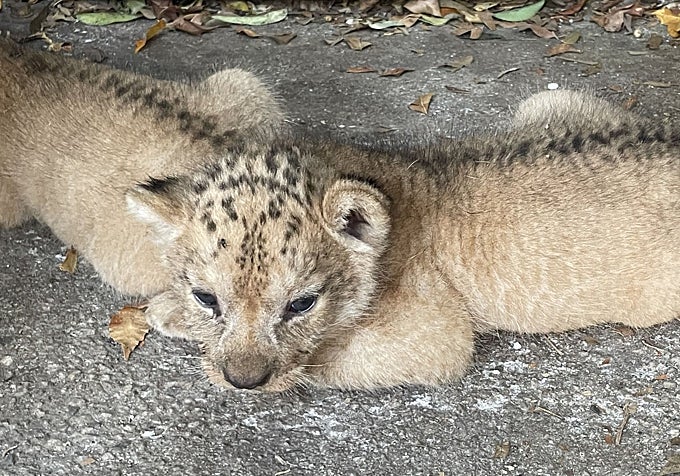
During their first few weeks of life, the cubs have remained in the enclosures under their mother's watchful eye and the supervision of the technical team.
"The lion cubs are being suckled by their mother and have so far been under constant monitoring," explains Eloy Serrano, Head of Conservation at Selwo Aventura, who highlights the excitement felt by the whole team after overcoming difficult moments, such as the separation and subsequent gradual reintroduction of the mother's sister, Ghalíya, mimicking the behaviour of the species in the wild.
Veterinary checks and public debut
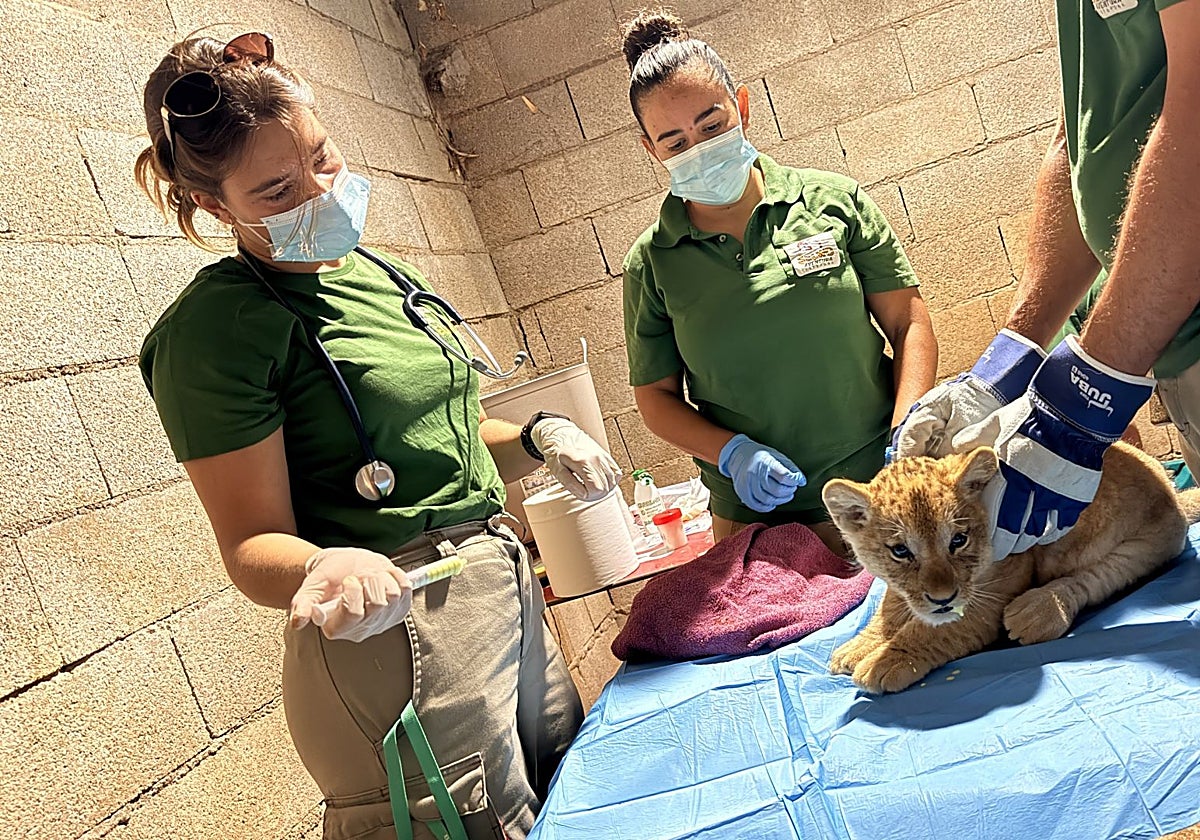
Having opened their eyes a week after birth, the cubs have now passed their first veterinary check-ups, with their health rated as 'perfect'. Weighing eight kilos each, they have been dewormed, fitted with identification microchips and had hair samples taken to determine their genetic profile - a key step in the EEP registration process. As an interesting aspect of the protocol, after being handled by humans, the keepers rubbed the cubs with straw to neutralise any unfamiliar odours before returning them to their mother.
Over the next few days, the cubs will take their first steps on the enclosure's outdoor meadow so that the public can begin to watch them. The mother will continue to nurse them until they are seven to ten months old, ensuring the natural rearing of a pair of big cats intended to strengthen the gene pool so that, in the future, the Atlas lion can be returned to its original habitat.
The 2015 edition of the Red List compiled by the International Union for Conservation of Nature (IUCN), which included 77,340 assessed species (with 22,784 classified as endangered), classified the lion (Panthera leo) as 'Vulnerable' at the global level.
The majority of lions, both males and females, live in eastern and southern Africa, where their population has declined by between 30 and 50 per cent over the last 20 years. The threats facing this species are habitat loss and conflict with humans, while isolated populations contribute to poor genetic diversity.
