
Environment
Andalucía deploys drones to combat processionary pine caterpillars in Malaga province's forests
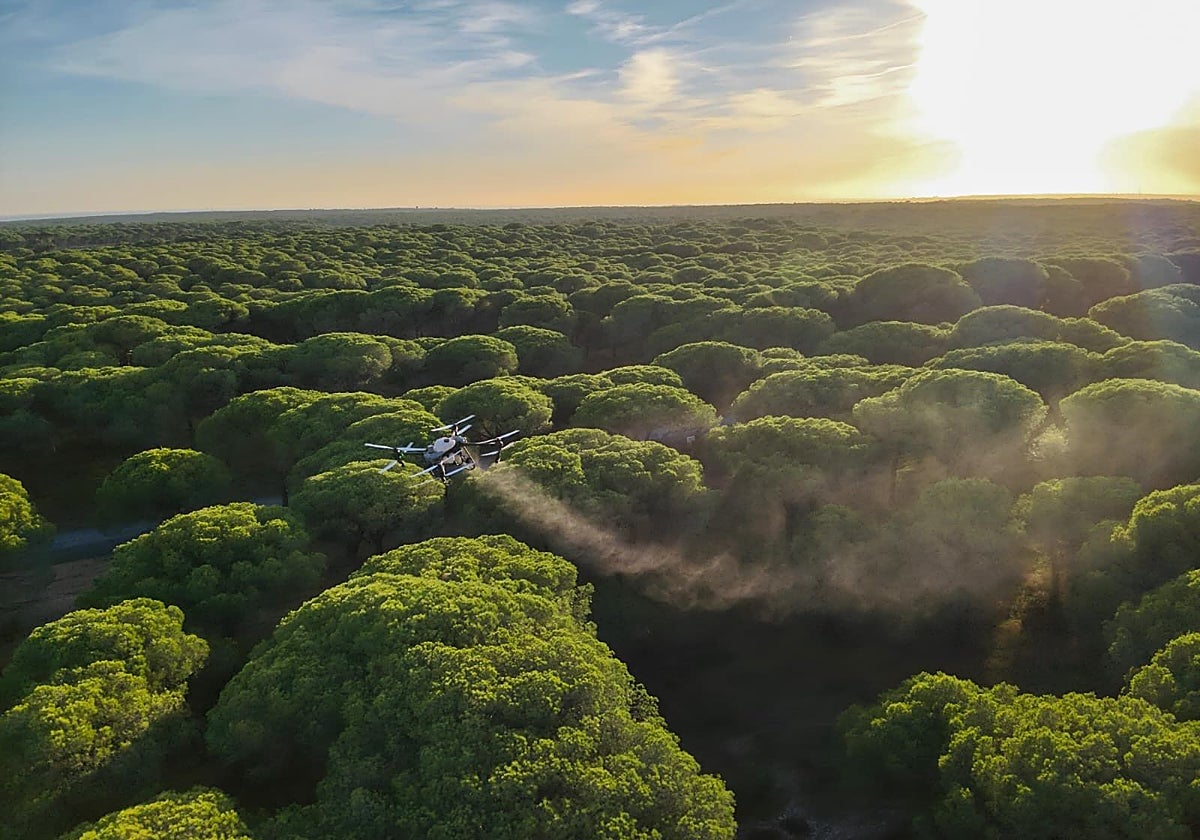
The regional government will carry out aerial spraying in Malaga city and Ronda and ground-based treatments using a spray cannon in Marbella

Málaga
Unmanned aerial technology is becoming a standard tool for the conservation of Malaga's environment. The regional government of Andalucía has launched a new campaign ... to control the pine processionary caterpillar, a common pest in Mediterranean pine forests which is once again the focus of conservation efforts this autumn.
In the province, the operation involves the use of drones to spray a total of 51.28 hectares of woodland across the municipalities of Malaga city and Ronda.
The operations, led by the regional ministry of sustainability and the environment, are not limited solely to aerial operations. The operation is complemented by ground-based interventions using a spray cannon along a 1.5-kilometre stretch in the municipality of Marbella.
Related story
These efforts form part of a regional strategy covering 256.9 hectares treated by unmanned aerial vehicles and 11.1 kilometres of ground spraying across the whole of Andalucía, with a particular focus also on Huelva (193.41 hectares), Almeria (10.21 hectares) and Cadiz (two hectares).
Focus on leisure areas and cities
The operation is in line with the guidelines of the integrated pest management plan against this pest: a continuous monitoring programme that the regional government has been running since 1991 and which currently monitors more than 750,000 hectares of Andalusian pine forests divided into some 4,500 stands.
Far from seeking the total eradication of the species, the aim of the technicians is to maintain the insect's populations at levels compatible with the biological balance of the forest ecosystem.
To decide where to take action using drones or ground-based machinery, environmental officers carry out an annual on-site assessment of each plot, assigning an infestation level from zero to five based on the characteristic white clusters and the extent of defoliation of the trees. Biological balance technicians then cross-reference this data with visitor numbers.
They give priority to the so-called Zeus (special social use) areas, which include recreational areas, camping sites and campsites, as well as pine forests near population centres. There are two reasons for this: prevent damage to the tree population and minimise the health risk the caterpillars' stinging hairs pose to both people and animals.
The decision to use drones as a tool in the mountains of Malaga and Ronda is based on strictly technical criteria. Aerial methods allow access to areas with difficult terrain, steeper slopes and taller vegetation, ensuring selective application that minimises the impact on the rest of the local flora and fauna.
Plant protection treatments represent the final stage of the regional protocol. Before resorting to aerial or ground spraying, the plan focuses on encouraging the natural predators of the processionary moth by installing nest boxes for insectivorous birds and bat boxes, as well as using pheromone traps to monitor the spread of the pest in the province's pine forests.
