
Gender-based violence
Torremolinos walled-up woman case: defendant changes version of events again and admits killing Sibora
Marco Romero's defence denies that he acted in a premediated, cold or calculated manner
María José Díaz Alcalá
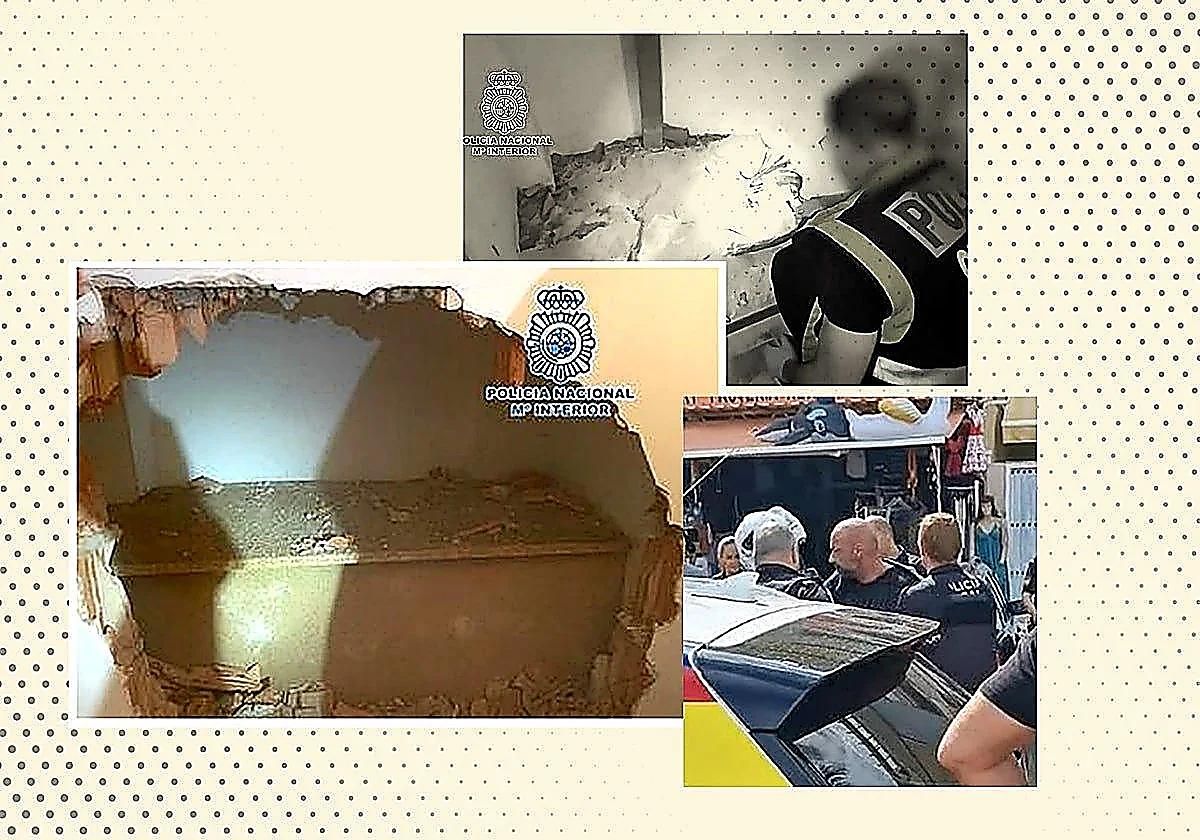
Following his arrest in 2023 for the murder of his ex-partner Paula in Torremolinos, Marco Romero spontaneously confessed that Sibora, a young woman with whom he had been in a relationship and who had been missing for nine years, was hidden within the walls of the attic flat they shared in the Calvario area.
This confession led to the discovery of Sibora's body. However, a week later, the main suspect changed his story in court, claiming innocence.
A year later, Romero testified again via video conference from prison, admitting only that he was responsible for walling her up. He still claimed he had done so because he feared the true perpetrators of her murder, the Albanian mafia.
Now, on the verge of trial, the defendant's lawyer has admitted that Romero killed Sibora during a fight.
A couple of years ago, from the Huelva prison, Marco testified before the judge regarding Sibora's murder, at the request of his then-lawyer. For more than two hours, he detailed his version of events: that Sibora had taken out a loan of 25,000 euros from some fellow countrymen to start a business. Romero then said that some Colombians she had met on a night out had stolen the money and she could no longer repay the debt.
Romero said that the lenders had begun pressuring Sibora to return the money to the point that the young woman was planning to leave Torremolinos.
In his written defence, however, he admitted to both the crime and the subsequent concealment of the body. According to his account, Sibora and he had a verbal fight that led to physical aggression. Romero said that a knife had been involved.
His lawyer, however, denies that Romero acted in a cold, calculated manner or with the intention of preventing the victim from defending herself. Furthermore, he holds that Romero's spontaneous statement at the police station was crucial in locating the body.
The defence requests that the court imposes the minimum legal penalty for the crime of homicide, which amounts to ten years in prison, and the minimum penalty for walling up the body, given the mitigating factors of confession and serious addiction to narcotic substances.
The prosecution considers Romero responsible for the crime of murder within the context of gender-based violence, aggravated by kinship and another crime against moral integrity for concealing the whereabouts of the body, for which it is requesting a total of 22 years in prison.
Regarding civil liability, it requests that the defendant, who will also be tried by a jury, compensate Sibora's mother with 197,588 euros.
A jury has already sentenced Romero to 24 years in prison (23 for murder and one for habitual abuse) for Paula's murder. Furthermore, he will have to pay over 918,000 euros in compensation to the victim's children and other relatives.
Although during the trial Romero maintained that the death occurred accidentally during a fight in which he was "only" trying to "deflect" the knife, the court rejected his account based on the reports and testimony of the forensic doctors. Paula suffered 16 stab wounds, so they considered it "highly improbable" that she had stabbed herself.
Romero was also convicted last year of making serious threats against a former partner. The court found that one of the incidents involved brandishing a knife or switchblade at her while saying: "You're about to die."
The Local Police remind the population that anybody, whether a victim or someone who knows that a person is at risk, can contact 061. The service is available in 52 languages. The call is anonymous and confidential, so it does not appear in the phone bill.
In addition, the city council has the SUAM service that provides legal advice to women in the event of gender-based violence. The service is available 24 hours a day, every day of the year. The phone numbers are 010 and 679 661 800.
![[]](http://static.vocstatic.com/voc26/latest/assets/images/favicon/surinenglish/apple-touch-icon-57x57.png)