
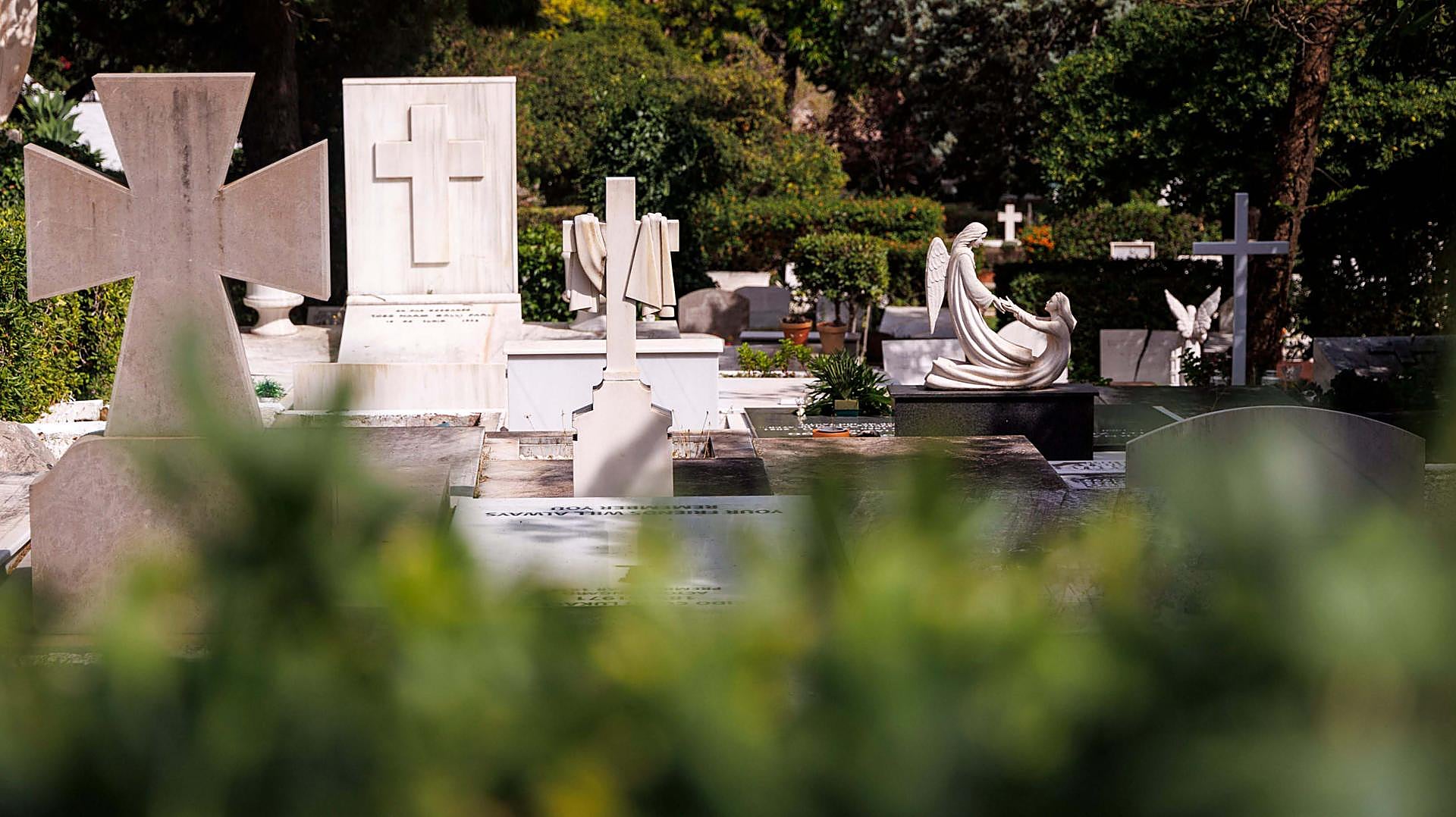
The charming cemetery that tells the story of the Costa del Sol: from the actress Hitler fell in love with to one of the fathers of the atomic bomb
The international cemetery in Benalmádena is home to key figures from Malaga province as well as the grave of Ágata Lys, which belies the solitude of her death

Málaga
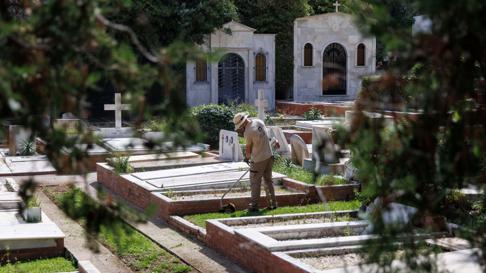
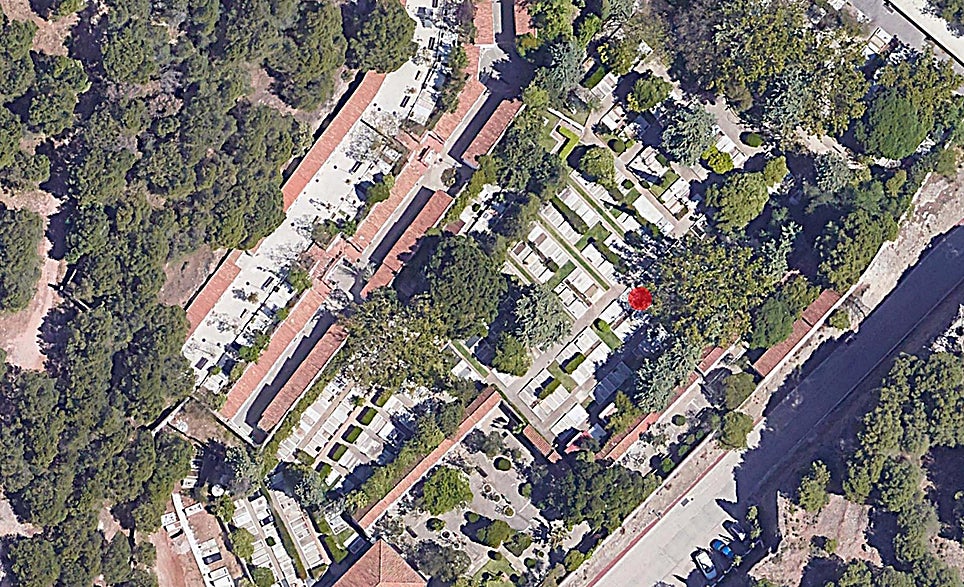
You have to turn just before entering the village, a right-hand bend that climbs a long hill. A steep metaphor for that heaven known as the Benalmádena International Cemetery. A divine place, even though it is barely more than half a century old.
Over this time, this charming necropolis has become the final resting place of many famous figures - particularly actors, writers and patrons of the arts - but also atomic scientists, military figures and prominent names from Malaga.
However, these represent only a tiny minority, as the vast majority of its occupants remain anonymous, though this does not prevent them from having left us wonderful, epigraphs as a memento.
This cemetery is the Costa's equivalent of the city’s English Cemetery, home to people of all faiths: Catholics, Jews, Protestants, Anglicans and Eastern religions. There are just as many Garcías or Rubios as there are Greenlees, Beriros or Anderssons – those who were born wherever they happened to be, but came to the Costa del Sol to live life. Even eternal life.
The photographs of the inaugural blessing of the cemetery in 1969 feature a key figure from Benalmádena, Enrique Bolín Pérez-Argemí (1940-2018), at the time one of Spain’s youngest mayors and regarded as the ‘inventor’ of a town that was too close to Torremolinos and, until the opening of this cemetery, far from heaven.
And here the town’s (almost) perpetual mayor continues to rest full-time, in a discreet family grave situated in the upper section of the ground-level burial grounds. With the mayor’s stone greeting, one can begin the route, descending on a tour of mausoleums and graves that are not only the recent memory of the Costa del Sol, but also proof of its irresistible power of attraction for locals and visitors alike.
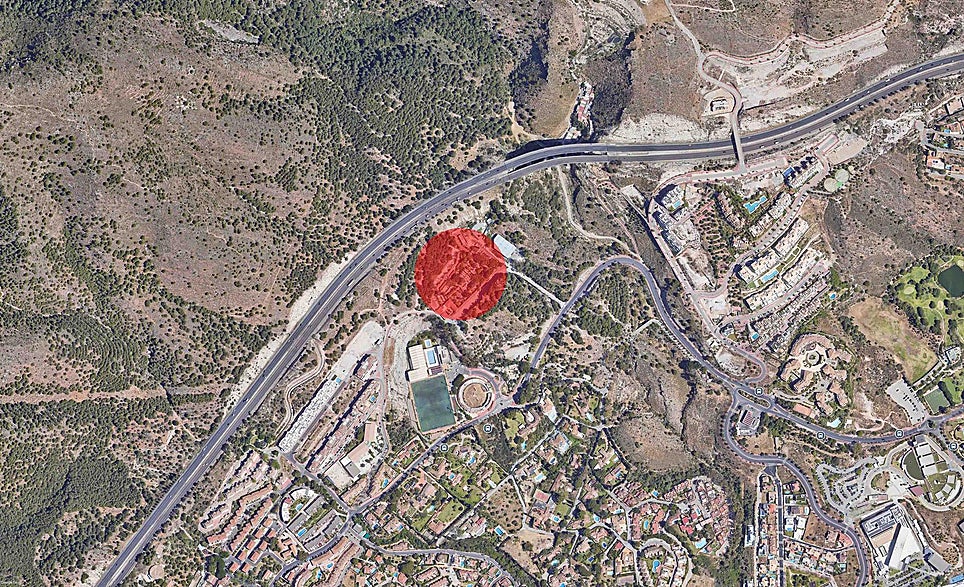
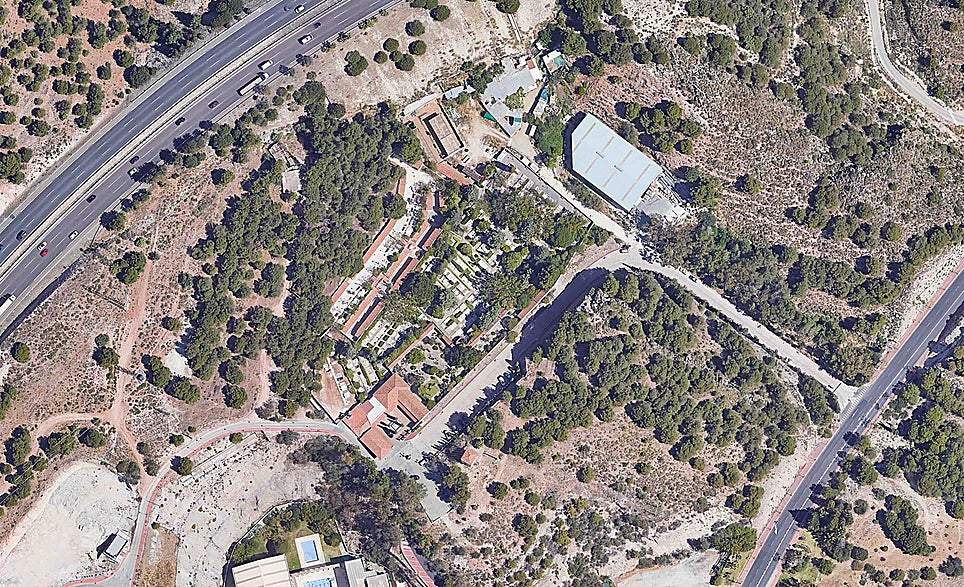
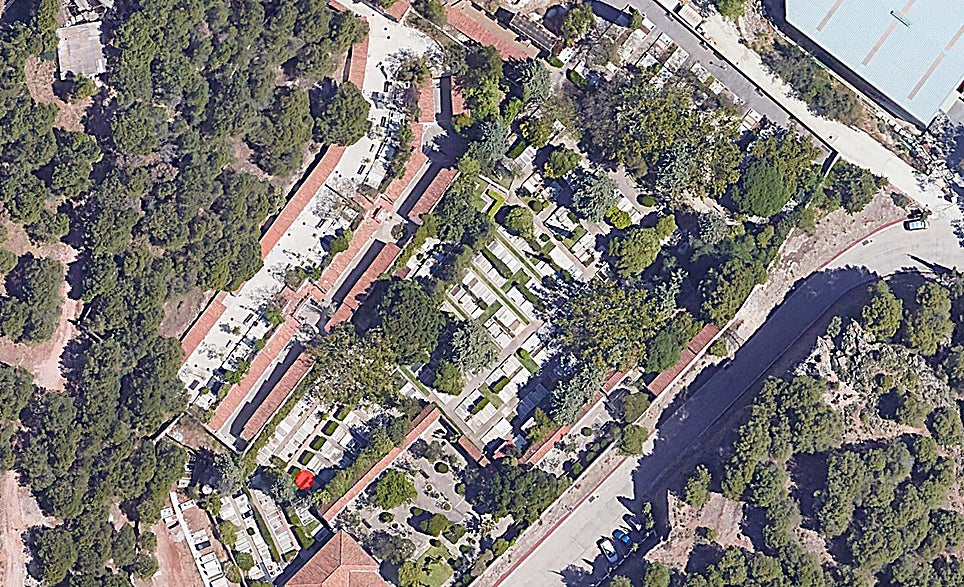
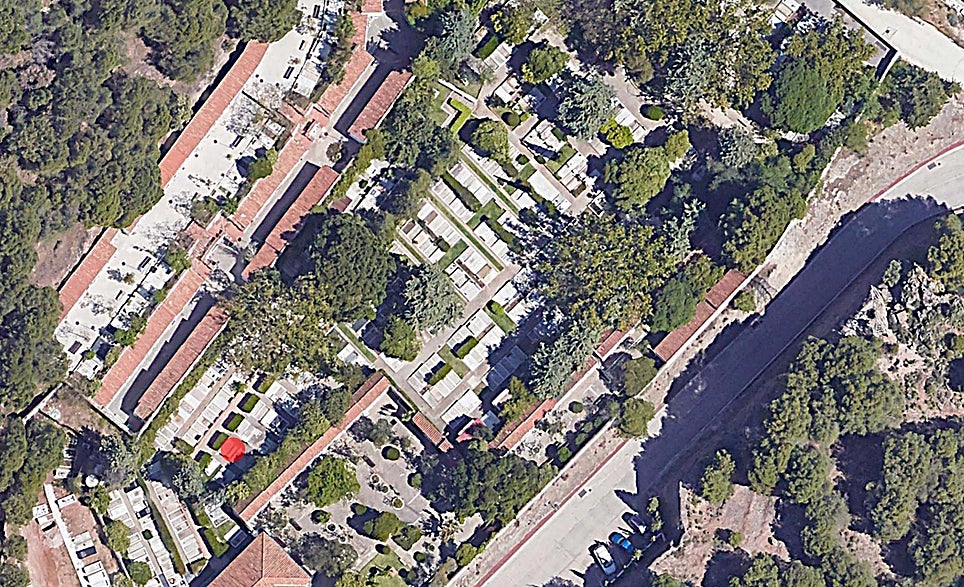
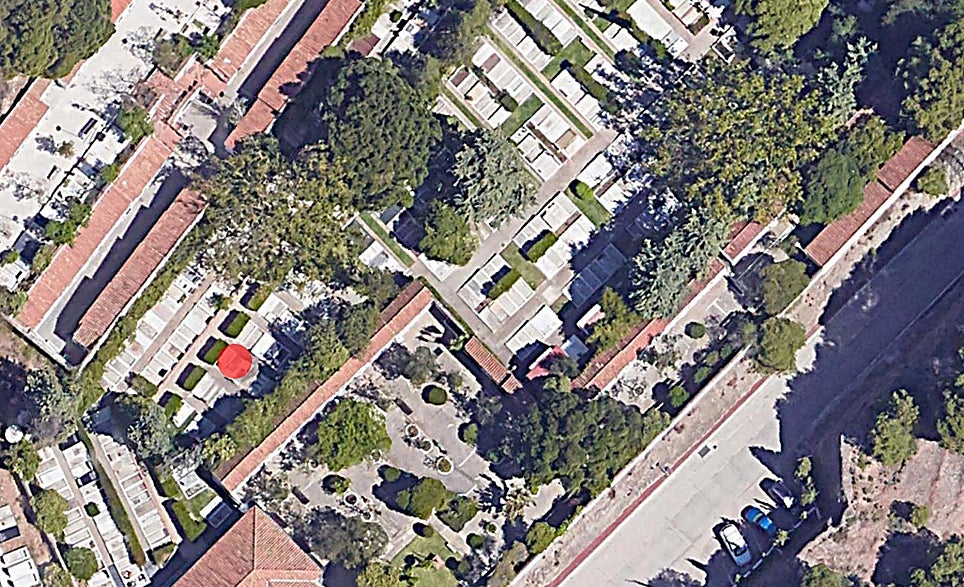
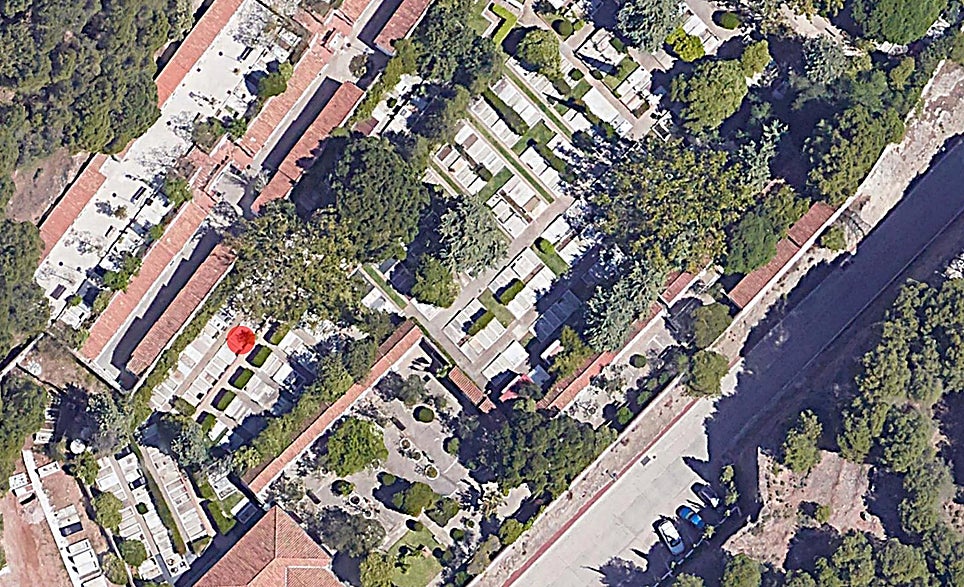
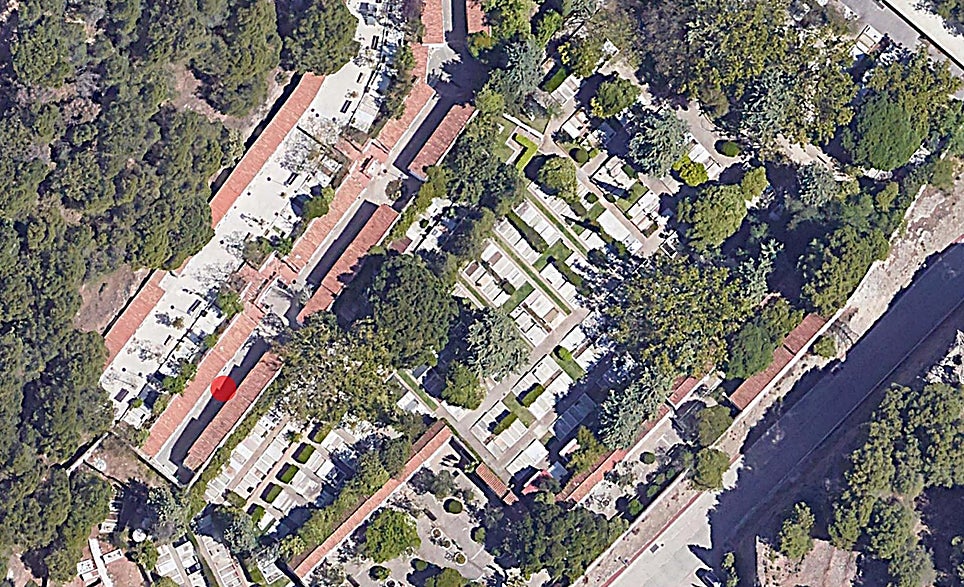
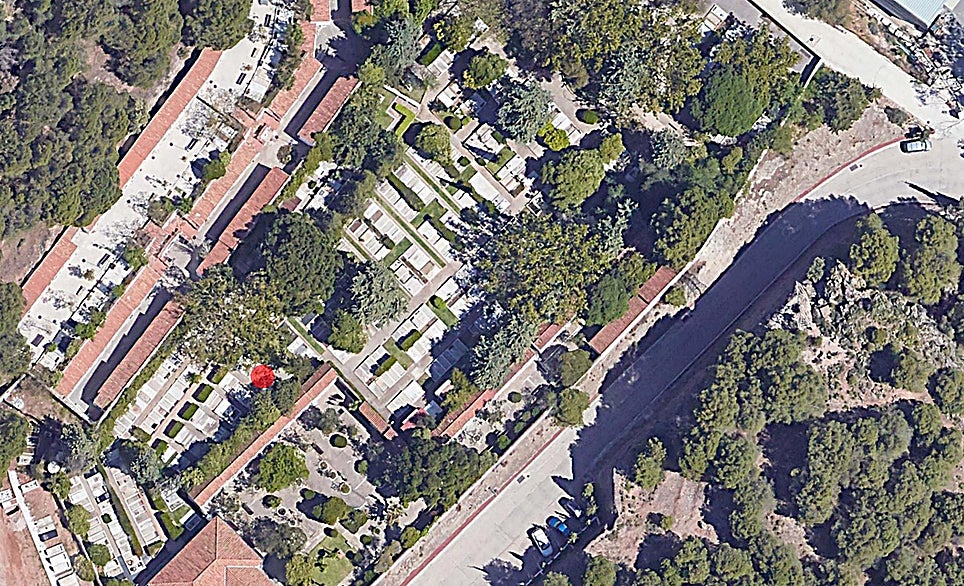
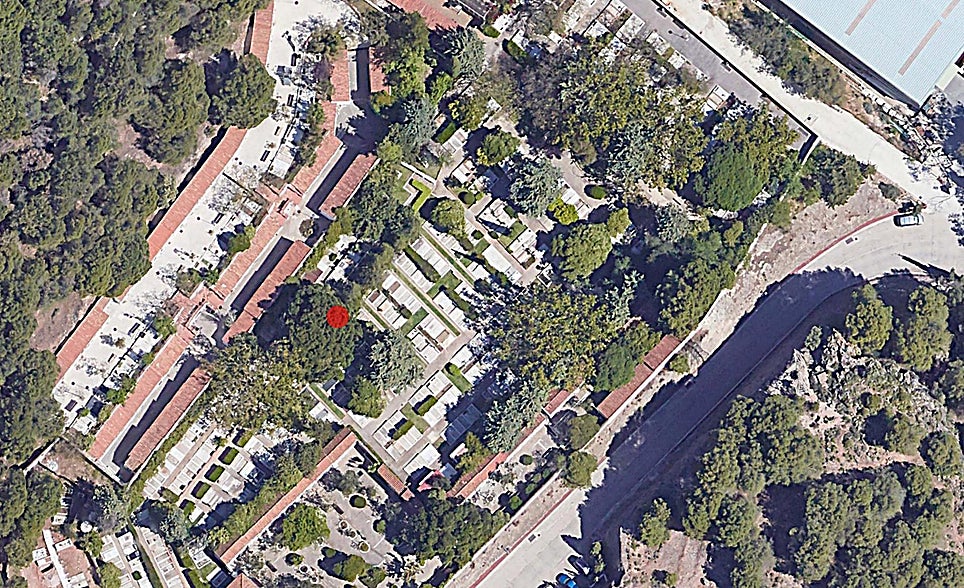
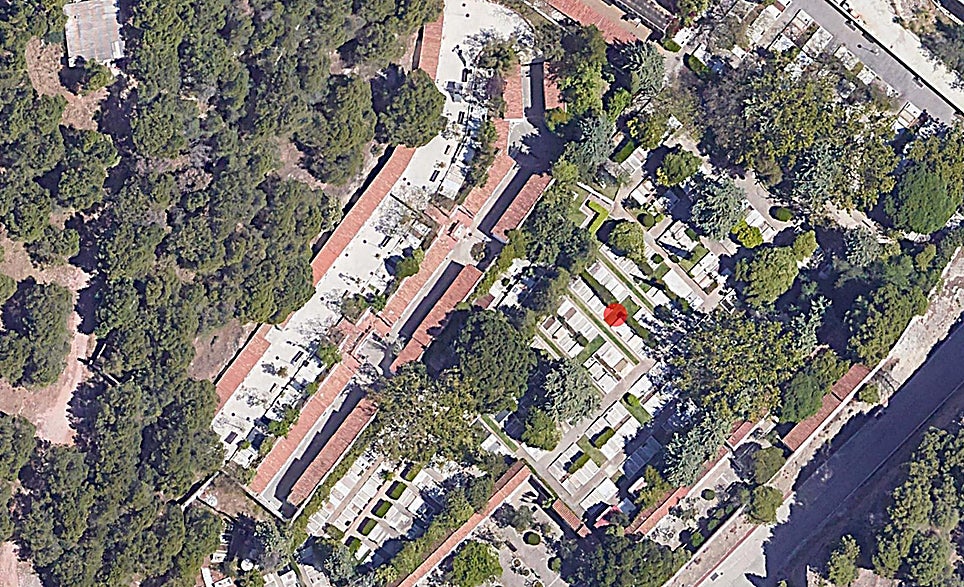
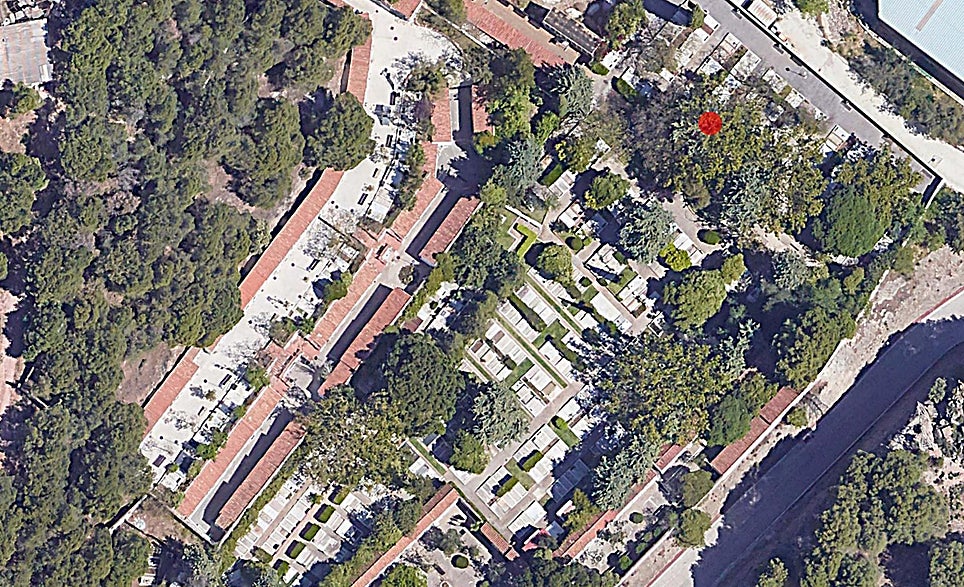
Benalmádena International Cemetery
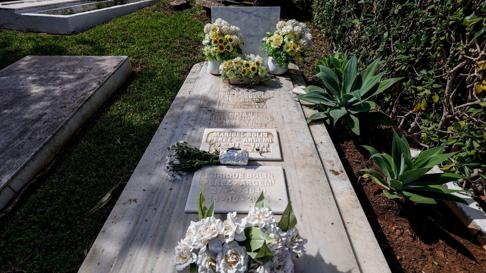
Enrique Bolín, mayor of Benalmádena
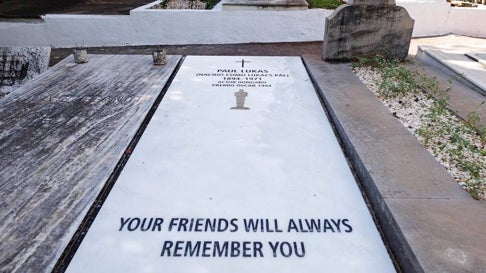
Paul Lukas, Oscar-winning actor
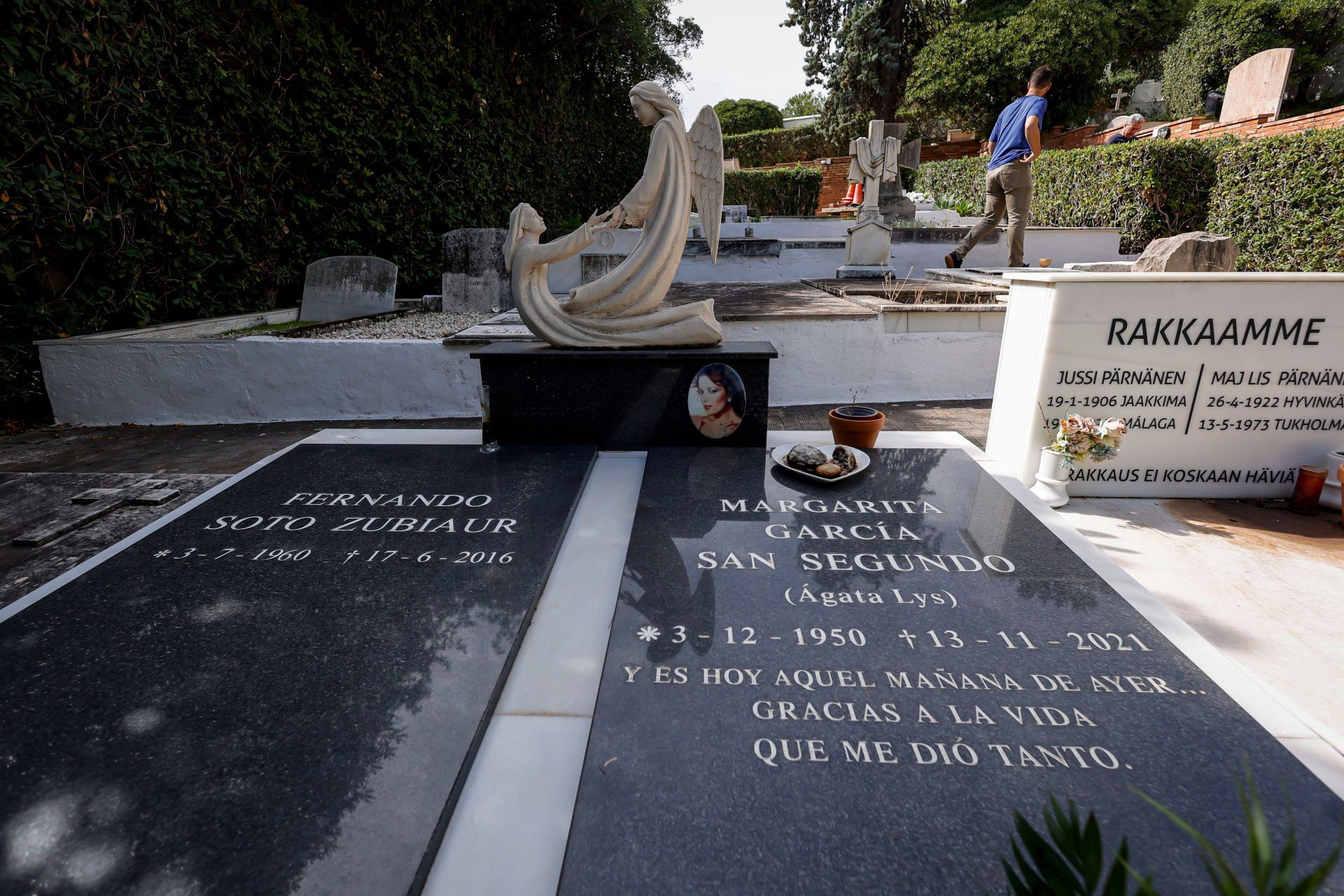
Agata Lys, actress
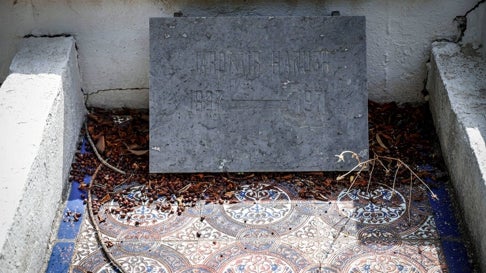
Jaromir Hanush, scientist
AUX STEP FOR JS
Right on the terrace below lies one of those figures who made this place his home: the Hungarian Lukács Pál, better known by the name under which he won an Oscar, Paul Lukas (1894–1971). After snatching the statuette from the popular Humphrey Bogart of Casablanca, this Central European globetrotter ended up swapping Hollywood for Malaga and stipulated in his will that he should be buried in Benalmádena. The grave of the star of 20,000 Leagues Under the Sea and Watch on the Rhine had been forgotten until, just a few weeks ago, his headstone was restored and re-unveiled with honours by his country’s embassy and the town hall itself. With the silhouette of the Oscar engraved on the marble, you can’t miss it.
Ágata Lys passed away peacefully
Going down a further step, we come across another of those graves that make you stop in your tracks. She, too, was a legend of the silver screen. And although she never won an Oscar or a Goya, Spanish actress Ágata Lys (1950-2021) needed no awards whatsoever to stir passions in the world of erotic cinema. And she continued to show off her figure and silver tongue even after that erotic trend had passed, with films such as Los Santos Inocentes and Familia.
Her death five years ago caused something of a controversy, as nobody in Benalmádena found out of her passing until 40 days after she died. The headlines spoke of a death in solitude. However, her grave tells a less sad story.

Beneath a spotless black headstone, adorned with flowers, the actress is buried alongside her partner, the architect Fernando Soto (1960-2016), her great love - he was ten years younger than the actress - with whom she moved to Benalmádena.
In large letters, the headstone announces that Margarita García San Segundo rests there, although her stage name appears in brackets alongside a photo of Ágata with a playful expression, as if it were the poster for her latest film. And at the bottom, a set of credits featuring the artist’s final messages.
On one side, a verse by Antonio Machado serves as a farewell, lamenting that her time has run out: "And today is that tomorrow of yesterday…". And immediately following that, the lyrics of Violeta Parra’s legendary song, which she paraphrases in the first person to make it clear that she passed away in peace: “Thank you to life, which gave me so much.”
Despite the supposed solitude of her death, Ágata Lys’s immaculate grave conveys a different message: ‘Thank you to life, which gave me so much’
Near the legendary actress, we find a grave with a small headstone. It attracts more attention for the latticework covering the grave than for the name of its occupant on the stone: Jaromir Hanush (1897-1971). However, his death made the news around the world under a striking headline: 'One of the fathers of the atomic bomb commits suicide in Spain'.
Of Czechoslovak origin and a naturalised American citizen, this engineer worked on the team that developed the ultimate weapon of the Second World War and, according to the AFP news agency, even "lost a finger on his right hand" due to "radiation".
After retiring in 1963, he returned to Europe, specifically to Benalmádena, where he built ‘Villa Elena’, named after his wife. One night in February 1971, he went out with his walking stick and was found the following morning hanging from a tree. Little is known about what drove him to take his own life, but there was no shortage of voices which, with more moralising than certainty, regarded it as a delayed explosion of "remorse" over the deadly bomb.
Patron of the arts in Malaga
To find one of the key figures in Malaga’s cultural life, you have to take a detour and head up towards the side of the niches, where you’ll find the pink marble tomb of the "Most Excellent" Ángeles Rubio Argüelles (1906–1984), Countess of Berlanga de Duero, "patron of the arts" and "much loved by her children, family and pupils".
This last detail is significant, as Doña Ángeles, as she was known, was the founder of a highly distinctive school, the Teatro A.R.A. (the initials of her name), where Tito Valverde, Óscar Romero, Raúl Sénder, Fiorella Faltoyano and Antonio Banderas playes their first roles. The daughter of one of the pioneers of tourism in Torremolinos, Carlotta Alessandri, the writer, theatre director, teacher and patron returned to her roots to bring down the curtain at this secluded Benalmádena International Cemetery.
.
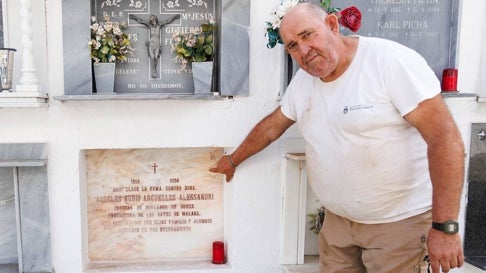
Ángeles Rubio Argüelles, writer, director and theatre entrepreneur
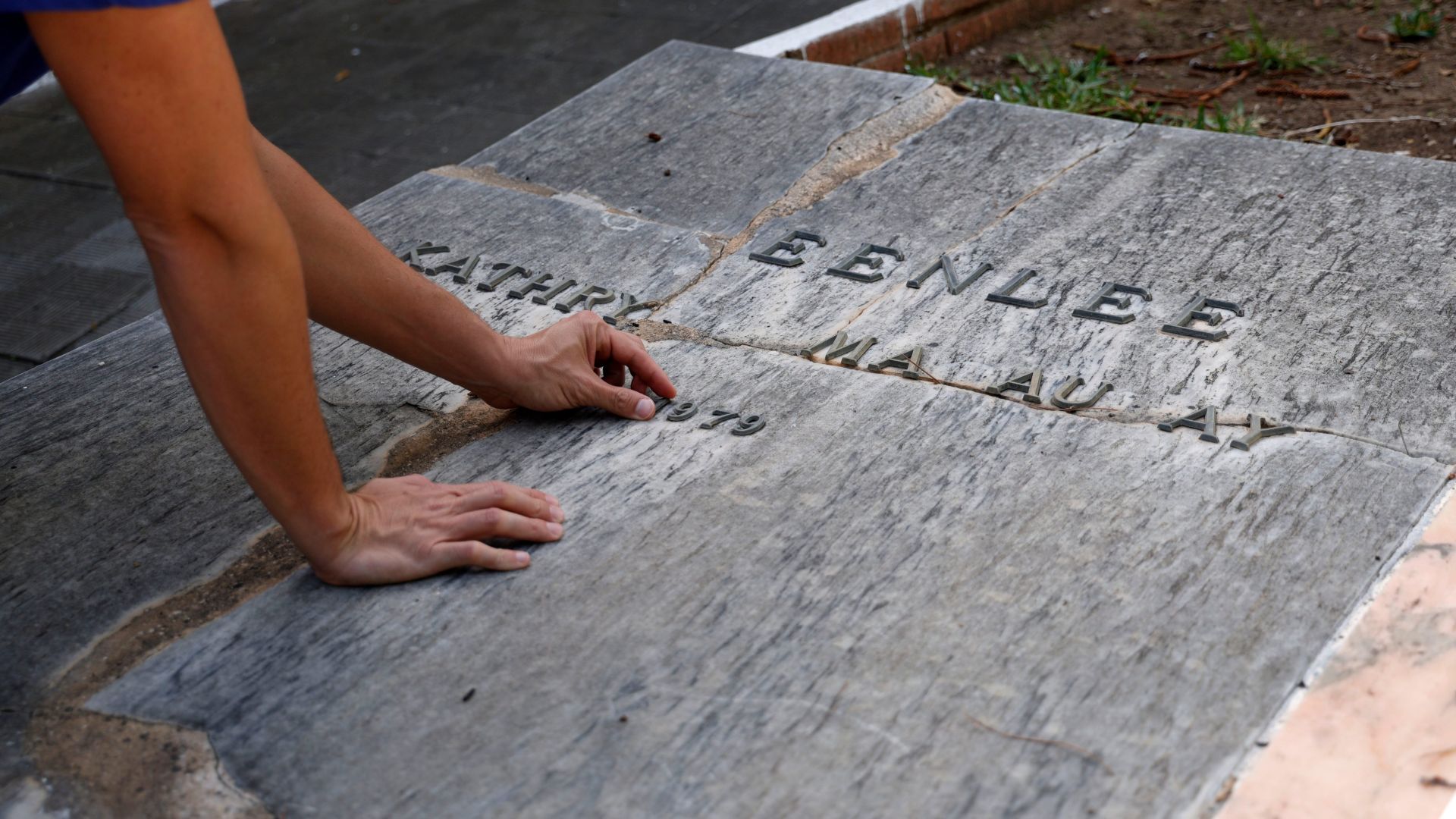
Kathryn Greenlee, erotic novelist
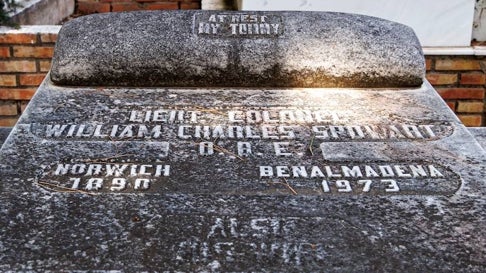
William Charles Spowart, lieutenant colonel
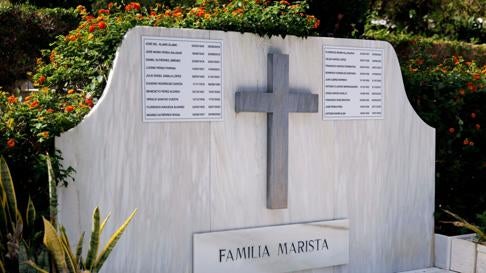
Marist family
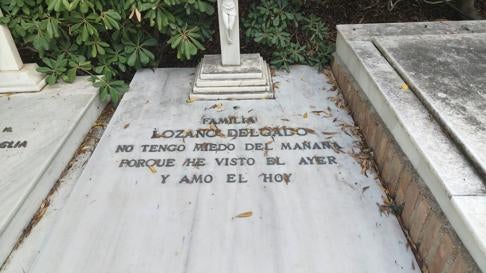
Lozano Delgado family
AUX STEP FOR JS
Back on the central boulevard, another writer awaits us, although her grave is notable only for its state of disrepair and the lack of any inscription identifying its occupant. Despite this, cemetery records state that she was Kathryn Greenlee (1918-1979), an American of British origin. That was her married name, but, as the playwright and researcher Carlos Zamarriego explains, her real name was Kathryn Macaulay Owen.
Although if one had to choose an identity, it would be better to remember Margot Bland, the pseudonym under which she wrote her popular erotic novels in the 1950s and 1960s. Sales followed her just as closely as scandal; she even ended up on trial and was convicted following the publication of Julia (1953), which was censored and branded as obscene. The author took refuge at Rancho Domingo, very close to this cemetery, from where she continued to write, provoke and enjoy herself.
Along the route, one comes across surnames with a business pedigree, such as the spirituous Bacardi and the motor-racing Guarnieri, as well as the largest grave in the cemetery, that of the Marist educational congregation
In this section on writers, we must also mention the Londoner Allen Carr, a heavy smoker who wrote one of the best-selling self-help books in history: It’s Easy to Stop Smoking If You Know How (1985). The irony is that he is buried in Benalmádena after dying in 2006 of… lung cancer. For before he became a guru who knew it all, he was a heavy smoker who wrote, from personal experience, his famous guide to overcoming addiction. Not death, though.
World war hero
If we continue downhill, the path leads us to another gravestone inscribed in English, but this time that of a World War II hero, William Charles Spowart (1890–1973), whose gravestone- darkened by the passage of time and shaped like a bed with a pillow - still reveals that this is a soldier, a lieutenant-colonel to be precise, with the letters OBE after his name. This army officer was awarded the Order of the British Empire in 1944 for his service in Sicily during the Allied campaign in Italy.
‘I’m not afraid of tomorrow because I’ve seen yesterday and I love today’
Epitaph of the Lozano Delgado family
As one descends towards the lower part of the necropolis, the gravestones become increasingly monumental and Baroque in style. Surnames associated with business dynasties begin to appear, such as the spirituous Bacardi and the motor-racing Guarnieri, while we also come across the largest grave in this cemetery, that of the Marist educational congregation, which, divided into two adjacent areas, occupies as many as seven plots where around a hundred brothers from the institution are buried; Arroyo de la Miel is, in fact, where the home for retired members of the order for its Mediterranean Province is located.
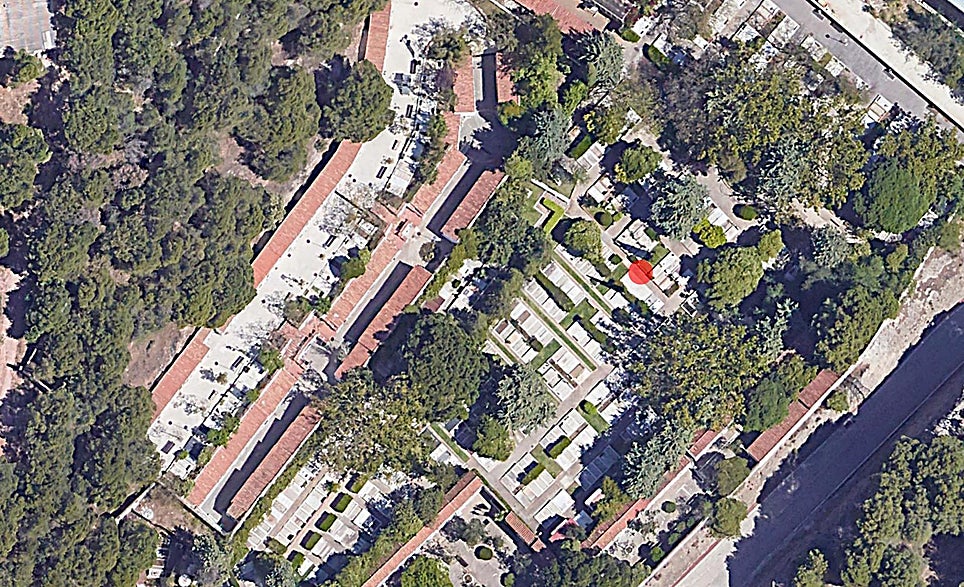
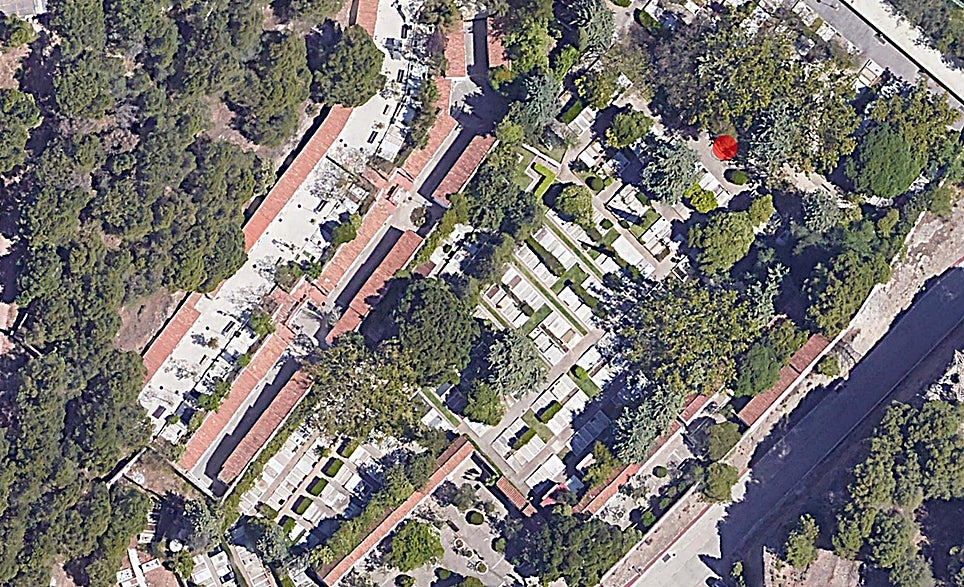
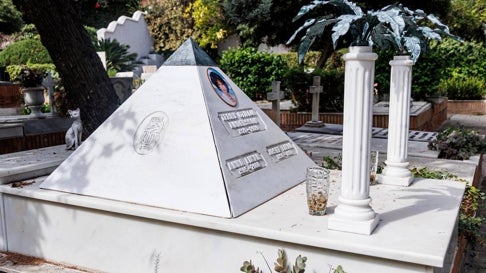
Terry Otilija Andersson
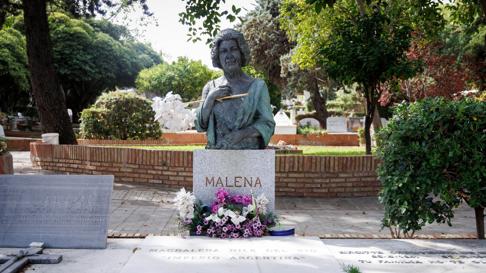
Imperio Argentina, actress and singer
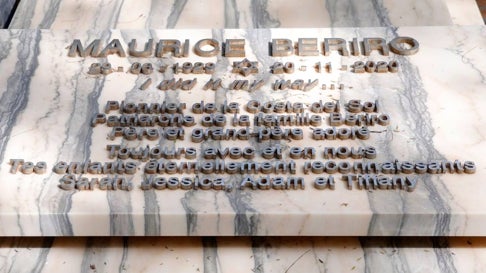
Maurice Beriro
AUX STEP FOR JS
As you continue down the slope, it is impossible not to notice the pyramid that crowns the tomb of Terry Otilija Andersson (1926-2020), with her smiling photograph at the apex of the grave, in which her parents are also buried. There are no inscriptions or much information about this pyramid's female pharaoh, but the funerary monument is replete with symbols and kitsch aesthetics: a scarab on one side of the pointed tomb - a symbol of life, resurrection and transformation - as well as a pair of classical Greco-Roman-inspired columns flanking the pyramid and a statue of a cat at the back. Otilija certainly does not go unnoticed; a name which, to round off this geobiography, points to Slovenian origins.
A nearby grave also stands out for its message, albeit with a very different presentation. A plain headstone, covered in small autumn leaves, states that the Lozano Delgado family rests there, followed by one of the most poetic, serene and existentialist epitaphs in the cemetery: "I am not afraid of tomorrow for I have seen yesterday and I love today." A phrase attributed to the American writer, editor and journalist William Allen White, a Pulitzer Prize winner buried many kilometres from here, in Kansas.
The pioneer and the star
As we reach the foot of this charming cemetery, we also come across one of the figures who helped forge the legend of the Costa del Sol, the businessman Maurice Beriro (1919-2020), who is remembered on his headstone in English and French as the ‘patriarch’ and ‘pioneer’ of tourism.
As the founder of the Hotel Tropicana - a true icon of Torremolinos - and of Rancho Domingo in Benalmádena, the entrepreneur was a charismatic and visionary man who not only left a legacy in urban development and many nights of partying, but also an epigraph that sums up his personality: "I did it my way."
The Tropicana was the place to be for a good time in Malaga in the 1960s, so another legendary resident of Benalmádena is sure to have passed through there: Imperio Argentina (1910-2003). A statue bearing the inscription ‘Malena’ - the name by which her friends knew Magdalena Nile del Río - draws the eye towards the most popular mausoleum in the grounds, which commemorates the great film star of the Spanish Republic and the first dictatorship, who stirred passions with films such as Suspiros de España and Nobleza Baturra, and to whom Hitler himself made advances. More than two decades after her death, her grave remains the main attraction for visitors to this cemetery. It is never without flowers.
