
History
The erotic writer who went into hiding in Benalmádena
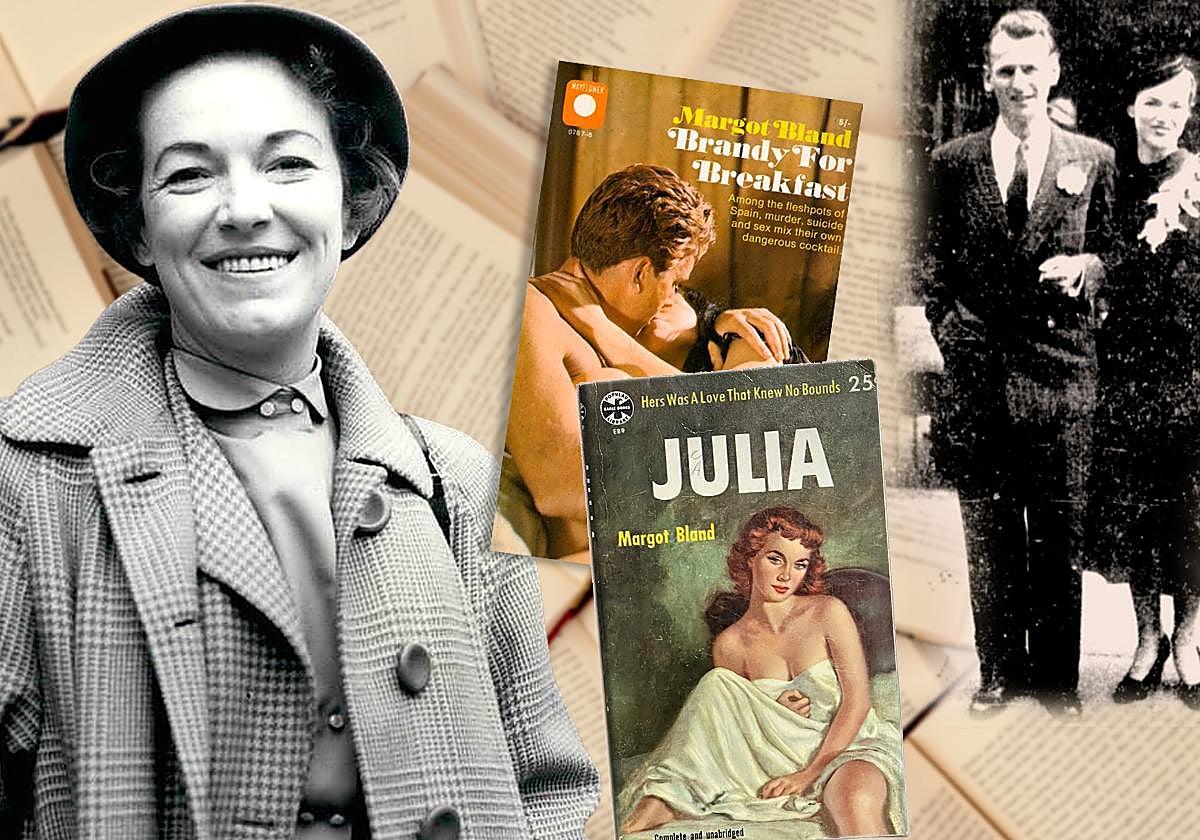
Writing under the pseudonym Margot Bland, Kathryn Greenlee penned novels about sex and desire; she was prosecuted for obscenity and eventually settled on the Costa del Sol

A gravestone weathered by time stands in a corner of Benalmádena International Cemetery. A surname one can guess at: Greenlee. The name is incomplete due ... to the passage of time. There's no 'We will never forget you' or 'Rest in Peace'. Just a single year: 1979. That gravestone is all that remains of a woman who wanted to choose her words carefully and ended up disappearing into a series of surnames.
Let's start with Greenlee, the man who was an American soldier marching through Italy on Christmas Eve 1943 with the Fifth Army, with the aim of liberating Rome from the Nazis. On their way, a group of Germans were toasting and singing at a farm north of San Vittore. “We came to a farm where there were no lights to be seen, but we could hear the sounds of revelry and drunkenness inside. We got as close as we could to see who was there. The house was full of Germans making a racket and clinking glasses while drinking schnapps. We surrounded the house and opened fire.
“The Germans tried to defend themselves, but many were killed or wounded, and others were taken back to the American lines.”
It sounds like a scene straight out of Inglourious Basterds, but it really happened, and the man who recounted it to Army Times magazine was Frank S. Greenlee, the lieutenant in command of a 15-man patrol that had infiltrated the German lines. Time magazine also reported on this feat (“killing many”), ironically titling the article Silent Night.
Greenlee continued to inflict casualties on the enemy until he reached Rome. “First Lieutenant Frank Greenlee, from Nashville, Tennessee, led his platoon of the 3rd Recon Troop into Rome at 8am on 4 June, in a photo finish with the 88th Recon Troop. By nightfall, the first capital of a Nazi nation had fallen,” reported the magazine Stars & Stripes.
Thirty years later, on the road leading up to the village of Benalmádena, Juan Carlos Martínez de la Ossa couldn't take his eyes off the painting that hung above the entrance to 'La Casa del Porche'. “It had a marble staircase like you see in American houses, the sort you could climb from two sides. And right at the top there was a portrait, life-size, of him in full uniform. With his pistol, his medals and everything.” Greenlee, proud of his military past, donated his entire military legacy to the Tennessee State Library Archives, in the southern state where he was born in 1913.
.

Martínez de la Ossa's father, owner of the popular Benalmádena restaurant La Rueda - which would later become Casa Fidel - would settle him into the back seat of his R12, hand him his lunch so it wouldn't spill, and would drive him to 'La Casa del Porche', in the exclusive Rancho Domingo housing estate - the very same one where Alain Delon spent a summer and where another Second World War veteran, General Hendrik Johan Kruls, had his second home.
“As [the Greenlees] had no family, my father and mother - let's say - looked after them. They had a stunning living room with a piano at the far end. And I, being a child, whenever I went there with my father, would start banging away at the keys. And my father would call down from upstairs and tell me off. 'Boy, boy!'”
The presence of a piano already hints at a more artistic sensibility in this house, that of the writer Kathryn Macaulay Owen. Born in Detroit in 1918 but of English descent on her father's side, she grew up as a young woman of London high society. There, in 1937, she married John Dyson-Taylor, the first surname she would adopt and under which she would publish her first novel, Festered Lillies (1950). She would frequently travel with him to Austria to go skiing, as reported by the society weekly The Bystander.
But don't look for her under that name. Under the pseudonym Margot Bland, she led a double life as a writer of erotic novels, causing quite a scandal in 1953 with Julia, in which she recounted the relationship between an American soldier and an Englishwoman while on holiday in... Austria. Based on a true story?
“We started off by going to Kitzbühel in the Austrian Tyrol to ski for a couple of weeks. Neither of us knew how to ski, but I was mad about it and Sally had seen so many photos of people doing it in the society pages that she was determined to learn even if it killed her,” reads the first chapter. Julia was reported for obscenity, which boosted its sales and earned its author a place on the prestigious list of censored authors of the 20th century. The publishers pleaded guilty and she was fined. Her defiant photo as she left the court was published in newspapers across the English-speaking world. Incidentally, John Dyson-Taylor died in 1987 and, guess where he's buried: in Kitzbühel, Tyrol, Austria.
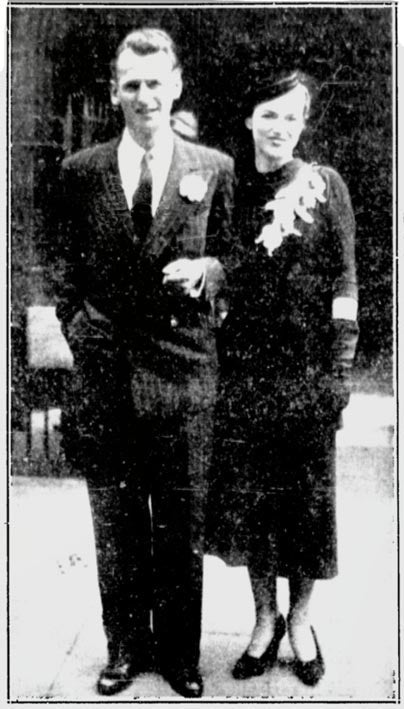
Most importantly: the soldier and the writer left their past behind and married in 1955. War and passion found a refuge in Benalmádena - perhaps an exile where they could leave the scandal behind, where they could live and die. The paradox is that they did so in Franco's Spain, given that he had fought against fascism and she against censorship.
Kathryn adopted the surname Greenlee but continued to write as Margot Bland. She continued to choose her words carefully: she named her villa 'La Casa del Porche' as a tribute to Porch House, a house built in 1550 where they had lived and which is a listed building in the English town of East Grinstead. In short, her literature continued to draw inspiration from her own life.
In 1964, she published Business and Desire, “a gripping novel of love and sex” set in Malaga. “An American mining engineer, Joe Farrar, is waiting in southern Spain for his fiancée, but his girlfriend, Helen, has kept postponing their meeting because of her work for an American magazine. He falls in love with a beautiful Spanish woman and embarks on a passionate relationship from which there is no turning back,” the synopsis reads, adding, “a truly gripping novel, full of highly perceptive observations on the effect of sexual compulsion on human behaviour.” On the first page, it feels the need to state that “any resemblance or apparent connection between the characters and real people, living or dead, is purely coincidental”.
In 1964, she published Business and Desire, “a gripping novel of love and sex” set in Malaga
In 1966, she published Brandy for Breakfast, in which she returns to settings she knows well: “It tells of a community of exiles in Spain, immersed in a sybaritic lifestyle in which the frantic pursuit of pleasure turns into a kind of latent despair.”
In the 1960s, the Rancho Domingo residential estate, developed by the Beriro brothers and designed by architect Robert Mosher, was a luxury development inhabited by well-off foreigners seeking equal measures of comfort and privacy. Two villas further on, the Greenlees had as neighbours another writer, Dale Wasserman, and his wife, the actress Ramsay Ames. And nearby lived Bud Ornstein, a film producer at United Artists, with his wife Gwynne, the niece of silent film star Mary Pickford.
Do Kathryn Greenlee's stories offer a perspective on the Costa del Sol's golden age that we are missing? One of passion and disillusionment? Margot Bland's last novel was Madame of Marrakesh (1968). And after that, silence.
“They used to come to my parents' restaurant a lot; they had two white Mini Coopers, with twin carburettors and high-capacity engines,” Martínez de la Ossa recalls wistfully, “when they'd had a bit too much to drink, my father would take his car and drive them home. And then they'd ring and say: 'Miguel, can you bring us something to eat?'”
Empty plot
On 15 February 1986, Frank S. Greenlee, the soldier who survived the war, died in Malaga, and 'El Porche' was completely demolished. Like a broken slab, that plot of land has remained empty until this year, while property booms have sprung up all around it. Years earlier, on 7 May 1979, Kathryn Greenlee died, and her name - one of her names - is fading away as if her books had been written in the sand.
![[]](http://static.vocstatic.com/voc26/latest/assets/images/favicon/surinenglish/apple-touch-icon-57x57.png)