
Bathing is still prohibited in Guadalmar and Los Alamos due to faecal bacteria
Analyses rule out the possibility of other beaches being affected and Emasa is working on a solution for the large collector pipe destroyed during the droughts
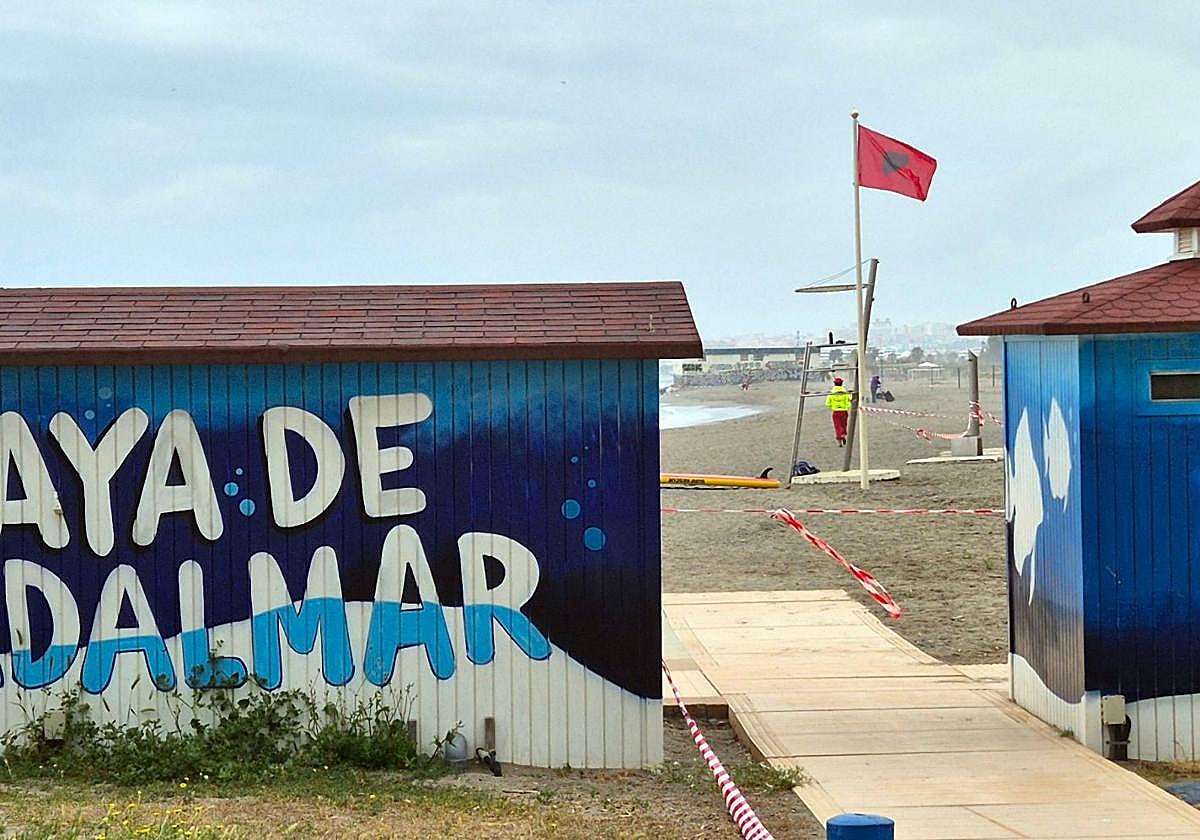

The bathing season does not start until 1 June. However, the Regional Ministry of Health carries out periodic analyses outside this date, which have been ... used to detect concentrations of faecal bacteria that advise against going into the sea on the beaches of Arraijanal (in Guadalmar, next to the golf course) and Los Álamos. The follow-up analyses, in coordination with the town councils of Málaga and Torremolinos, rule out, for the moment, that this contamination has reached other parts of the coastline, according to what regional sources have confirmed to SUR. The source of the problem is well known: the breakage of a large collector that crossed over the Guadalhorce river during the red alert for rain at the end of last year.
Provisional and definitive works
The solution to this problem depends on works being carried out by Emasa, the Malaga city water company, which are of two types. The first, provisional, depends on work which is expected to be completed next week. It is understood that, from then on, the concentration will gradually disappear. The second, long-term project was awarded a few days ago and will be completed in August. In the meantime, the red flags, signs and seals are still on the beach, where the guards are also keeping a watchful eye to ensure that no one goes swimming.
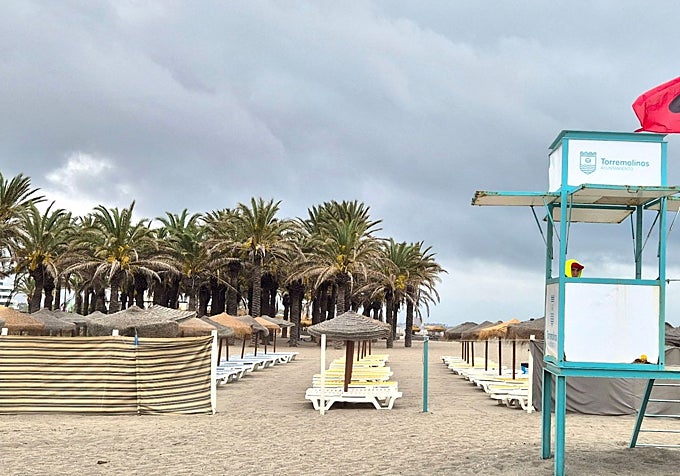
Bathing has been banned on the Malaga beach since the end of December. In Torremolinos, the incident was detected in the last week of April.
The breakage
"The sewage from the districts of Churriana, Finca Monsálvez and Guadalmar, as well as the waste water from the municipality of Torremolinos, is conveyed to the Guadalhorce WWTP by means of two 1 000 millimetre diameter discharge pipes from the Guadalmar pumping station (EBAR) to the Guadalhorce WWTP. These pipes cross the Guadalhorce river on a 68-metre-long reinforced concrete structure. The rains of 27 and 28 December 2025 caused a significant rise in the Guadalhorce river, which reached record levels since records began to be kept. As a result of this flood, one of the piles of the structure was affected, which gave way, causing the two pipes resting on it to fall," according to the specifications that served as the basis for the tendering process for the work, which will be completed in the summer.
Bathing has been banned on the beach in Malaga since the end of December. In Torremolinos, since the last week of April.
"This situation has meant that waste water is currently being discharged into the sea through the sewage pipes from the Guadalmar pumping stations. Emasa is making every effort to recover the sewerage, provisionally, through the use of a 500 millimetre diameter pipe for reclaimed water from the WWTP to the entire western area, which is currently under construction," he added.
Sanitation in the area around Guadalmar and the mouth of the Guadalhorce is the victim of a 'perfect storm' in which several factors converge. In addition to the obsoleteness of the installations, there is the regression of the coast due to the rise in sea level and the effects of the river floods in the last red alert episodes. The Guadalmar pumping station itself had to be protected with breakwaters years ago due to rising sea levels.
![[]](http://static.vocstatic.com/voc26/latest/assets/images/favicon/surinenglish/apple-touch-icon-57x57.png)