
Tourism
Costa del Sol beach bar owners warn of fall in tourist spending
The employers' organisation says that prices have risen by 25% since the pandemic, but turnover remains at the same level as six years ago, which indicates a fall in sales

Málaga
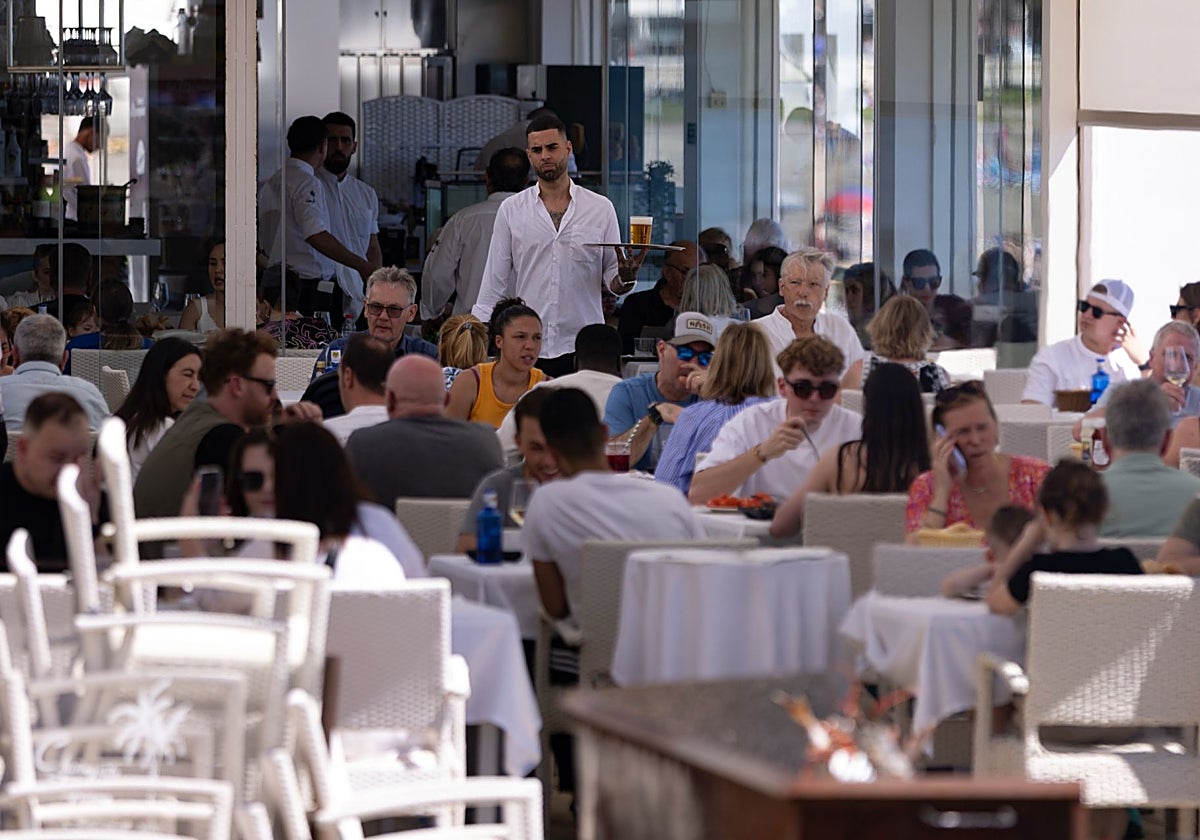
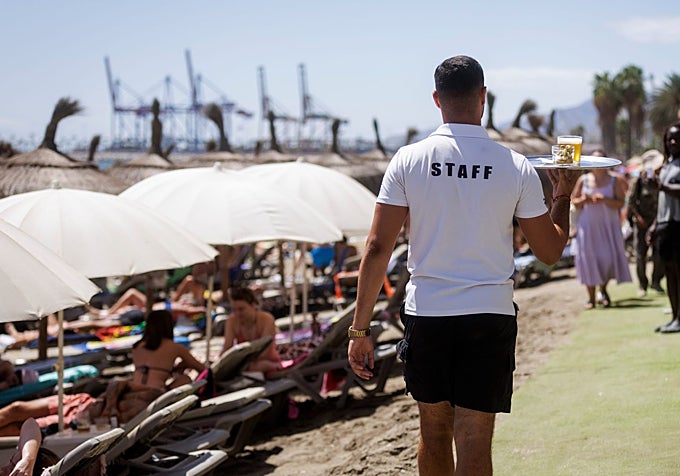
Costa del Sol beach bars have no shortage of customers. Hotels and holiday flats are operating at high occupancy rates and this, in turn, has ... an impact on the catering sector. Business owners are reporting a noticeable upturn in the number of Spanish tourists.
The rising cost of groceries, fuel and energy, however, is impacting people's spending power, which is then impacting the earnings of the hospitality sector.
"This is the first summer in which we've noticed a cut in tourists' spending," head of the association of beach business owners in Andalucía Manuel Villafaina says.

"From 2020 to the present day, the cost of living has risen by around 57%. We have passed on part of this increase, around 25%, to our prices, and yet, we're taking in the same earnings as we did six years ago. In other words, we're selling 25% less," he explains.
According to Villafaina, Spaniards are the most careful spenders. Ironically, they used to be the ones known for splashing out while on holiday.
Villafaina confirms that there is more domestic tourism than in recent summers, but tourists no longer order dish after dish. They order sparingly as they finish their previous dishes. If half-portions are available, they opt for those because the quantity is very similar to a full portion, but the price is lower.
Many beach bars along the coast have chosen to remove the half-portion option from their menus this summer. In addition, nobody decides to leave anything on their plate. They ask to take it home. Business owners appreciate this, "because the less food waste, the better".
Another change Villafaina has noticed is the growing trend of not ordering one dish per person but sharing portions. "Whereas they used to order three, they're now happy with two," he says.
While a couple of summers ago the average bill was between 30 and 35 euros, it now ranges from 20 to 25 euros. "People are ordering just enough and this is more noticeable among Spanish tourists than among foreign visitors," he states.
That said, people have very different spending habits. While Spanish tourists mainly go to beach bars to eat, international tourists spend more on drinks than on food, as they usually come on a full-board basis and make the most of the buffets at their respective hotels.
"Spaniards used to be big spenders on holiday, but the state of household finances is what it is. Not only are they cutting back on lunch or dinner, but they're also shortening their stays. Whereas they used to come for a fortnight, now they stay for ten days and are constantly watching their spend," Villafaina says.
'Chiringuito' (beach bar) customers confirms that "things aren't exactly booming" and that you have to plan very carefully to go on holiday so as not to go over budget.
Alberto Casado, his wife and children are tucking into a couple of skewers and a portion of anchovies. They have travelled from the Basque Country and are regular visitors to the Costa del Sol, although they admit they haven't been to the Malaga coast for a couple of years. "Prices have gone up a lot, from accommodation to eating out."
In Torremolinos, four friends are discussing how they need to choose their menu carefully so as "not to go overboard". "Holidays are starting to feel like a luxury, especially for those of us who work in Madrid, are from León and have to share a flat because our wages are barely enough to cover that."
Villafaina confirms that skewers are a staple dish, firstly because they are an icon of Malaga's cuisine and, secondly, because of their price, as are paellas. The average price of these portions ranges from eight to ten euros and from 12 to 18, respectively.
But he says diners also expect to find fish and seafood such as squid and coquinas (small clams) on the menu. "They are very expensive at the fish market, but you have to buy them even though you know you will lose money because you cannot pass the full cost on to the customer," he says.
He also acknowledges that menu prices have risen. "This year, prices have gone up by an average of 7%. Now that fuel prices have risen again, pushing up the cost of all our supplies, we won't be able to pass that increase on to customers either," Villafaina says.
Looking back over the year so far, Villafaina says May and June performed "very well". July got off to a poor start but recovered and ended with strong figures. August has followed a similar pattern.
"The days when July and August were the star months are coming to an end. The season keeps getting longer and the period before the main summer season, as well as September to November, is becoming increasingly important. Overall, this year has been very steady," Villafaina says from his chiringuito in Torremolinos.
His is one of 484 beach bars spread along the Malaga coastline. Together, they generate an average of more than 20,000 jobs, rising to around 50,000 across the province as a whole.
Figures from Spain's national institute of statistics (INE) confirm the strong start to the year. During the first six months of 2026, before the busiest period of July and August, these establishments recorded their best figures ever. For the first time, they exceeded ten million overnight stays, reaching 10.3 million between January and June after a 4.2% increase, driven mainly by the recovery of the domestic market.
Data records 2,246,021 overnight stays by Spanish tourists, 6.7% more than during the first six months of the record-breaking 2025.
The difficulties in finding staff, however, remain unchanged. "We are still facing the same problems, which we partly solve by taking on students who want to earn some money over the summer. They have no experience at all, but they learn quickly and are very polite and attentive with customers," he says.
The most expensive holidays
Tourists face the most expensive holidays yet this summer. Fuel prices alone provide a clear example. In August, standard diesel, still the most widely used fuel overall, reached 1.81 euros a litre at petrol stations across the province as holidaymakers took to the roads. Meanwhile, 95-octane petrol stood at 1.71 euros a litre.
The worst was still to come. From 1 August, motorists had to add another six cents to those prices after the government ended the reduction in the special tax on hydrocarbons (IEH). The tax had reduced fuel prices by 15 cents a litre in July, before the reduction fell to ten cents in August.
Accommodation costs have also continued to rise. According to a Turismo Costa del Sol report, hotels in the Costa del Sol rank as the second most expensive on Spain's coastline.
The latest Costa del Sol price barometer, covering June, puts the average cost of a hotel night across Malaga province at 214 euros, almost 6% higher than in the same month of 2025. Only the Balearic Islands cost more, with an average nightly rate of 247 euros. Prices there rose even faster, increasing by 7.8%.
The report breaks down average prices for three-, four- and five-star hotels in both destinations. At the top end of the market, the Costa del Sol actually has the highest prices, overtaking the Balearic Islands. A night in a five-star hotel on the Costa del Sol costs an average of 506 euros, compared with 483 in the islands.
Malaga province ranks second for the other hotel categories, while the Balearic Islands remain the most expensive destination overall. A four-star hotel in Malaga costs an average of 212 euros a night, while a three-star stay costs 146. Three-star hotels recorded the largest price increase, at 4.5%, while four- and five-star rates rose by around 3.5%.
Despite the higher prices, tourists are giving the destination increasingly positive ratings for their overall experience.
![[]](http://static.vocstatic.com/voc26/latest/assets/images/favicon/surinenglish/apple-touch-icon-57x57.png)