
Diesel now costs two euros a litre, making holidays in Malaga more expensive
The last time fuel prices reached these levels was during the Russian invasion of Ukraine in 2022, and there is still a great deal of uncertainty about how the situation will develop

Málaga
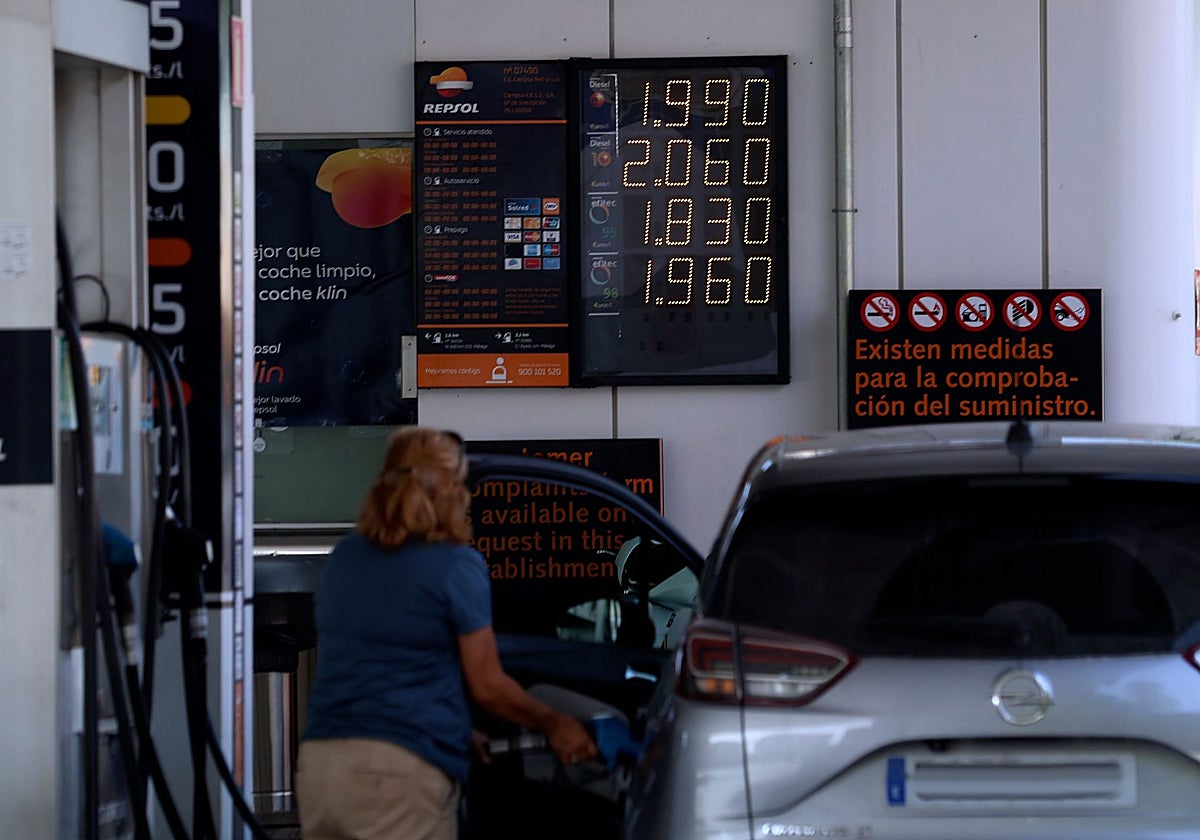
The price of diesel (which is still the most common type of vehicle fuelin Malaga) reached the psychological threshold of two euros per litre in ... the province this weekend. This has substantially increased the cost of holidays for the thousands of Malaga residents and visitors who use this mode of transport to travel to their holiday destinations.
There is no need to look very far back to find a comparable point in time, as the last time fuel prices reached such levels was relatively recent. Specifically, it was in June 2022, when Russia's invasion of Ukraine triggered an energy crisis similar to the one we are experiencing today. This was despite the fact that the Government had introduced a state subsidy of 20 cents per litre on fuel.
The rise continued over the following weeks, reaching record highs of around 2.10 euros at the start of summer. Subsequently, the markets stabilised and the average price has remained at around 1.5 euros at most petrol stations.
Now, the war in Iran, along with other factors, has once again pushed premium-grade fuel back ahead at many filling stations across the province. The ministry for ecological transition’s geoportal provides a wealth of information on what has happened in the last few hours. In fact, the good news is that, although this maximum price is already being charged (or is close to it) at numerous petrol stations throughout the city of Malaga and the rest of the province, it is not yet the norm.
In fact, growing competition from so-called ‘low-cost’ or unstaffed petrol stations means that, as of Tuesday 4 August, the average price across the province stood at 1.89 euros. Since 31 July, when some of the government’s subsidies were withdrawn, the average increase has been five cents per litre.
Malaga has the highest fuel prices
Malaga city is the municipality with the highest fuel prices: on Tuesday, diesel was selling for an average of 1.96 euros, although at many petrol stations the price was 1.99. The situation is similar in Marbella, while the opposite is true further inland, in regions such as the Guadalhorce valley, where prices are still hovering around 1.74.
1,77
euros per litre of petrol
Those who need to fill up with petrol will find it less of a strain on their wallets these days. The geoportal reports that petrol was priced at an average of 1.77 euros per litre across the province on Monday, having risen by four cents since last Friday
On the other hand, those who need to fill up with petrol will find it less of a strain on their wallets these days. The geoportal reports that petrol was selling at an average of 1.77 euros per litre across the province on Tuesday, having risen by five cents since last Friday.
Why has it risen so much? On the one hand, as is well known, the war in Iran shows no sign of abating, and this is keeping the price per barrel very high. But this has been the case almost since the start of the conflict. The reason it has skyrocketed right now is that, on 31 July, part of the reduction in the special tax on hydrocarbons ceased to apply; this reduction had lowered the price by 15 cents per litre in July, and has now been reduced to ten cents in August.
Although the Spanish confederation of service station operators (CEEES) had estimated a rise of up to six cents for this reason (the loss of a five-cent discount, plus the corresponding VAT), the truth is that the increase has ultimately been somewhat lower, at least for the time being, according to the information available on the Miteco geoportal. Furthermore, the other key measure in the government’s anti-crisis plan – the reduction in VAT on fuel from 21 per cent to ten per cent – had already been phased out at the beginning of July.
The outlook is currently uncertain, as we await, on the one hand, developments in the oil markets in the wake of the war in the Gulf; and, on the other, any measures the Government might take to try to alleviate the situation facing households.
![[]](http://static.vocstatic.com/voc26/latest/assets/images/favicon/surinenglish/apple-touch-icon-57x57.png)