
South of Vélez-Málaga
Vélez-Málaga unanimously approves a 15 per cent cut in politicians’ salaries to improve street cleaning services
The council and the opposition have agreed in the plenary session to allocate more than 400,000 euros a year to machinery and new street-cleaning services following an increase in complaints from local residents
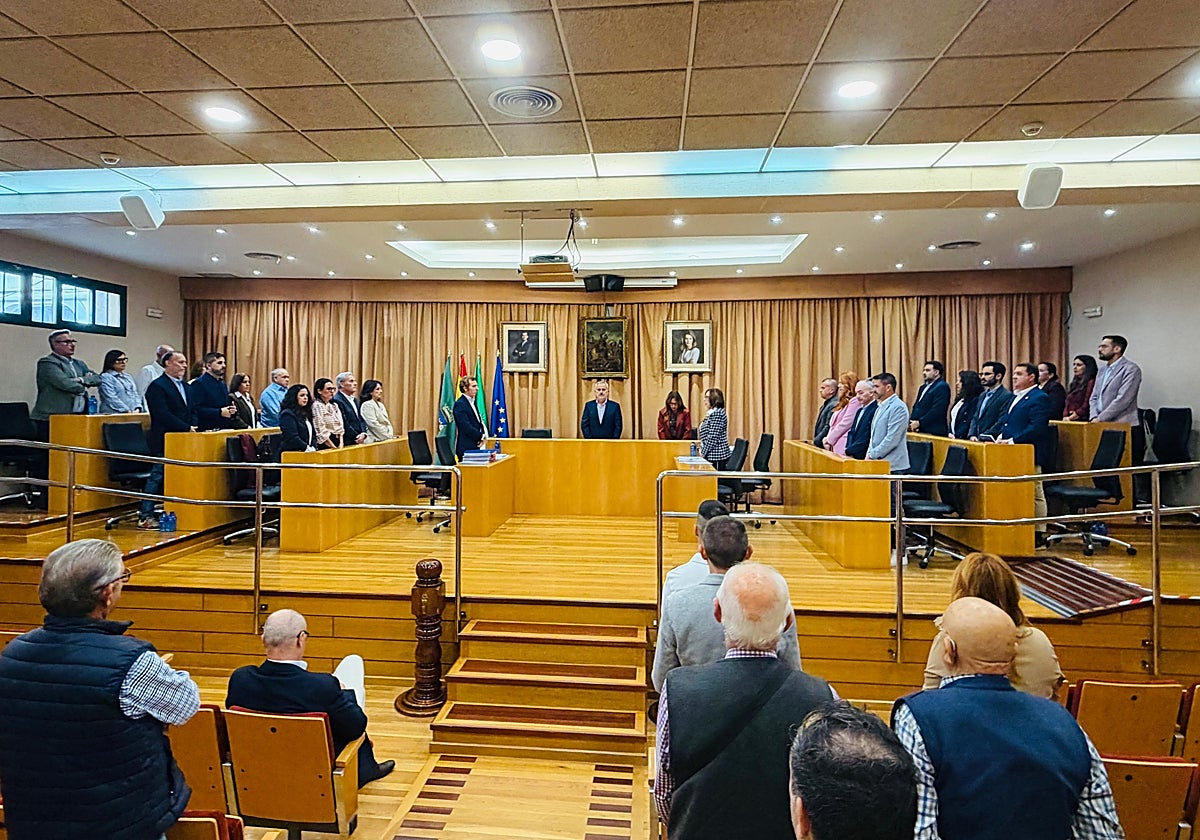

On Tuesday, Vélez-Málaga council unanimously approved a reduction of around 15 per cent in the salaries of councillors from both the ruling coalition and ... the opposition, as well as temporary staff, with the aim of saving more than 400,000 euros a year, which will be allocated entirely to improving street cleaning services.
The measure, put forward by the new mayor, Jesús María Claros (PP), via an urgent motion, was passed at the full council session for October, which had been postponed due to the period of national mourning following the train accident in Toledo.
The measure was approved unanimously, with the backing of the bipartisan coalition government – comprising the PP and GIPMTM – and the opposition, consisting of Andalucía por Sí, the PSOE, Vox and the independent councillor, Elías García.
This is one of the first resolutions adopted by the council following the change of mayor, after the resignation of Jesús Lupiáñez due to the political crisis triggered by the new rubbish collection charge.
The cut will affect full-time councillors, both from the bipartisan PP and GIPMTM administration and from the opposition groups, as well as the allowances for temporary staff. It also provides for a reduction in the maximum amounts received by councillors who are not recognised as working on a full-time or part-time basis for attending plenary sessions, committees and other collegiate bodies.
“The reduction will apply to everyone - to the administration and to the opposition - because we are all part of this same council,” said Claros during the press conference he held early on Tuesday morning, prior to the plenary session. The council has not yet provided a detailed breakdown of the new remuneration packages or the savings corresponding to each item.
The initiative also includes the mayor’s own decision to waive any remuneration from the council for holding office, as well as any sums to which he might be entitled for attending municipal meetings.
“And I’m going to start with myself,” said Claros, who was keen to emphasise that he did not intend to present his decision as an exceptional measure. “I don’t want to present this as a personal sacrifice, nor do I intend to lecture anyone. It’s a decision I’ve taken because I believe it’s the right thing to do at this time,” he said.
The councillor had already resigned in July from the full-time position he held at the town hall upon taking up his post as a provincial councillor, with a gross annual salary of 80,759.07 euros, and will therefore no longer receive any municipal attendance allowances.
He has also announced his intention to formally resign from the corresponding emoluments at the association of municipalities of the Costa del Sol-Axarquía and Axaragua. In September 2024 the bipartisan government approved a 25 per cent increase in the council’s salaries, with a 17 per cent increase in the mayor’s salary and a 30 per cent rise for full-time councillors.
Claros has waived his municipal remuneration and plans to allocate more than 400,000 euros to purchasing machinery and expanding the street-cleaning service
The local government’s stated aim is for the savings on salaries to be channelled directly into street cleaning services, through the introduction of new street-washing operations, the purchase of machinery and greater mechanisation of maintenance work on streets and in public spaces.
“We will save over 400,000 euros that we would otherwise have spent on political salaries, and we will invest this directly in keeping our streets clean. This is the real aim of this measure,” explained Claros. The mayor acknowledged that poor street cleaning is one of the most frequent complaints he receives from residents, although he refrained from promising immediate results.
“I’m not going to say that this measure will suddenly solve all the cleaning problems we have in the municipality. That would be misleading the public and deceiving ourselves,” he said.
The approval of the motion does not, however, mean that the more than 400,000 euros are already available to contract new services or purchase equipment.
This is an estimated annual saving, which will need to be finalised once the cuts have been implemented and processed through the relevant budgetary and administrative procedures.
During the plenary debate, the opposition asked whether the proposal already had the required and binding technical reports, and the secretary clarified that these had not yet been produced, as the vote was to be taken as a matter of urgency.
The mayor has put the expected savings at between 12 and 18 per cent of political expenditure. The measure comes, moreover, just a week after Claros took office as mayor on 28 October, replacing Jesús Lupiáñez, who resigned from the post on the 14th following neighbourhood protests against the new rubbish collection charge.
The new mayor has presented the reduction in political expenditure as one of his first decisions, under the premise of "spending less on ourselves, so that we can invest more in the services our residents need".
Over 2.7 million to prevent water costs from being passed on
The reduction in politicians’ salaries was not the only financial agreement reached during a meeting in which the council also gave the go-ahead to use part of the cash surplus to meet outstanding obligations.
According to figures released by the municipal government, the final accounts for the 2025 budget showed a surplus of 9.134,143.09 euros, of which 2.709,324.72 euros will be allocated to cover costs related to the water supply. Of this amount, 1.876,013.69 euros relates to CPI-linked adjustments to drinking water and sanitation service charges that had not been applied in previous financial years.
The remaining 833,311.03 euros will cover the cost of water supplied from Malaga during the drought. The local council maintains that covering these costs using municipal funds will prevent them from being passed on to residents’ bills.
In the same financial section, the full council has agreed to allocate three million euros to the early repayment of municipal loans, a move which the council estimates will save it 526,632.15 euros in interest payments. In addition, a contribution of 1.805,590.61 euros to the Vélez-Málaga municipal services, housing, infrastructure and development company (Emvipsa) has been approved.
The council has also dealt with the municipal economic and financial plan as a matter of urgency; its approval will enable progress to be made on the processing of a 5.6 million euro loan for investment purposes. The combination of debt repayment and new financing forms part of the economic decisions taken, although their definitive effects will depend on the implementation of the planned operations.
Another of the initiatives approved concerns the historic centre of Vélez-Málaga, where the town hall intends to set aside some 1,100 square metres of land in the vicinity of Calle Pescadería Vieja to facilitate future social housing developments.
The full council has given its final approval to the proposal to demarcate the reserved area, with the aim of incorporating the land into the municipal assets and providing spaces specifically for young people and families who struggle to access affordable housing.
The project is still at an early planning stage, so this does not signify the start of construction work or the approval of a specific development. The municipal plan also provides for the possibility of temporarily converting this land into a public car park while the necessary procedures are being carried out.
The future permanent exhibition centre in Vélez-Málaga has also returned to the debate. The council has approved a motion tabled by Vox, with amendments from the PP, GIPMTM and Andalucía Por Sí, to move forward with the creation of this facility. In contrast to the location initially proposed by Vox near the wholesale market, the local council has defended its proposal to develop the project in the northern part of the town, near Santo Chiquito, on a site covering approximately 36,000 square metres.
The council has pointed out that the current budget already includes 780,000 euros to proceed with the acquisition of land, although the agreement does not mean that the plots have been purchased or that there is a fixed construction timetable. Support has also been given to another initiative by Vox to study improvements to accessibility and the regeneration of the historic centre, where the council said it is working with the CIEDES foundation.
The full council has allocated 2.7 million to water costs and a further 3 million to debt repayment; it also addressed social housing and the exhibition grounds
The meeting, which began with a minute’s silence in memory of the recently deceased local councillor Ana Graciano, included other resolutions relating to safety, transport and public services. These included a budget allocation of 263,000 euros for additional Local Police services, as well as a motion to renew the pedestrian crossing markings located near schools. On the political front, a proposal by the PSOE to improve public transport was partially successful, as the point relating to the integration of urban bus routes into the Malaga metropolitan transport consortium was rejected.
The local council has defended the 36 new routes recently introduced - 14 in Vélez-Málaga and 22 in Torre del Mar - as well as new connections to the capital. However, another socialist motion concerning the indoor swimming pools in Vélez-Málaga and Torre del Mar was not passed. The council thus concluded a session featuring significant economic and town-planning decisions, in which the reduction in politicians’ salaries became the first notable measure of Claros’s new term of office.
The cut in political spending comes at a particularly difficult political time for Vélez-Málaga council, following the crisis triggered by the introduction of the new refuse collection charge, which led to numerous complaints from residents and a mass protest outside the town hall on 7 October. A week later, on 14 October, Jesús Lupiáñez announced his resignation as mayor and his resignation as a councillor, bringing to an end a period of just over three years at the helm of the municipal executive. The PP then appointed Claros as his successor, with the backing of its coalition partner, the GIPMTM. The new mayor has made improving public services and reviewing the controversial waste management by-law among his priorities. “Spending less so that we can invest more in the services our residents need,” he said on Tuesday while explaining the philosophy behind his proposal.
At a press conference prior to the full council session, during the question-and-answer session, Claros also referred to the reorganisation of the executive team approved last Friday. This entailed, among other changes, the departure of Manuel Gutiérrez from the treasury and the appointment of Lourdes Piña to this department, alongside the mayor’s office, administrative procurement and responsibilities relating to the audit office. When asked specifically about the reasons for this change, the mayor defended the need to assign new responsibilities to councillors and to concentrate the coordination of financial and administrative procedures in a single person. “I wanted to restructure the entire governing team, or almost the entire governing team,” he explained, before adding that he intended for the councillors to take on “new responsibilities”.
Claros pointed out that it is not a question of councillors settling into their roles, but rather of driving forward changes in management. The new organisation, with María Josefa Terrón joining the executive and Celestino Rivas heading up infrastructure and water, must now set about delivering on the commitments announced by the mayor. “I’m not going to say that everything will be easy, or that we can solve all the problems in a day, but I do want residents to be clear about one thing: from the very start, we are going to make decisions and tackle the problems,” he concluded.
