
Environment
Torrox town hall investigates complaint over damage to sea lilies on town's beaches
Axarquía-based environment lobby, GENA-Ecologistas en Acción, has compared photographs taken in spring and summer and claims that specimens have disappeared from various parts of the eastern Costa del Sol beach
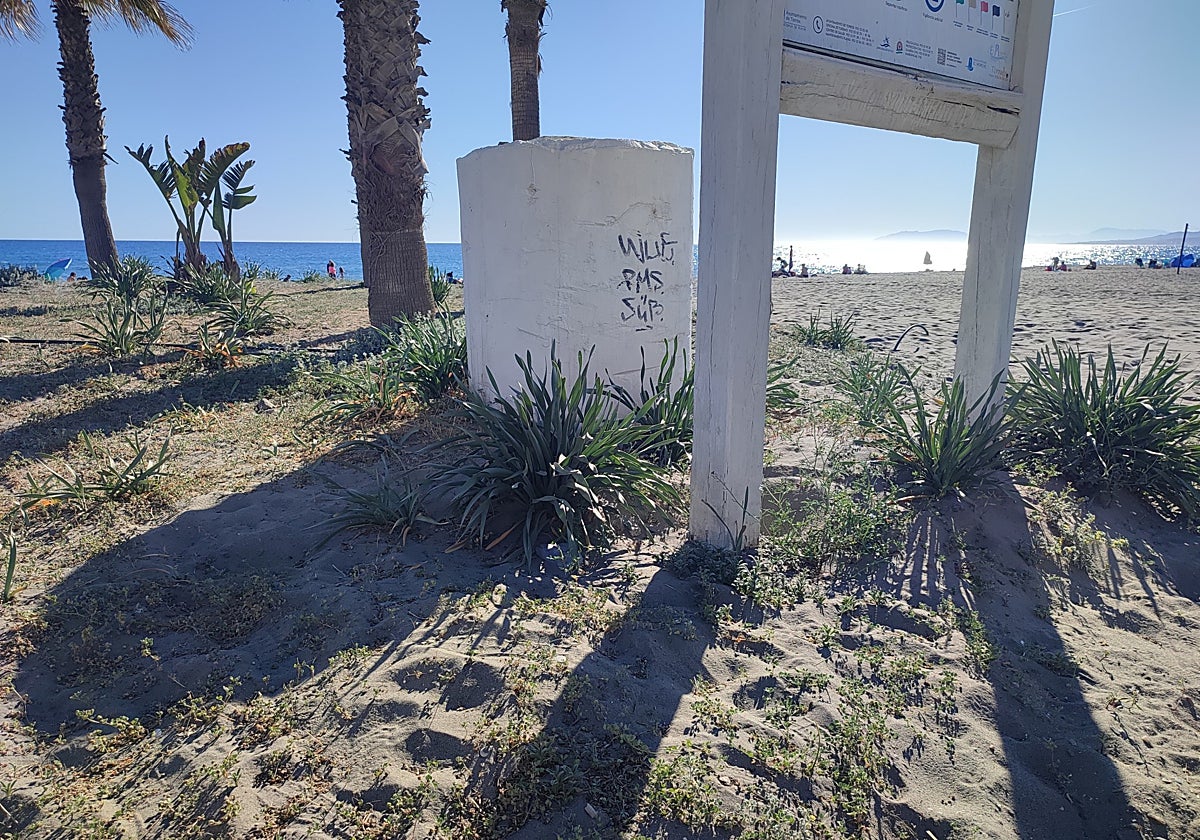

The controversy surrounding the conservation of sea lilies (Pancratium maritimum) in Torrox Costa on the eastern Costa del Sol is back on the agenda after ... the Axarquía-based environmental lobby group GENA-Ecologistas en Acción, reported further instances of plants being uprooted on Las Lindes beach.
The environment group maintains that the problem persists several months after it first raised the alarm about similar incidents during the clean-up operations carried out in the spring. Torrox town hall has said it is continuing to investigate the causes and has thanked the group for its input.
GENA has accompanied its new complaint with a 21-page photographic report comparing the condition of various sites in Las Lindes between April and July. The report notes that, at the end of March, the removal of plants was observed during municipal work near several palm trees and that these incidents were subsequently brought to the attention of the Delegación Provincial de Sostenibilidad (provincial sustainability delegation).
The images now provided by GENA are intended to show that the problem was not confined to that single incident. In one of the side-by-side comparisons, the group shows an area next to the Salvamento facilities which still had plants on 4 April, while in another photograph taken in July it points out the spots where, according to its interpretation, "most of the lilies have been pulled up", adding, "The inadvertent error has been repeated."
GENA has provided photographs and inventories of Las Lindes and maintains that the felling has continued months after its initial complaint
The complaint ties in with the one lodged at the end of March, when the town hall was investigating the removal of these plants during coastal regeneration work. At the time, council sources expressed their "concern" about what had happened and suggested the possibility of an "unintentional error’" pledging to take measures to prevent further incidents. GENA now considers that the events documented over the summer show that the instructions given have not been sufficient.
The group maintains that the problem may be linked to a lack of information among those who work on beach cleaning or carry out activities on the beaches. It therefore calls for the sea lily not to be treated as rubbish or vegetation to be removed, but as part of the sandy ecosystem. The Andalusian regional government classifies this species as "near threatened" (NT) on the Red List of Andalusian Vascular Flora and notes that it typically grows on coastal dunes and sandy areas.
Reporting and signage
The environmental report cites as an example another group of palm trees where, according to GENA, there was a population of more than twenty healthy specimens in the spring. The organisation states that, following the removal of leaves and stems, "the vast majority have been lost" and that those plants which managed to flower during the summer did so in a weakened state. It also claims to have observed similar situations both beneath the palm trees and in the landscaped areas along the promenade.
GENA argues that repeatedly removing the leaves depletes the plant’s reserves and may jeopardise its recovery. “When their leaves are picked, sea lilies can no longer feed themselves,” the group points out and explains that this is a wild species adapted to sandy areas and does not require any specific maintenance. Their main demand is that the plants be identified to prevent them from being damaged during future landscaping work.
To facilitate this conservation work, environmentalists have even drawn up an inventory of the presence of water lilies along Las Lindes, dividing the coastline into five sectors. The maps included in the report pinpoint clusters and isolated specimens in areas near beach bars and hotels on Laguna Beach, the sports area and the vicinity of the Iberostar hotel, among other locations.
The town hall says it is continuing to investigate the causes and thanks the environmentalists for the information they have provided about the beach
The association also proposes moving away from simply raising the alarm towards a public awareness campaign. GENA proposes installing information boards at various points along the promenade and on the beach, explaining the characteristics of the sea lily and recommending its conservation.
The document even includes a mock-up of what such signage might look like, with information about the plant in several languages, and argues that its flowering season could become an additional natural attraction for the Torrox coastline.
Municipal sources consulted by SUR have stated that the town hall is continuing to investigate the causes of the incidents reported and have expressly thanked GENA for its contributions.
The environmental organisation is now calling for measures to be taken to ensure that the incident does not happen again and proposes turning what has so far been a source of controversy into an opportunity for environmental education.
“Sea lilies will be an added attraction for visitors,” says the group, which considers this species to be particularly abundant on the beaches of Torrox.
![[]](http://static.vocstatic.com/voc26/latest/assets/images/favicon/surinenglish/apple-touch-icon-57x57.png)