
Agriculture
Study warns of the challenges facing agriculture in the Axarquía and proposes alternatives to avocados
Researchers warn of the lack of crop diversification and new marketing channels to move towards more sustainable practices
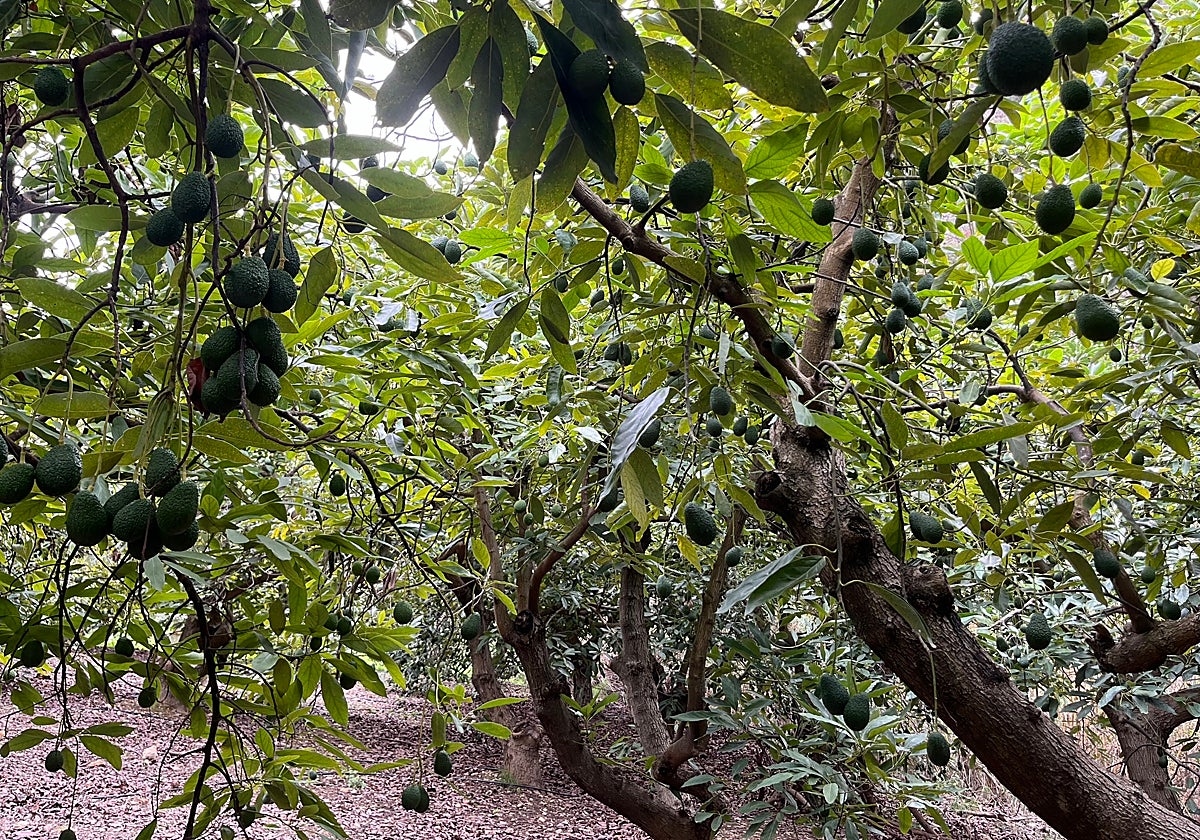

A new scientific study about agriculture in the Axarquía area of Malaga province, which has become heavily focused on subtropical crops such as mangoes and avocados in recent years, warns of a lack of crop diversification and the lack of generational change in the sector.
The study, carried out by researchers linked to the universities of Cordoba and Pablo de Olavide in Seville and published in the Spanish Journal of Agricultural Research analyses the existing agricultural business models in Axarquia and proposes what changes would be necessary to move towards a more environmentally, socially and economically sustainable agricultural system.
The researchers explain that the Axarquía has become a particularly relevant case study for analysing changes in Mediterranean agricultural systems. In recent decades, the area has undergone a profound agricultural transformation, moving from a historical predominance of rainfed crops such as olive groves, almond trees and vines to a model dominated by subtropical crops, especially avocados and mangoes.
This rapid growth in irrigation, together with the pressure on water resources and the effects of climate change, has placed the Axarquía at the centre of the debate on the sustainability of the agricultural model in southern Europe.
The study sets out what changes would be needed to move towards a more sustainable agricultural system.
For the study, 19 structured interviews were conducted with farmers and farm managers of different crops present in the Axarquía, including subtropical, olive and horticultural productions. The aim was to identify the main barriers to the adoption of more sustainable practices in the sector.
The results show that one of the main problems is the limited diversification of crops and income sources on many farms, which reduces the sector's capacity to adapt to shocks such as droughts, pests or price volatility. The study also points out that recycling and circular economy efforts within farms are still limited, while access to alternative markets - such as direct sales or short marketing circuits - remains low in the east of Malaga province.
Change of model
Another factor hindering the change of model is the low participation of young people and women in agricultural activity, which complicates generational changeover and the introduction of new productive practices in the countryside. The researchers stress that moving towards more sustainable agriculture does not only mean modifying cultivation techniques, but also transforming agricultural business models, incorporating strategies such as productive diversification, circular economy or opening up new marketing channels.
Among the alternatives proposed are practices such as crop rotation, the use of cover crops, the integration of different crops or the development of complementary activities such as the processing of agricultural products or agro-tourism.
In recent decades, the Axarquía has established itself as one of the main producers of subtropical crops in Europe, especially avocado and mango, which have expanded significantly in the last quarter of a century. However, the sector is also facing major structural challenges, including the scarcity of water resources, rising production costs and the lack of generational replacement, factors that have called into question the dominant agricultural model.
In recent years, the Axarquia countryside has had to face one of the longest periods of drought in the world.
In recent years, moreover, the Axarquia countryside has had to face one of the longest periods of drought in its recent history , with the La Viñuela reservoir reaching historic lows and forcing water for irrigation to be restricted for months. However, the reservoir has substantially improved its reserves following the abundant rainfall and is now close to 90 per cent of its capacity. In this context, the researchers consider that moving towards more diversified and sustainable agricultural models could contribute to improving the resilience of the agricultural sector in the Axarquía in the face of climate change and future water crises.
The debate on the future of the agricultural model in the Axarquía has intensified in recent years as a result of the severe drought that has affected the region. La Viñuela reservoir, the main water reserve in the area, reached historic lows in 2023 and 2024, which meant that water for irrigation had to be restricted for months and led to the loss of numerous plantations.
Although the rainfall recorded this year have made it possible to partially recover reserves, the agricultural sector continues to analyse how to adapt to a scenario marked by the scarcity of water resources and the advance of climate change.
![[]](http://static.vocstatic.com/voc26/latest/assets/images/favicon/surinenglish/apple-touch-icon-57x57.png)