
Traffic
Maro residents put forward plan to tackle traffic congestion and give priority to locals
A neighbourhood group and the opposition PSOE political party are calling on Nerja town hall to adopt a strategy to prioritise residents, provide more outdoor parking spaces, improve public transport and step up policing
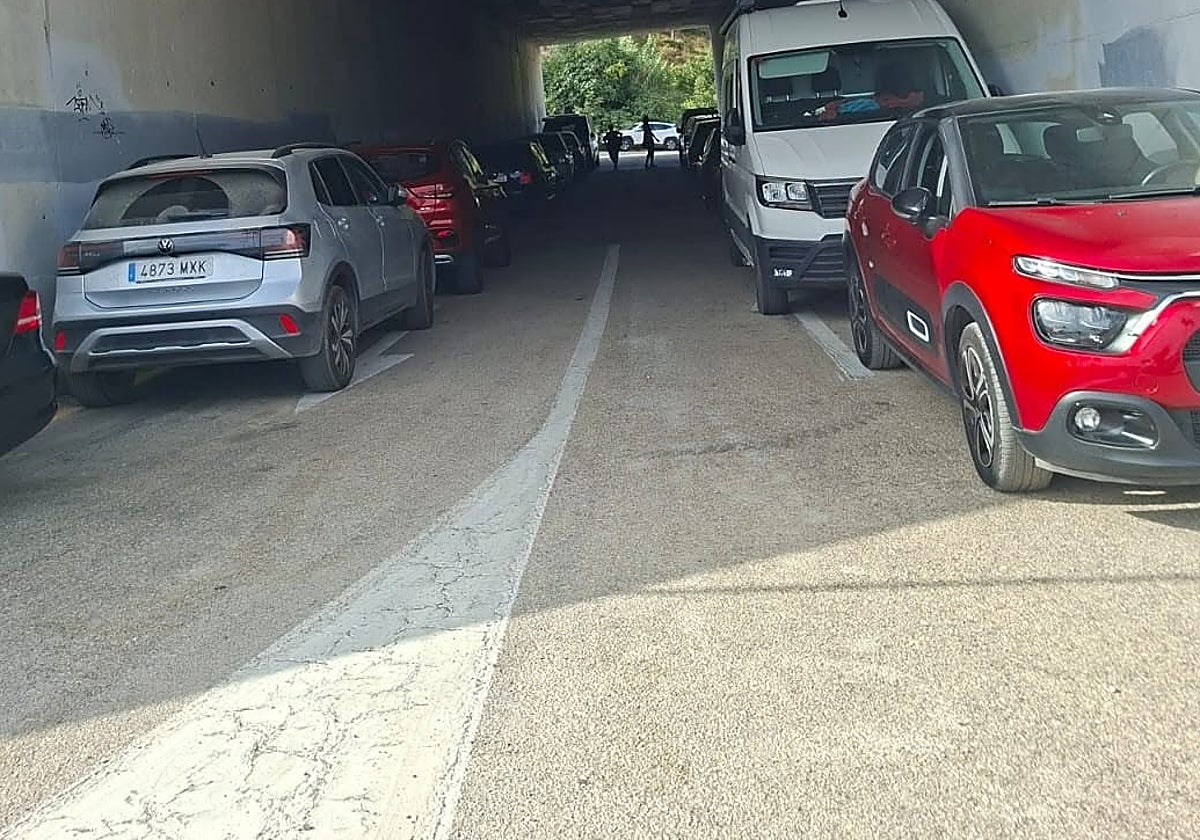

Residents in Maro on the eastern Costa del Sol have put forward a proposal to Nerja town hall which aims to give them priority, especially ... in the busy summer months when the popular coastal village is taken over by tourists and visitors.
Parking outside of the centre, prioritising the village centre for residents, and controlling vehicle access once capacity is reached are just some of the key changes proposed by the Asociación para el Desarrollo Turístico, Cultural y Medioambiental de Maro (Maro association for tourist, cultural and environmental development) in a transport, parking and resident protection plan, which it would like Nerja town hall to consider with a view to implementing it gradually, with a target date of summer 2027.
The document has been drawn up following repeated complaints from local residents about the pressure placed on the village during the months when tourist numbers are at their peak.
The association has highlighted the occupation of spaces reserved for residents, vehicles repeatedly driving up and down narrow streets in search of parking, illegal parking, difficulties for emergency services to get through and increased safety risks for pedestrians. Added to this is the congestion on the access roads to Maro beach and the need, in their view, for a more consistent police presence.
The proposal divides Maro into three main zones. The town centre would constitute Zone A, with priority given to residents and parking spaces reserved for authorised residents; the town's outskirts would function as Zone B, with regulated short-stay parking for shops, restaurants, visitors, loading and unloading, and services; and a third, outlying zone would house park-and-ride facilities for visitors, connected to Maro via footpaths, public transport or a shuttle service.
The plan divides Maro into three zones and aims to prevent visitors from entering the town centre solely to look for a parking space
To ensure that local residents' priority is upheld, the association proposes creating a municipal register of authorised number plates and stepping up monitoring of reserved parking spaces. At a later stage, it even suggests looking into automatic number plate recognition systems at access points and temporary entry controls to the town centre during peak hours. Any restrictions would include exemptions for residents, emergencies, the police, municipal services, people with reduced mobility, public transport, loading and unloading, and other essential services.
The group considers it essential to provide alternatives for visitors to the town alongside any restrictions. It is therefore calling for the creation or expansion of park-and-ride facilities before the entrance to Maro, the strengthening of a shuttle service connecting these car parks with the town and the beach area and to install information boards indicating availability. The proposed system would use green, amber and red indicators to show whether spaces are available or whether the car park is full and an alternative outside the town must be used.
Criticism from the opposition
The project comes amidst ongoing controversy over the situation the village has been facing this summer. In recent days, the association has shared images of overcrowded car parks and vehicles parked in unauthorised areas and has once again called on the town hall to provide real solutions. "We want tourism. We want to give our visitors a warm welcome. But we also want to be able to live and park in our village," the association stated in a message on its social media accounts. The demands have grown more urgent following the recent incident in which a local resident was hit by a car near a pedestrian crossing on Calle San Miguel.
Among the immediate measures, the association is calling for an increased daily presence of the Local Police and the availability of a tow truck during peak times, particularly in July and August, at Easter, on public holidays and on busy weekends. The plan also aims to protect pedestrian crossings, ensure access routes for ambulances and fire engines, repaint and signpost residents' parking spaces, and inform visitors before they enter the centre of teh village. "The solution does not lie solely in banning parking or increasing fines," states the document, which advocates anticipating the arrival of vehicles and offering alternatives.
The opposition PSOE party in Nerja has backed many of the demands following a meeting with residents. The socialist group has referred to "overwhelming traffic" and a lack of staff to manage the car parks. The party is calling on the PP-led town hall for "more resources and specific planning for the busiest months" and maintains that the increase in visitors can, at certain times, quadruple the pressure on services. In a second statement, the PSOE has accused the town hall of a lack of "planning, management and foresight" and believes that "Maro needs much more than headlines and photographs".
One of the affected residents, Antonio Gallardo, has expressed his frustration at the situation by posting several photos on his social media: "It's the same as every day. Vehicles in the yellow zone, forcing the many cars on the road to drive very close to the kerb, with all the danger that entails. The other day, a car hit a pram with a baby in it. Of course, there are also vehicles parked in the residents' zone. How much longer will we have to put up with this chaos?"
Another local resident, Michael Albertsen is calling for access control systems with daily quotas, as is the case on some beaches in Sardinia, Italy, and as is planned for the Río Chíllar in Nerja, which has been closed by order of the local council since August 2023.
The association proposes a phased approach up to 2027, whilst the PSOE and PP disagree on how to manage transport in the village
Municipal measures to try to manage the pressure from tourism date back several years. In 2022 the town hall restricted vehicle access to the beaches of Maro and La Caleta during the summer and set up a shuttle service. In February 2025 a municipal car park with around a hundred spaces was opened at the western entrance, at a cost of 241,964 euros and this summer the shuttle bus to the beach is running from 12 June to 15 September.
The association considers, however, that these measures are insufficient and proposes taking a further step forward through a comprehensive model. The councillor for Maro, Nuchi Moreno, has defended the measures implemented in recent years to improve transport and has called for the debate on tourist overcrowding to reflect "the full picture".
Moreno said that Maro previously had only one public car park and that, since then, two new car parks have been brought into service; one in 2023 and another in 2025, significantly increasing the available capacity. She acknowledges that traffic pressure persists due to the town centre's layout and its limited access points, but considers it "unfair" that the measures taken are not recognised.
![[]](http://static.vocstatic.com/voc26/latest/assets/images/favicon/surinenglish/apple-touch-icon-57x57.png)