
Obituaries
Dr. Oswaldo Arteaga, a world reference for Phoenician archaeology in the Axarquía, dies
The archaeologist's relationship with the eastern Costa del Sol began in the 1970s when he became director of the Phoenician-Punic Project within the German Archaeological Institute
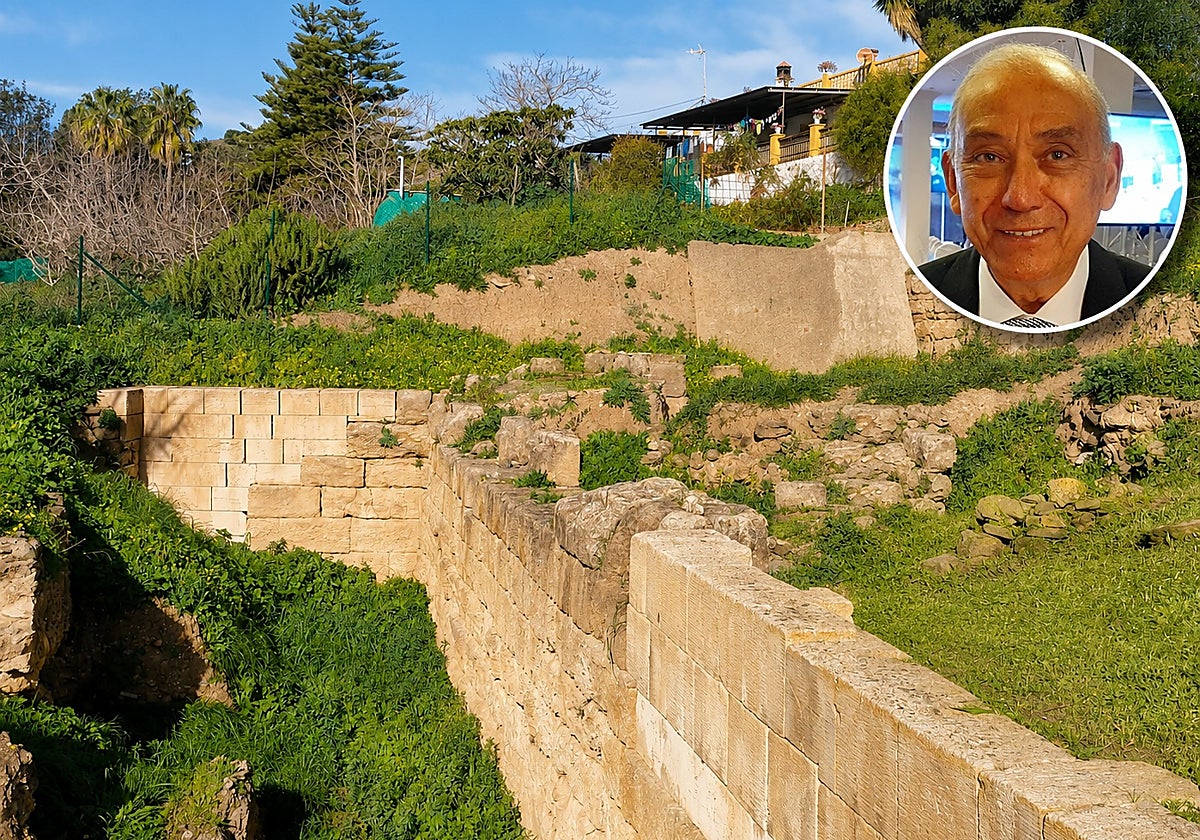

Dr. Oswaldo Arteaga Matute, archaeologist, researcher and professor considered a key figure in the knowledge of the Phoenician past of the Axarquía area of Malaga ... province has died aged 84.
Vélez-Málaga town hall has announced a day of official mourning on Friday 15 May as a sign of recognition and tribute to the man who was named 'adopted son' of the eastern Costa del Sol town in May 2022. .
"His tireless work allowed us to discover, study and enhance important sites as Los Toscanos and the Phoenician legacy of our municipality, contributing decisively to the knowledge of our roots," the town hall said in a message posted on its social media pages on Thursday 14 May. The flags will be flown at half-mast on municipal buildings as a sign of respect.
"Today we bid farewell with deep sadness to Dr. Oswaldo Arteaga, adopted son of Vélez-Málaga and an essential figure for the knowledge of our history."
Mayor of Vélez-Málaga, Jesús Lupiáñez, said, "Today we bid farewell with deep sadness to Dr. Oswaldo Arteaga, adopted son of Vélez-Málaga and an essential figure for the knowledge of our history." The mayor highlighted Arteaga's work at the Phoenician sites of Los Toscanos and Cerro del Mar, considered some of the most important archaeological sites in the western Mediterranean. "Thanks to his dedication, Vélez-Málaga knows its roots better and understands even more the greatness of its past," Lupiáñez said.
Academic background
Born in Venezuela in 1942, Arteaga had an extensive academic and research career linked to Spain. He was professor of Prehistory at the University of Valencia and later professor at the University of Seville, where he headed the department until his retirement. He also maintained close ties with the German Archaeological Institute, with which he promoted numerous international scientific projects.
His relationship with the Axarquía began in the 1970s when he became director of the Phoenician-Punic Project within the German Archaeological Institute. Those investigations put Vélez-Málaga, Torre del Mar, Algarrobo and the eastern Costa del Sol on the international map of studies on the Phoenician civilisation.
His work demonstrated that part of Vélez-Málaga had been a large maritime inlet used by Phoenician navigators more than 2,500 years ago.
His main contributions include excavations at the Mainake-Maenoba sites, in the area of Los Toscanos and Cerro del Mar, as well as the geoarchaeological reconstruction of the ancient mouth of the River Vélez. His work demonstrated that a large part of the current aricultural area around the River Vélez was once a large maritime inlet used by Phoenician navigators more than 2,500 years ago.
Arteaga's pioneering application of geoarchaeological techniques in the Axarquía was one of the most valued contributions by the scientific community. This research model would later be exported to numerous European archaeological projects.
Enormous prestige
Vélez-Málaga town hall awarded him the title of adopted son of the town in May 2022, which was promoted by the local society of friends of culture (SAC) and by various researchers and specialists. During the ceremony held at the Nuestra Señora del Carmen cultural centre in Torre del Mar, his "enormous prestige" and role as "one of the greatest exponents of the study of Phoenician civilisation" were highlighted.
The SAC recalled that the excavations carried out by Arteaga in the 1970s and '80s "put the Axarquía at the forefront of research into the Phoenician world".
In June 2025 Arteaga was also named adopted son of Antas in Almería province for his involvement in research into the Argaric culture and for coordinating the first international symposium on El Argar, which brought together specialists from different countries.
Arteaga helped to raise awareness of the importance of conserving and protecting the archaeological heritage of the coast.
Many people have pointed out that Oswaldo Arteaga not only made a decisive contribution to the historical knowledge of the Axarquía, but also helped to raise awareness of the importance of conserving and protecting the archaeological heritage of the Costa del Sol.
With Arteaga's death the archaeology world has lost one of its most influential figures linked to the south of the Iberian peninsula, a researcher who dedicated a good part of his life to deciphering the Phoenician origin of Vélez-Málaga and whose mark will remain forever linked to sites such as Los Toscanos, Cerro del Mar and the mouth of the River Vélez.
The SAC underlined the pioneering nature of his research, carried out together with the German Archaeological Institute at sites such as Los Toscanos, Trayamar and Mezquitilla. According the obituary it sent out on Thursday, Arteaga was one of the driving forces behind the application of geoarchaeology in Phoenician excavations, an innovative methodology that later served as a model for research in numerous Atlantic and Mediterranean coastal basins of the Iberian Peninsula.
Arteaga was one of the driving forces behind the application of geoarchaeology in Phoenician excavations, an innovative methodology.
The cultural association also highlighted the close personal relationship they maintained with the researcher and his wife, Anna Marie Roos, especially as a result of the organisation of an exhibition on the excavations carried out by the German Archaeological Institute in Axarquía during the seventies and eighties. "The relationship, which was initially a professional one, developed into a sincere friendship," the SAC press release notes.
The SAC said it was "saddened by his loss" but also "fortunate to have had the privilege of knowing and working with a man like Oswaldo".
![[]](http://static.vocstatic.com/voc26/latest/assets/images/favicon/surinenglish/apple-touch-icon-57x57.png)