
History
Nerja Cave provides a key clue to solving the 'Dolomite Problem'
Researchers from the University of Granada (UGR), the Spanish National Research Council (CSIC) and the University of Malaga (UMA) have identified, for the first time in nature, amorphous phases that precede dolomite and magnesite
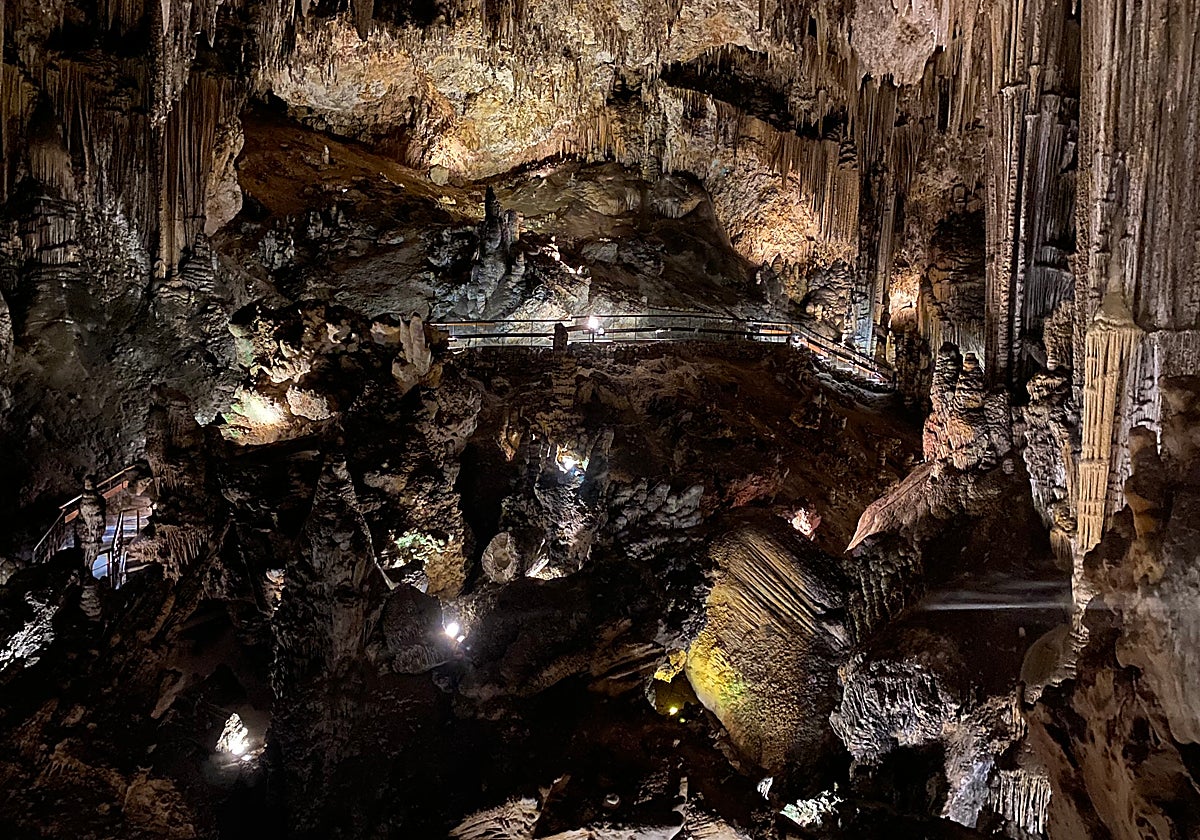

The Nerja Cave has once again become a natural laboratory for science. A team comprising researchers from the University of Granada (UGR), the Andalusian Institute ... of Earth Sciences and the University of Malaga (UMA) has, for the first time in a natural environment, identified mineral phases that act as a precursor to the formation of dolomite and magnesite, two of the most abundant carbonates on the planet.
The discovery was made in deposits known as 'moonmilk', a whitish, soft-textured material found in some cavities and composed mainly of carbonate minerals. Research carried out in Nerja has provided new evidence on how these minerals may form under low-temperature conditions, a process that geologists have been trying to understand for decades.
This mystery even has its own name: the 'Dolomite Problem'. The mineral appears in the form of enormous rock masses formed throughout the Earth's geological history, but its formation proves extraordinarily difficult to replicate in the laboratory under conditions similar to those found in nature. "The paradox lies in the fact that there are enormous naturally formed dolomite formations, while their formation is very difficult to replicate under similar conditions in the laboratory," explains the information released by the UGR.
The study has, for the first time, identified amorphous phases in nature that can subsequently transform into dolomite and magnesite
In an attempt to unravel this process, the scientists analysed the 'moonmilk' using advanced microscopy and mineralogical analysis techniques. The research was carried out using experiments at two major European scientific facilities: the ALBA synchrotron in Spain and SOLEIL in France. Using these techniques, they identified amorphous compounds of magnesium carbonate and calcium-magnesium carbonate.
The key lies precisely in this amorphous nature. These materials do not yet possess the ordered structure of a crystalline mineral, but researchers have found that, under the natural conditions prevailing within the Nerja cave, they can subsequently evolve into magnesite and dolomite. It would therefore appear to be a sort of preliminary stage in the mineral formation process.
Direct evidence
The significance of the finding lies in the fact that it provides direct evidence of a formation pathway different from that traditionally considered. Rather than the mineral forming directly as a crystal from a solution, the results suggest that the process may begin earlier, with the formation of an amorphous phase that subsequently reorganises and crystallises.
This mechanism could offer a possible explanation as to why nature has been able to produce large deposits of dolomite at low temperatures, while reproducing the process experimentally remains so difficult. The researchers believe that the existence of this amorphous precursor could represent a key stage in the formation of both dolomite and magnesite.
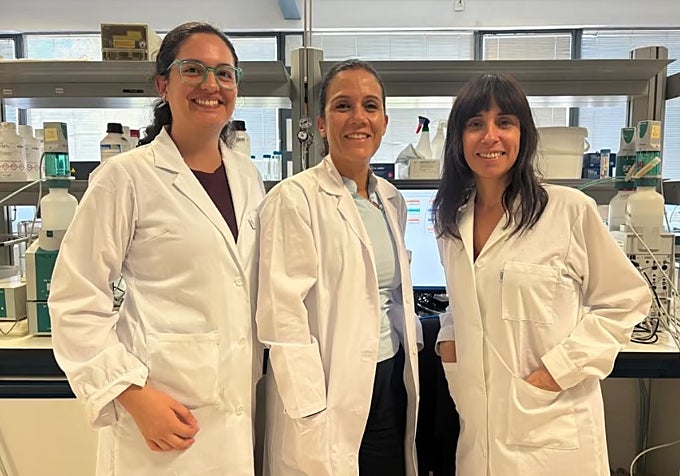
The research forms part of the doctoral thesis of Sarah Bonilla-Correa, a PhD student at the University of Granada, supervised by professors Encarnación Ruiz-Agudo and María Pilar Asta Andrés. Scientific staff from the UGR, the CSIC and the UMA are involved in the project, strengthening a line of research that utilises the Nerja cave to study mineral processes that are difficult to observe in other natural environments.
The discovery in Nerja's 'moonmilk' provides direct evidence of a geological process that is difficult to replicate in the laboratory
This discovery thus adds a further dimension to the scientific value of the cave known primarily for its geological, archaeological and heritage significance. In this case, the interest lies not in its large stalactites or stalagmites, but in much more inconspicuous deposits of 'moonmilk', the microscopic analysis of which may help answer questions about processes that have taken place over millions of years in different parts of the planet.
The research has been funded by the Ministry of Science, Innovation and Universities, the Andalusian regional government, the UGR and the Scientific Unit of Excellence UCE-PP2016-05. The findings do not yet resolve the 'Dolomite Problem', but they do provide a missing piece of the jigsaw: the observation, in a natural environment, of these amorphous precursors and their evolution into crystalline minerals.
![[]](http://static.vocstatic.com/voc26/latest/assets/images/favicon/surinenglish/apple-touch-icon-57x57.png)