
History
Prehistoric handprint mystery at Costa del Sol cave solved by bat guano reaction
From children's fingers to high-level palm prints, researchers uncover how prehistoric groups left their mark in stone
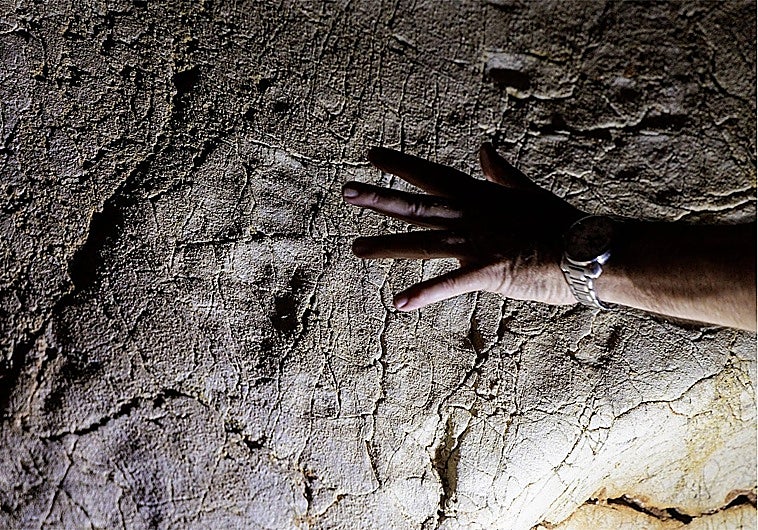

A long-standing archaeological mystery surrounding prehistoric handprints pressed into the limestone walls of the Cueva del Tesoro in Rincón de la Victoria has finally ... been solved by geological research.
Initial hypotheses put forward by researchers - led by Cristina Liñán, a geologist at the Nerja Cave Research Institute and the University of Malaga (UMA) - suggested that Palaeolithic groups had carved into a creamy limestone residue known as "moonmilk." However, laboratory analysis of the soft substrate revealed an unexpected mineral composition: 100 per cent hydroxyapatite.
Related story
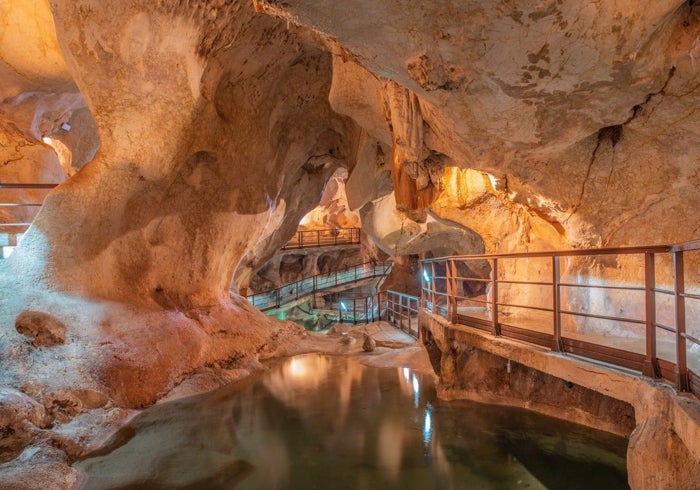
The discovery pinpointed a natural chemical reaction involving bat droppings (guano). When guano came into contact with the calcium carbonate in the cave's limestone, it triggered a reaction that dissolved the rock and precipitated calcium phosphate minerals, creating a temporary, soft crust. Prehistoric explorers took advantage of this malleable surface to leave impressions of their fingers, palms, and hands.
Traces of ancient explorers
Archaeologist Pedro Cantalejo, who toured the eastern Costa del Sol cave with researchers, highlighted distinct U-shaped indentations left by fingers sweeping across the rock, which contrast with the deeper, V-shaped grooves typically created by flint tools.
The handprints are scattered across deep, dark galleries far from the cave entrance. Variations in hand sizes indicate that the explorers belonged to a diverse group ranging from young children to adults. While some prints sit at eye level, others are located 2.5 metres above the ground, suggesting individuals stood on one another's shoulders or used rock hollows for elevation.
DNA extraction and carbon dating
The scientific breakthrough has opened new avenues of research. Because hydroxyapatite naturally absorbs and preserves biological material, researchers believe they may be able to extract ancient human DNA from the wall impressions.
Samples were collected in June 2026 as part of the First Art Project, supported by National Geographic. The multi-institutional research team - comprising experts from UMA, the University of Cádiz, the CSIC in Granada, the Nerja Cave Research Institute, Rincón de la Victoria Town Hall, and the Junta de Andalucía - is now working to establish precise radiocarbon dating for the prints.
"They are certainly rock art. But is it rock art? I don’t know," Cantalejo noted, adding that the strategic placement of the prints alongside traditional artistic motifs suggests they served a deliberate purpose - perhaps a message left in stone for future explorers.
![[]](http://static.vocstatic.com/voc26/latest/assets/images/favicon/surinenglish/apple-touch-icon-57x57.png)