
Axarquia
Iznate is once again without drinking water due to high chlorate levels
The regional government has declared the municipal water supply unfit for consumption after detecting levels exceeding 0.7 mg/l, so the town hall is now distributing free bottled water
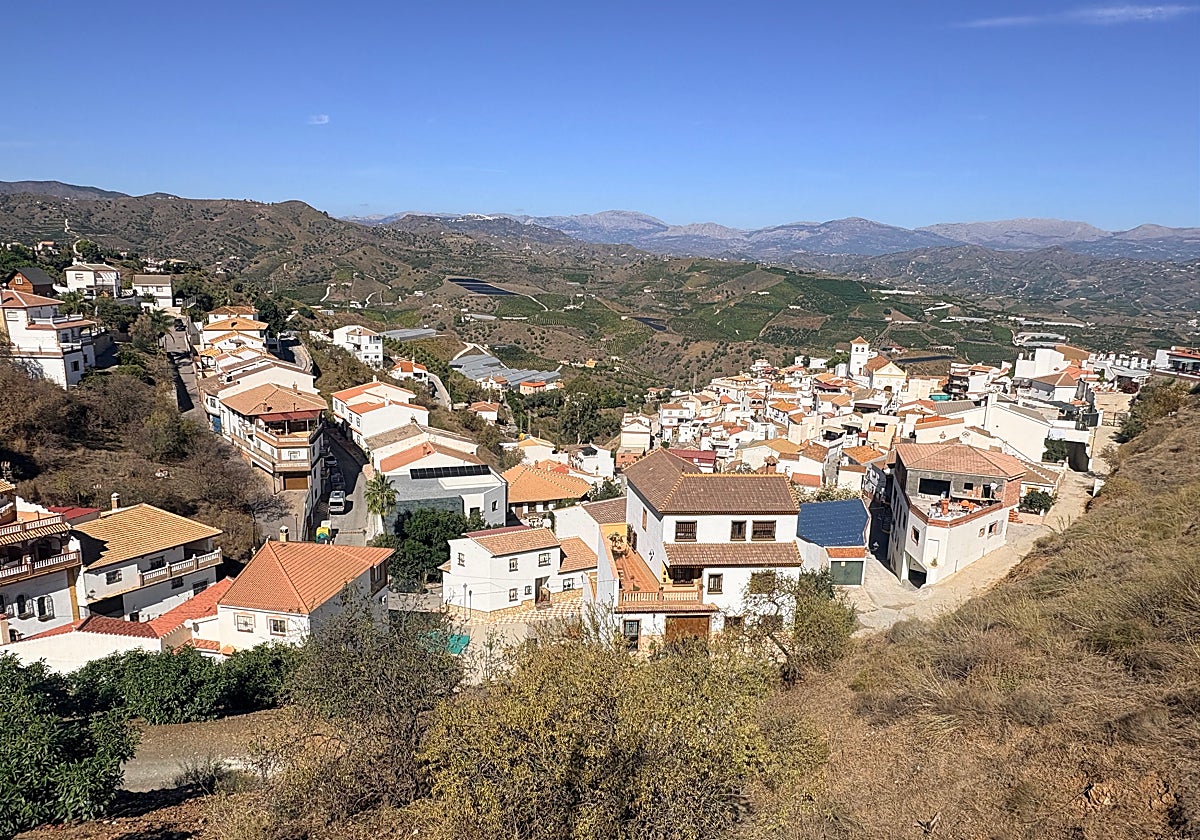

Residents of Iznate, a small municipality in the Axarquía region with a population of around 940, are once again unable to drink tap water due ... to the presence of chlorates in concentrations exceeding the legal limits.
The regional health and consumer affairs office of the Andalusian regional government has declared the water from the municipal supply unfit for human consumption after routine laboratory tests detected levels exceeding 0.7 milligrams per litre.
This incident comes almost a year after the town experienced a similar problem, which at the time forced the distribution of bottled water to the population for several weeks.
This was announced on Monday 9 November by the council in a public notice signed by the mayor, Gregorio Campos (PSOE), which sets out immediate restrictions to protect public health. Tap water must not be used for drinking, cooking, washing food intended to be eaten raw, or preparing coffee, herbal teas or baby bottles.
However, the council said that it may still be used for personal hygiene, such as showering or washing hands, as well as for cleaning the home, washing clothes and washing up. As an additional precaution, its use for brushing teeth is not recommended.
In light of this situation, the council has announced that it will provide bottled drinking water free of charge to the entire population while the restrictions remain in place. To receive a supply, each family must first collect a voucher from the town hall between 8am and 3pm.
This voucher will specify the authorised amount of water based on the number of people living in each household. The supply can be collected either from the town hall itself or from the local Covirán supermarket, where the relevant voucher must be presented.
Residents will be able to collect free bottled water using council vouchers while the test results remain subject to health restrictions
The documents will be for one-off use only and will be left at the collection point. As the local authority explained on its social media channels, the first round of distribution will cover the period from Tuesday 10 to Monday 16 November.
For the time being, no details have been provided on how subsequent distributions will be organised should the situation continue beyond that date. The aim is to ensure that all families have access to safe water for drinking and food preparation until the health authorities once again authorise the use of the municipal water supply.
On Monday, the council also announced that it has brought forward the cleaning work on the municipal water reservoir, originally scheduled for Tuesday 10 November. As a result of this work, the water supply was cut off during the afternoon and evening. No specific time has been given for when the service will be restored. This temporary interruption is separate from the health restrictions, which will remain in force even once water is flowing from the taps again.
A problem that the local authority had already faced in 2025
The situation marks a repeat of an incident that had already disrupted daily life in Iznate during the autumn of 2025. On 30 October of that year, health inspections detected high concentrations of chlorates in the Loma de Barcos reservoir, which supplied part of the population. Subsequently, laboratory tests also revealed levels exceeding the permitted limits in the main reservoir and in the distribution network, leading the local council to extend the declaration that the water was unfit for consumption to the entire municipal area on 14 November. Families also had to rely on a scheme providing free bottled water.
During that crisis, the town hall explained that the water supply came from the Viñuela-Axarquía system, managed by Axaragua, and that the water arrived treated from the El Trapiche water treatment plant, with the disinfection process being completed in the municipal reservoirs.
Technicians carried out regular analyses and implemented various corrective measures, including adjustments to the disinfection, cleaning and flushing processes for the networks, as well as checks on the products used. The incident also affected other municipalities in the Axarquía at that time, including El Borge and Totalán, which had to impose restrictions on water consumption. More recently, last March, Canillas de Aceituno also experienced a similar incident.
The problem in Iznate was officially resolved on 1 December 2025, when the council announced in a public notice that the water throughout the municipal network was once again fit for consumption. A return to normality followed several weeks of checks and coordinated action with the health authorities, Axaragua and the municipal services. The council said at the time that preventive measures had been put in place to avoid further incidents and thanked the local businesses that had helped distribute bottled water for their cooperation.
The municipality in the Axarquía region experienced a similar crisis in 2025, which was resolved on 1 December: it is now once again facing consumption restrictions
Chlorates are chemical compounds that can arise as by-products of certain water disinfection processes, particularly when substances such as hypochlorite are used. Royal decree 3/2023, which regulates the sanitary quality of drinking water in Spain, sets a general parametric value of 0.25 milligrams per litre, although it allows for a limit of 0.7 milligrams when certain disinfection methods are used. The municipal notice confirms that the latest test results have exceeded this second concentration, without specifying the exact value detected or the technical cause of the build-up.
The mayor said that the council is working in coordination with the water supplier to implement the necessary corrective measures and restore normality as soon as possible. However, the public notice warns that consecutive test results will be required to confirm that the water quality parameters once again meet health standards before the restrictions can be lifted. At present, no date has been announced for when the water will once again be fit for human consumption. In the meantime, households should use the alternative water supply provided by the council, which has undertaken to keep the public informed via its official channels.
