
Research
Malaga cave selected for international study to pioneer subterranean robotic navigation
Researchers from University of Malaga and Turin Polytechnic collect 335GB of sensor data inside Cueva de la Victoria to train autonomous rovers in complex karst environments
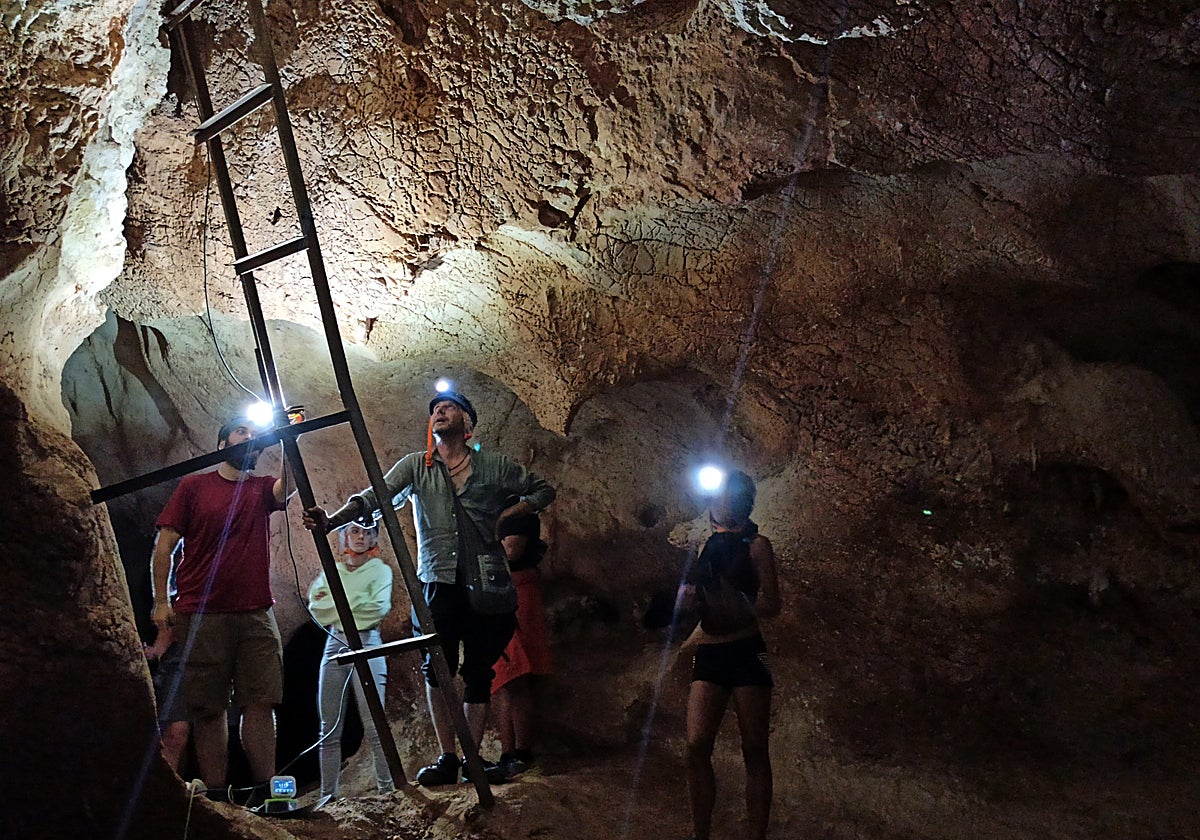
EP
The Cueva de la Victoria in Rincón de la Victoria on the eastern Costa del Sol has been the setting for an international scientific ... study aimed at improving and facilitating the development of algorithms for autonomous localisation and mapping in robotics within highly complex underground environments including caves.
The project, known as Cavers (Multimodal SLAM Data From a Natural Karstic Cave With Ground Truth Motion Capture), was carried out by an international team of archaeologists from Malaga and researchers from the University of Malaga and the Polytechnic University of Turin.
The work carried out in the town’s cave system has enabled the collection of a multimodal dataset totalling over 335GB; this will contribute to the development of navigation systems for autonomous robots in natural karst caves, which are characterised by total darkness, complex geometries, narrow passages and damp, reflective surfaces.
To carry out the research, the team used a ground-based rover equipped with sensors and infrared thermal cameras, RGB-D depth cameras and inertial sensors, as well as installing a motion-capture system inside the cave. The archaeological work was led by María del Mar Espejo Herrerías, with the collaboration of Pedro Cantalejo Duarte and Pedro Cantalejo Espejo.
This study once again highlights the Cueva de la Victoria as a site of heritage interest for scientific research. The results have been set out in a scientific article published in a high-impact journal and have been made available to the scientific community via open-access repositories.
![[]](http://static.vocstatic.com/voc26/latest/assets/images/favicon/surinenglish/apple-touch-icon-57x57.png)