
Sealife
Scientifc expedition records 66 sightings of beaked whales off Andalusian coast
The MegaMAR group has concluded a month-long study trip in the Mediterranean sea with 561 sightings of the species, alongside pilot whales, dolphins, turtles and fin whales between Nerja and Almería
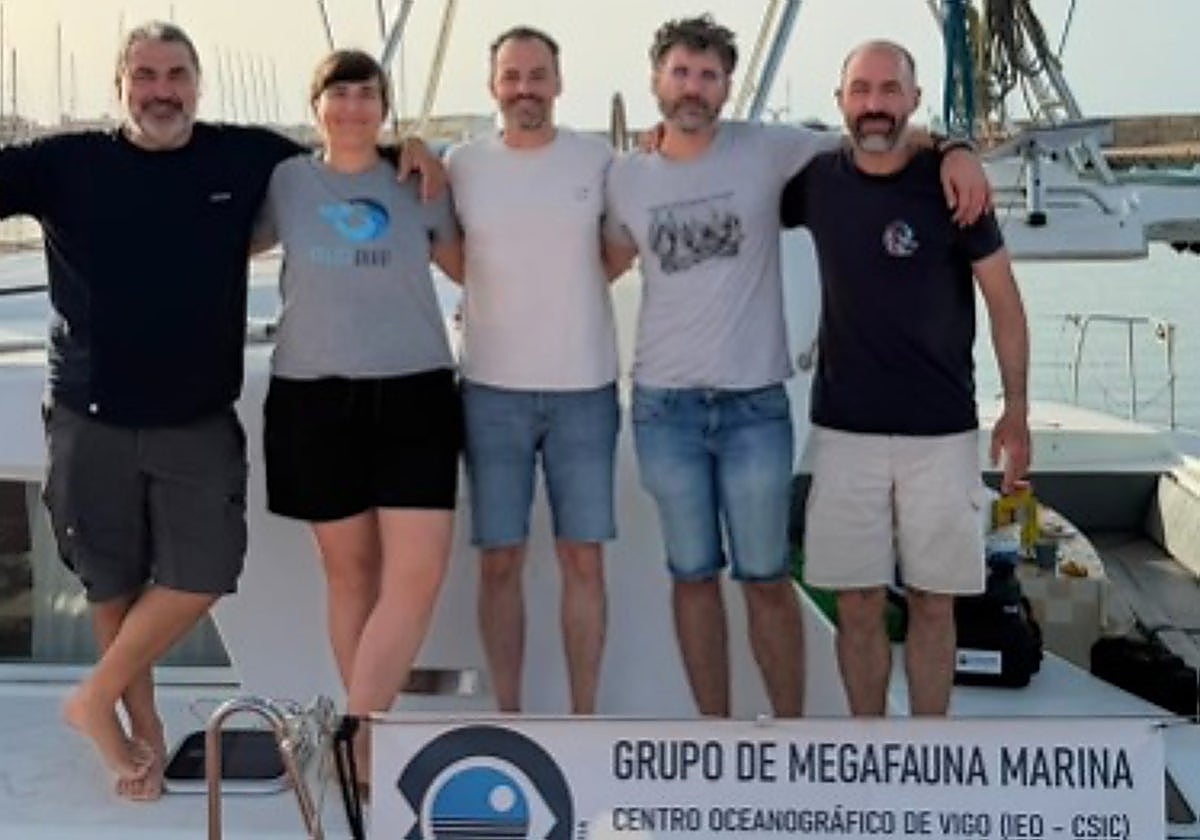

The coast of Andalucía once again confirmed its immense value as one of the major marine biodiversity corridors in the western Mediterranean. The CETALBORAN0526 scientific ... expedition, which took place over almost a month between Nerja in Malaga province and Cabo de Gata in Almeria province, has concluded with a total of 561 sightings of sea turtles and cetaceans, including 66 encounters with the beaked whale, one of the most difficult to observe due to its deep-sea habitat.
The expedition was carried out by the MegaMAR group – the marine megafauna research group at the Spanish institute of oceanography (IEO-CSIC) – in collaboration with the organisation’s own underwater acoustics group. A pre-doctoral researcher from the Doñana biological station (EBD-CSIC) also took part, according to the report published by the scientific team on social media.
During the study, the researchers combined visual tracking from a boat with passive acoustic techniques, an important method for studying species that spend much of their time underwater and which, as a result, can easily escape direct observation. The work now moves into a new phase of laboratory analysis to cross-reference the data collected on the surface with the sound recordings captured underwater.
The total so far this year stands at 561 sightings, comprising 127 turtles, 70 common pilot whales and 66 encounters with beaked whales
The final tally released by MegaMAR includes 127 sea turtles, 70 common pilot whales, 66 beaked whales , 65 striped dolphins, 64 common dolphins, 107 sightings of common or striped dolphins, 29 grey pilot whales, seven bottlenose dolphins and two fin whales. The team particularly highlights the data on the beaked whale, the campaign’s focus species, alongside the records of common pilot whales and grey pilot whales.
The common beaked whale is a deep-diving cetacean that can remain submerged for long periods. This characteristic makes it difficult to track from the surface, making the 66 recorded sightings a finding of particular scientific interest. However, the researchers point out that these sightings do not necessarily equate to 66 different individuals, as the same animal may have been observed on more than one occasion.
969 nautical miles
The study took place across a vast stretch of sea between the eastern coast of Malaga province and the Almeria coastline, known as the Alborán Sea According to the data provided, the expedition covered 969 nautical miles and logged 146 hours of effective observation; this intensive effort has enabled the compilation of a particularly valuable database for studying the presence of large marine vertebrates in the area.
Joan Giménez, a researcher at the Malaga oceanographic centre and head of the expedition, has pointed out that the results represent a “qualitative leap” in our understanding of the common beaked whale and the common pilot whale in this area. As this expert has emphasised, the visual records obtained will enable updated abundance estimates to be generated for species whose conservation requires robust and up-to-date data.
The importance of the Alborán Sea lies in its high productivity and oceanographic complexity, factors which favour the presence of species of great ecological value. These include dolphins, pilot whales, fin whales, sea turtles and deep-diving cetaceans, the detection of which requires increasingly precise and combined methodologies.
The acoustic recordings will now be analysed in the laboratory to improve the monitoring of deep-diving cetaceans in the sea off Andalucía
Passive acoustics has been one of the cornerstones of the campaign. This technique makes it possible to record sounds underwater without relying solely on the animals surfacing. In the case of species such as the common beaked whale, which can spend much of their lives out of human sight, listening to the sea is just as important as observing it.
Researcher Manuel Bou-Cabo, from the IEO-CSIC-UPV joint unit and head of the underwater acoustics team at the Murcia oceanographic centre, has emphasised that the 146 hours of recorded data will enable visual and acoustic information to be cross-referenced, improve signal tagging and generate useful results for the long-term monitoring of these species.
Sound sources
The link between beaked whales and the atypical stranding incidents recorded off the coasts of Malaga, Almeria and Murcia lends further significance to the study. The information released suggests that some of these incidents were consistent with the effects of intense acoustic sources, although it does not establish a direct causal link. It is precisely for this reason that scientists emphasise the need for up-to-date information to help assess the conservation status of the species and guide future management measures.
The campaign forms part of the BIODIV project, which is dedicated to providing scientific and technical advice on marine biodiversity. It is funded by the European Union through the NextGeneration funds and supported by the Ministry for Ecological Transition and the Demographic Challenge, in collaboration with the CSIC. Now that the trip is over, the work continues in the laboratory: analysing what was seen from the ship and what was heard underwater to gain a better understanding of the whales that inhabit the Alboran Sea, even though they remain unseen for much of the time.
![[]](http://static.vocstatic.com/voc26/latest/assets/images/favicon/surinenglish/apple-touch-icon-57x57.png)