
Malaga coastal path
Contract for Torrox footbridge awarded as Malaga coastal path is close to completion
The Gran Senda Litoral project is now more than 90 per cent complete and will eventually connect the whole of the Costa del Sol, although the Axarquía coastline continues to present some of the most challenging issues to resolve
Eugenio Cabezas
The construction of the large footbridge over the mouth of the River Torrox, one of the most ambitious projects on the Senda Litoral (coastal footpath) in the Axarquía area of Malaga province, is now entering its decisive phase. The contract to carry out the work has been awarded to Estepona-based company URINCI S.L.U. who will lay the foundations and develop the surroundings of the future footbridge, with a budget of 717,178 euros including VAT. The company has eight months in which to complete the work.
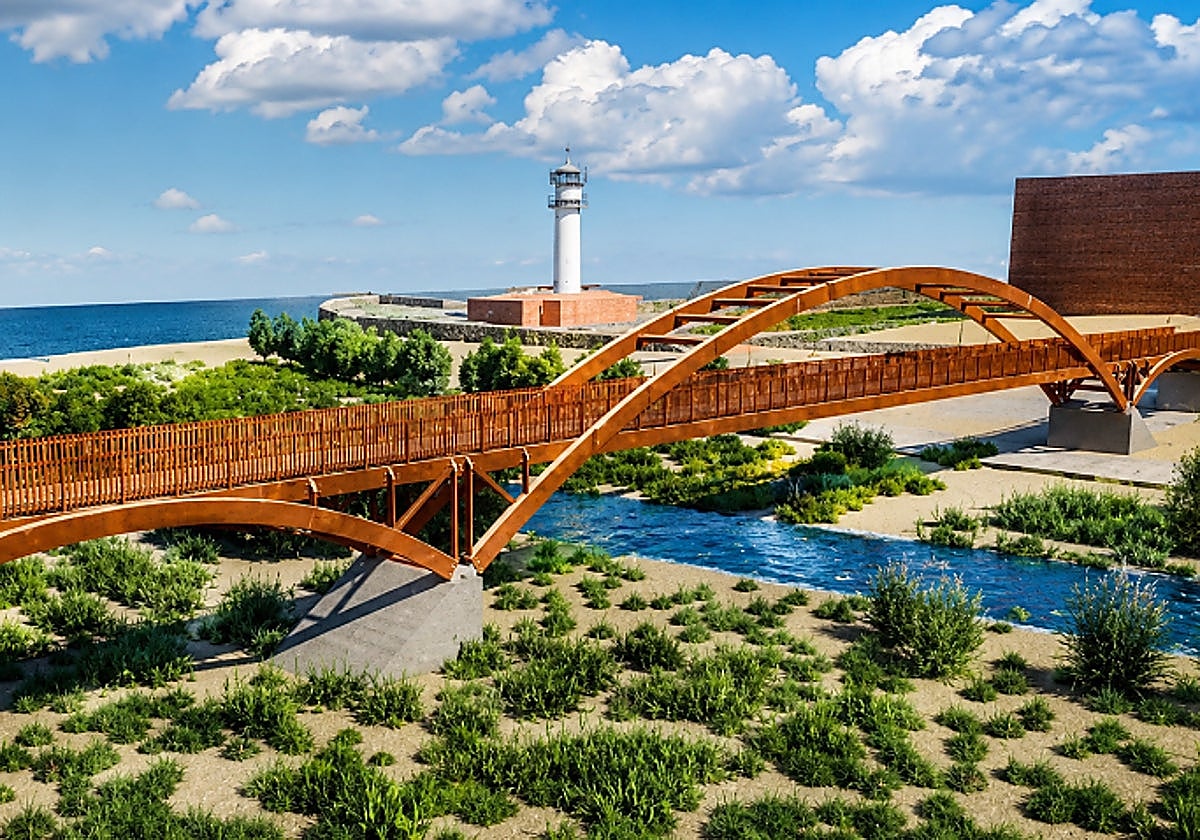
According to the technical documentation drawn up by engineer Pedro A. García-Tristán Quesada, the entire project has a total budget of 2.15 million euros, including VAT. The infrastructure comprises a 165-metre-long wooden bridge over the Torrox riverbed, as well as new pedestrian areas and adapted access points on both banks.
According to Torrox town hall the footbridge will be approximately 277 metres long, including access points. It will be three-metres-wide and has been designed to meet universal accessibility standards. The design aims to minimise the impact on the coastal area and reduce the environmental impact on the area around the estuary.
Speaking about the project on Wednesday 6 May, mayor of Torrox, Óscar Medina, explained that the project will involve a total investment of close to two million euros, comprising the more than 717,000 euros for the civil engineering works and the 1.17 million euros already allocated for the wooden structure.
Medina also revealed that the town hall is continuing to work alongside the provincial authority, the Diputación de Málaga, which is the driving force behind the entire coastal path project, on two further sections between the river mouth and Jardines del Mar residential area and then from the same residential area to Barranco del Agua.
More than 90 per cent complete
The mayor has said on previous occasions that the coastal path will see the “transformation” of the town’s seafront and move towards a “more accessible, sustainable and connected” coastal model. He has also said on several occasions that the aim is to create a continuous link along the promenade between the El Peñoncillo and Castillo Bajo-Conejito areas, two of Torrox-Costa’s main tourist hubs.
The infrastructure will be one of the largest pedestrian walkways in the entire province and the second longest on the Senda Litoral, surpassed only by the bridge at the mouth of the Guadalhorce in Malaga city. The project envisages an elevated structure to minimise the impact on the riverbed and ensure the walkway blends seamlessly into the coastal landscape.
The coastal dynamics study highlights the need to take into account the most severe recorded storms and potential flood levels at the estuary mouth. To this end, the project incorporates simulations based on data from the Spanish state ports authority, tide gauges and wave models used in coastal engineering. The technical dossier, consulted by SUR, also includes measures for waste management, health and safety, and environmental protection during the execution of the work.
The Malaga coastal path is now more than 90 per cent complete, although the eastern coastline continues to present some of the most challenging issues to resolve. In the case of Torrox, this infrastructure is set to become one of the most iconic features of the coastal route and a new tourist and scenic attraction for the Axarquía town.
![[]](http://static.vocstatic.com/voc26/latest/assets/images/favicon/surinenglish/apple-touch-icon-57x57.png)