
What To Do
Braille, tactile displays and easy-to-read text bring María Belén Morales’s art to life at the Nerja Museum
The exhibition aims to remove physical and sensory barriers in a free exhibition dedicated to the Tenerife-born sculptor, whose work is returning to the town after 32 years
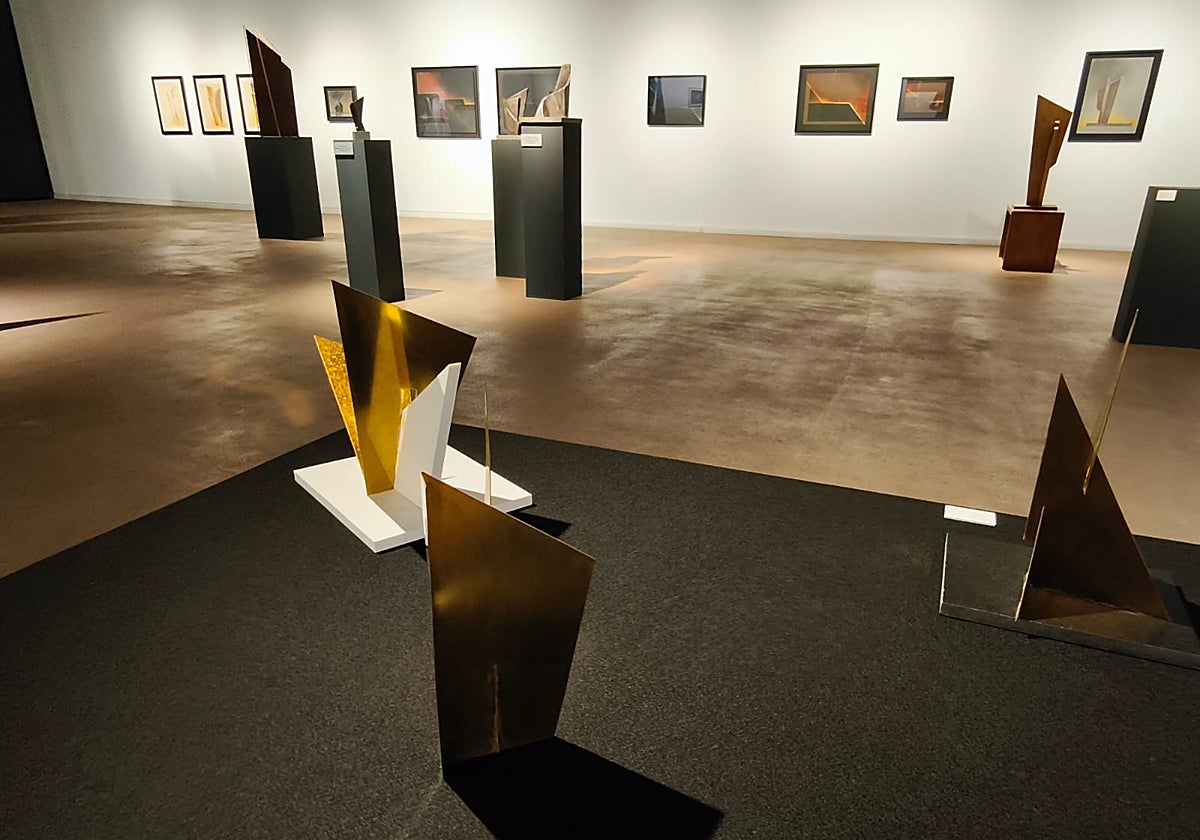

Visiting a contemporary art exhibition doesn’t have to mean just looking. At the Nerja Museum some works can also be touched, the texts can ... be read in Braille or in easy-to-read format and the audiovisual explanations feature subtitles and sign language. The eastern Costa del Sol town's museum has placed accessibility at the heart of its new temporary exhibition, Formas en Diálogo (Forms in Dialogue), dedicated to the Tenerife-born sculptor María Belén Morales (1928–2016).
The exhibition, on display in the Ana María Márquez gallery, has been designed to be accessible. The works displayed on the walls are positioned at a height of 1.4 metres to make them easier to view from wheelchairs, while three sculptures have been specifically selected so that visitors can touch them.
In addition to these resources, there are posters and a visitors’ book in Braille, a guide written in easy-to-read language and an introductory video with subtitles and sign language for deaf people. In this way, the Nerja Museum aims to ensure that access to contemporary art is not restricted by physical, sensory or comprehension barriers.
The exhibition features tactile elements, texts in Braille, easy-to-read versions and accessible videos to bring art to a diverse audience
This approach takes on a special significance when considering the work of Morales, an artist for whom volume, textures and materials were of fundamental importance. Rusted iron, geometric structures and even parts taken from agricultural machinery were transformed by the artist into sculptures and abstract constructions; as a result touch allows the visitor to gain an insight into essential aspects of her artistic language.
The exhibition brings together drawings, collages and sculptures created mainly between 1994 and 2004, one of the most prolific periods in Morales’s career.
Cliffs of Tenerife
The landscape is also one of the central themes of Formas en Diálogo: the cliffs of Tenerife, the vast fields of Andalucía, the Mediterranean coast and even the Sierra de Almijara mountains are reinterpreted through lines, planes and volumes that move away from a literal representation of the landscape.
The curator of the exhibition, Caroline Krabbe, a Danish sculptor based in Frigiliana, highlights precisely the continuity between the different disciplines employed by Morales. “Her sculptures, drawings and projects do not appear as separate disciplines, but as different manifestations of the same quest,” she explains.
The exhibition also marks María Belén Morales’s symbolic return to Nerja. The artist previously exhibited some of her large-scale works at the Balcón de Europa in 1994. Three decades on, the town is now showcasing a selection of her works, some of which are little known, alongside models, sketches and public art projects.
The museum places accessibility at the heart of an exhibition featuring sculptures, drawings and collages by María Belén Morales in Nerja
Morales also maintained close artistic ties with Andalucía: from the late 1980s onwards, she produced part of her body of work in Córdoba, where she found studios and spaces that enabled her to create large-scale sculptures without having to transport them from the Canary Islands. This relationship was reflected in numerous exhibitions and collaborations with other contemporary artists.
The exhibition at the Nerja Museum, organised in collaboration with UCOCultura at the University of Cordoba, will remain open with free admission until 20 September. As well as reviving the legacy of one of the pioneers of post-war Spanish abstract art, the exhibition also raises another point for reflection: the need for museums to adapt their content so that the artistic experience can reach as many people as possible.
![[]](http://static.vocstatic.com/voc26/latest/assets/images/favicon/surinenglish/apple-touch-icon-57x57.png)