
Transport
Axarquía town halls demand improved transport options as pressure on existing infrastructure grows
Business leaders, local authorities and the Andalusian regional government met to discuss ways to put a stop to the traffic jams that have been choking the eastern Costa del Sol for years
Eugenio Cabezas
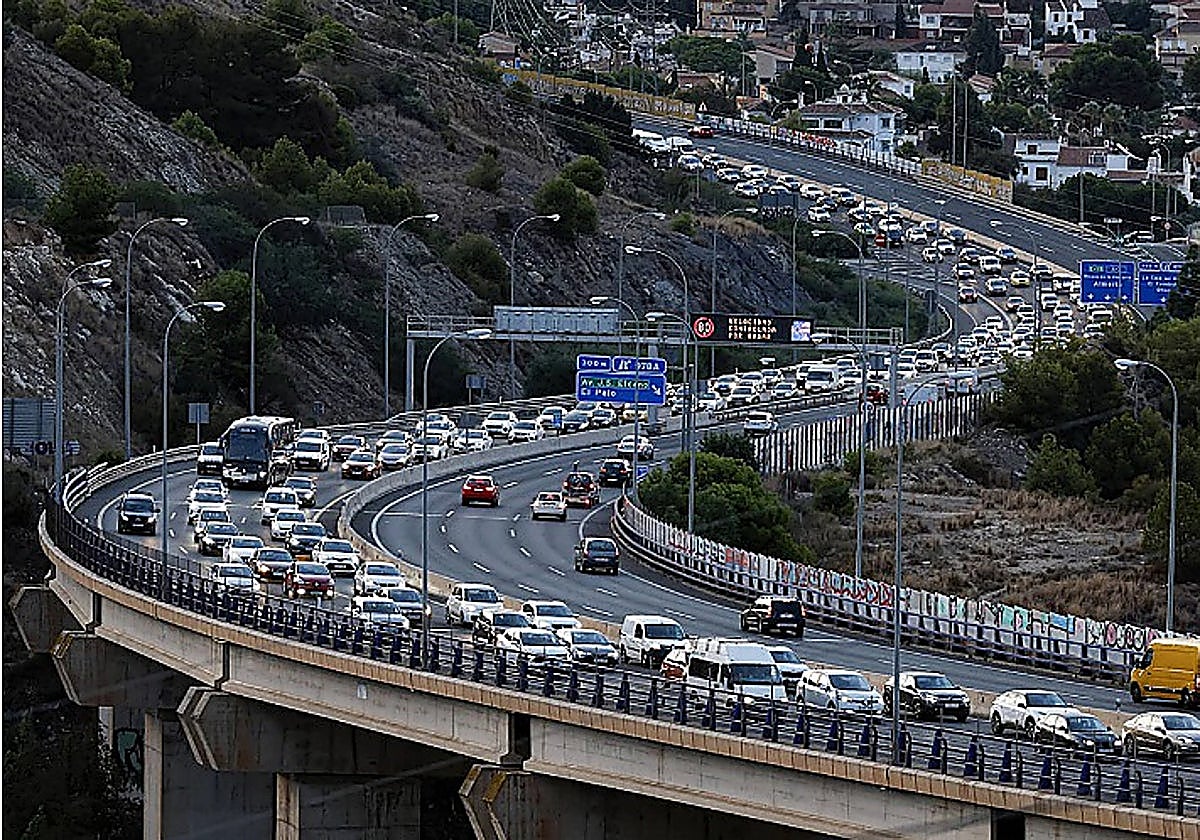
Business leaders, local authorities and the Andalusian regional government met on Wednesday 15 July to discuss the issue of transport in the Axarquía area of Malaga province, with a view to putting a stop to the traffic jams that have been choking the eastern Costa del Sol for years.
The Malaga Business Confederation (CEM) and business associations in Nerja, Rincón de la Victoria, Torre del Mar and Vélez-Málaga met on Wednesday with the central government’s representative in Malaga, Javier Salas, in a meeting characterised by a sense of urgency and frustration over the lack of transport infrastructure in the area.
The Axarquía is increasingly populated, more dependent on cars and ergo hampered by a road network that is prone to long traffic jams at peak times on a daily basis. Endless queues, delays getting to work, students stuck on the roads and a growing sense that transport problems are always one step ahead of the solutions, were the concerns that were put on the table.
Reversible lane
Salas immediately ruled out the option of a third reversible lane on the eastern section of the A-7, explaining that, technically, it is not feasible due to the route of the road as it passes through Rincón de la Victoria. Salas argued that the government is already working on several studies to improve transport links, including upgrades to the eastern section of the A-7 and the coastal railway.
In a video released after the meeting, he emphasised that these projects must ultimately lead to construction work and announced that the government will push for their inclusion in the general state budget as part of the Malaga Plan, which he presented as a commitment to progress for the province and for the Axarquía.
Salas also called on the other political parties to support these state budgets, as he believes the province cannot continue to wait for major infrastructure projects to remain nothing more than an eternal promise. His message has been clear: if progress is to be made on transport links in the eastern Costa del Sol, political backing, coordination between authorities and a genuine willingness to place the province at the heart of the investment agenda are required.
Frustration
The meeting was also clearly marked by the frustration of the business community, which has been calling for quicker and more definite responses for years. Representatives from the CEM and regional associations have called for studies into alternatives to resolve traffic congestion to be fast-tracked, as the problem affects not only road traffic but also competitiveness, punctuality at work and the daily lives of thousands of people who depend on these transport corridors.
Among the issues they have been keen to include in the debate are the Axarquía desalination plant and the completion of the motorway junction at Caleta de Vélez – two infrastructure projects now considered essential in the Axarquía. The former is seen as a strategic asset for securing the area's future water supply; the latter, as a key project for improving mobility and road safety in an area that bears a huge traffic burden, particularly during the busiest months.
Business leaders have also announced that they will submit a request for a meeting to the new Andalusian government, formed by the PP and Vox, to address issues falling within the remit of the regional government. These include public transport routes, the widening of the A-356 Arco road as it passes through Vélez-Málaga and on to El Trapiche, as well as other measures that have been on the table for some time without, as yet, a resolution to the administrative or road congestion issues.
20,000 more cars
This demand comes against an already highly complicated backdrop. SUR recently reported that 20,000 more cars travel daily between Rincón de la Victoria and Malaga city than two decades ago, a figure that helps explain why the eastern section of the A-7 is constantly at breaking point and why even the slightest incident causes long traffic jams.
Vélez-Málaga, which is considered the capital of the Axarquía, has once again called on the Ministry of Transport to unblock the Caleta de Vélez junction, a piece of infrastructure that the town hall considers strategic for managing access to the coast and improving the link with the motorway, while the mayor, Jesús Lupiáñez, has asked the public water company Acuamed for a clear timetable for the Axarquía desalination plant.
Salas used the meeting to highlight the role of town halls as well, calling on them to get involved in improving the urban fabric of each town. The key point he put forward is that transport cannot be resolved through major infrastructure projects alone, but also requires better internal organisation within local authorities, more effective public transport and planning that keeps pace with the Axarquía's growth.
Read comprehensive local news from the Axarquía
![[]](http://static.vocstatic.com/voc26/latest/assets/images/favicon/surinenglish/apple-touch-icon-57x57.png)