
Housing
Almayate residents object to plans for over 1,000 homes and hotels
The proposal, submitted as part of the public consultation on Vélez-Málaga's PGOM, calls for the El Hornillo area and the mouth of the River Vélez to be classified as rural land requiring special protection for agriculture and the landscape
Eugenio Cabezas
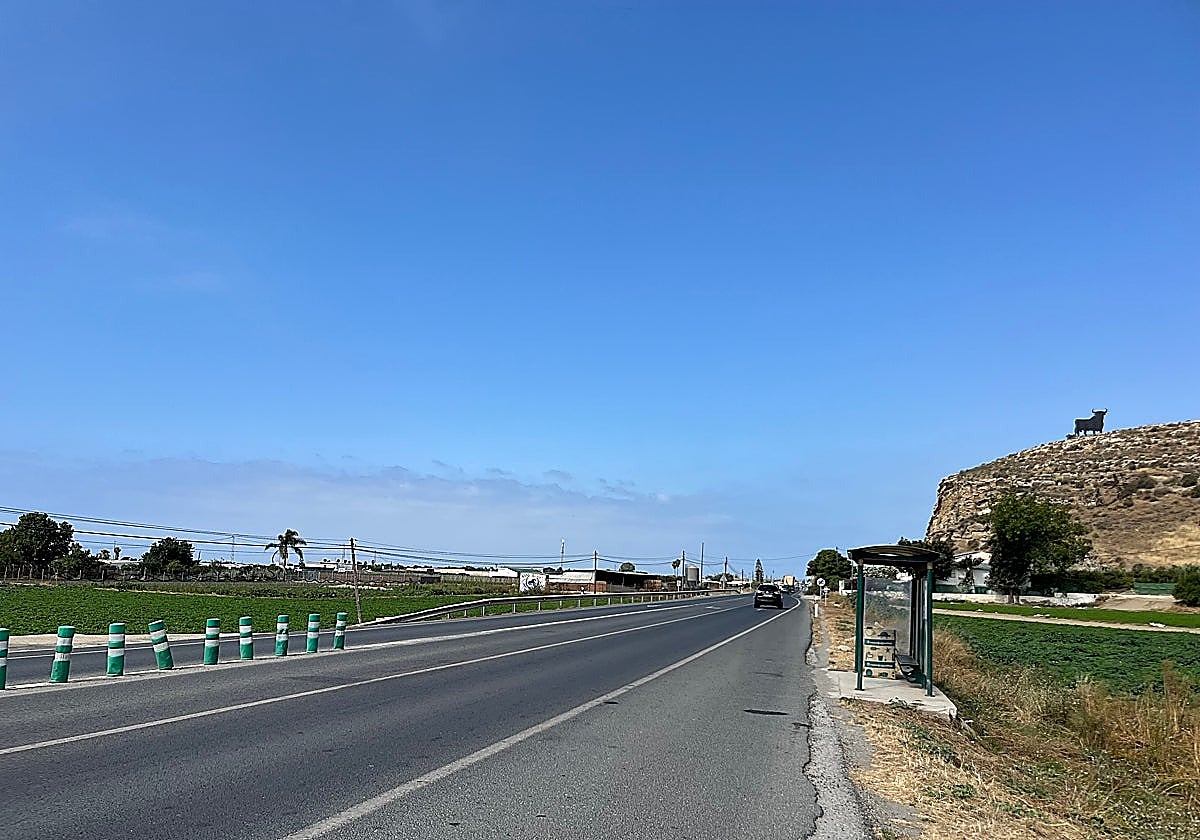
Residents of Almayate, El Hornillo and the area surrounding the Vélez River delta on the eastern Costa del Sol have rejected plans for the development of 1,121 new homes included on the draft General Municipal Development Plan (PGOM 26).
The residents have used the public consultation period to put forward objections and propose alternatives calling for the agricultural character of these lands to be preserved and for residential and tourist development to be curbed.
The main focus of the controversy is the so-called Vélez River Delta Opportunity Area, being developed by landowners Salsa Inmobiliaria. The summary sheet currently available on the company’s website puts the development at 1,121 homes and 2,152 hotel rooms, along a seafront stretching over 2.5 kilometres between Almayate and the mouth of the River Vélez. The developer presents the area as one of the major future tourism and residential developments on the eastern Costa del Sol.
There is, however, a discrepancy within the Salsa page itself: while its data sheet shows the aforementioned 1,121 homes and 2,152 hotel rooms, the descriptive text retains the figures of 1,178 homes and 2,015 rooms. In earlier stages of the planning process, the figure of 1,221 homes had been cited. Consequently, the exact figures will need to be definitively established in the planning documents that are ultimately approved.
Alternative
The local residents’ submissions, to which SUR has had access, call for a so-called ‘Alternative Zero’, meaning that the new PGOM should not allow for any further urban development along the coastline between Almayate and the River Vélez. They also propose specifically protecting the El Hornillo area, preserving existing farms and classifying the delta plains and the river valley as rural land requiring special protection for agriculture and the landscape.
The arguments put forward in the suggestions are based primarily on five issues: the risk of flooding, the availability of water resources, the loss of productive agricultural land, the environmental impact on the delta, and the existence of other developable areas that remain undeveloped.
This mobilisation comes at a particularly crucial stage in defining Vélez-Málaga’s new urban model. The current process corresponds to the draft PGOM, meaning the planning process has not yet been finalised. At this stage, rather than the formal objections typical of later approval phases, suggestions and alternatives are being put forward to enable the drafting team to assess different options before proceeding with the process.
The project already has a long history in terms of urban development. The floodplain situated alongside the river’s lower course comprises around 210 hectares of agricultural land on the beachfront, land traditionally linked to the former Larios sugar company. For decades, it was used for sugar cane cultivation and subsequently a large part of the area was used to grow vegetables and subtropical crops. It is precisely this agricultural use that now constitutes one of the main arguments put forward by those calling for its conservation.
Environment
The debate took on a new dimension in 2024, when the Andalusian regional government paved the way for amending the Axarquía Territorial Planning Scheme (POTAX) to allow the coastal strip corresponding to the Vélez River Delta Tourism Development Zone to be considered suitable for water sports facilities. That amendment opened up the possibility of a future marina near the river mouth, although any facility of this kind would subsequently have to go through its own planning process and undergo the relevant sectoral assessments.
The potential transformation of the delta has also sparked opposition from environmentalists. GENA-Ecologistas en Acción has already questioned the amendment to the POTAX and linked the debate over the nautical facilities to the planned urban development in the area. Its spokesperson, Rafael Yus, has repeatedly warned of the delta’s vulnerability to coastal erosion and flooding. This latter argument took on particular significance following the incident on 13 November 2024, when heavy rainfall caused the River Vélez to burst its banks.
The developer, for its part, advocates a very different approach: Salsa Inmobiliaria regards the delta opportunity area as a future high-quality tourist and residential development and highlights its extensive seafront, the proximity of the beaches at Almayate and the potential to incorporate housing, hotel accommodation, sports facilities and green spaces.
Its current proposal cites 1,121 homes and 2,152 hotel rooms as reference figures. In contrast to this model, local residents are now calling for the PGOM to prioritise the preservation of the floodplain, El Hornillo and the delta and to redirect future development towards land that already has approved planning permission.
![[]](http://static.vocstatic.com/voc26/latest/assets/images/favicon/surinenglish/apple-touch-icon-57x57.png)