
Infrastructure
Nerja aqueduct added to the 'Red List' due to severe state of disrepair
The Hispania Nostra heritage association has warned of the progressive deterioration of the eastern Costa del Sol aqueduct, which is believed to have been built in the late 19th century and closely linked to the cultivation of sugar cane and to the former San Joaquín de Maro factory
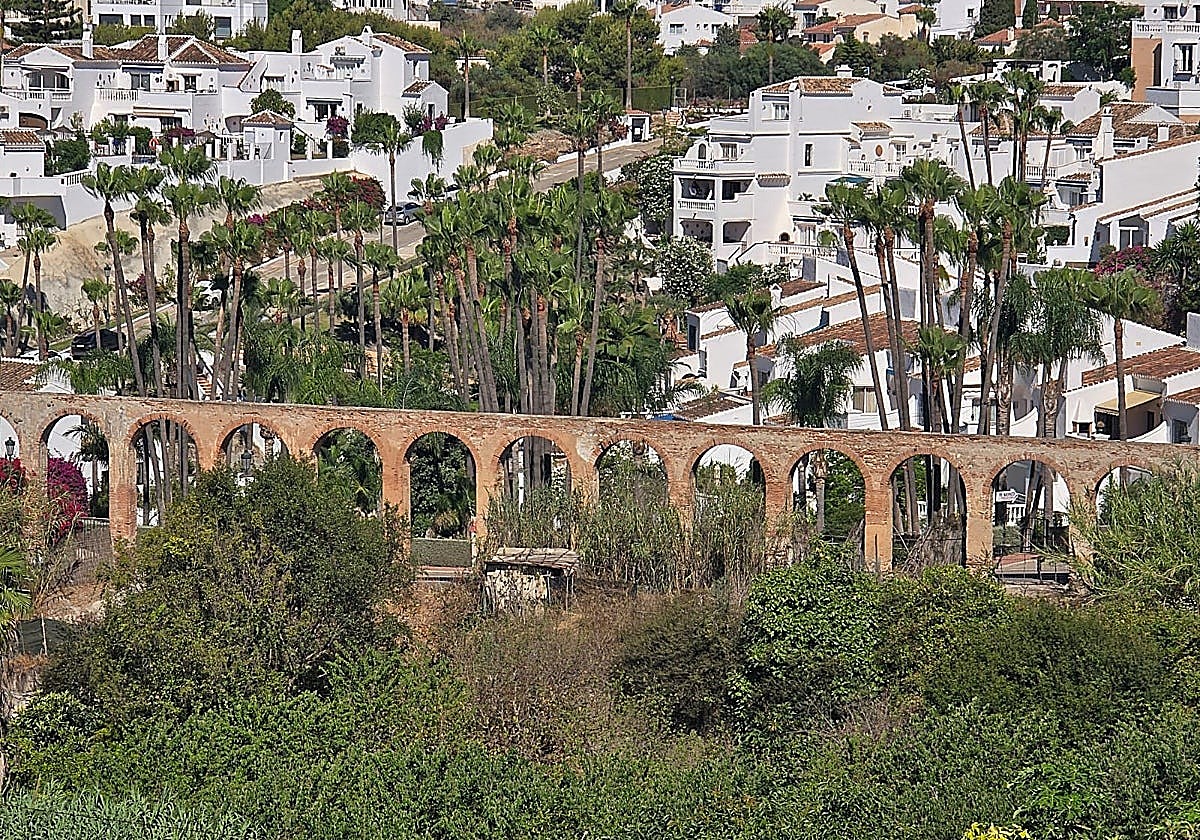

The Agua de Hierro aqueduct in Nerja on the eastern Costa del Sol, also known as El Tablazo, has been added to the Spain's ... heritage 'Red List' (Lista Roja) compiled by the Hispania Nostra association. It has warned of the progressive deterioration of the aqueduct, which is believed to have been built in the late 19th century and closely linked to the cultivation of sugar cane and to the former San Joaquín de Maro factory.
The heritage organisation states that the bricks forming part of the structure are coming loose and warns that the monument lacks specific legal protection. Hispania Nostra is calling for measures to be taken to document and conserve the monument and to prevent the damage from continuing to the point where its stability is compromised.
The site is situated in the Las Mercedes area between Nerja and Maro with a long history of agriculture, irrigation and the sugar industry. It is a structure built of plastered masonry and brick, approximately one hundred metres long and comprising 25 semicircular arches.
The bricks are becoming loose the aqueduct is not covered by any specific legal protection to halt its current deterioration
Although no documentation has survived to enable the exact date of construction or its architect to be determined, Hispania Nostra believes it may have been built during the 1890s by Rafael de Chaves y Manso, the sixth Marquis of Tous, coinciding with one of the periods of greatest activity in the sugar industry in this part of the Axarquía.
The aqueduct took its name from the Agua de Hierro spring and ran parallel to the old road from Burriana to Maro, along the right-hand bank of the Burriana ravine. The canal was connected to the Las Mercedes irrigation channel and formed part of the system that supplied both agricultural holdings and the San Joaquín industrial site.
Larios property development
Hispania Nostra's concern is not limited to the physical condition of the aqueduct. The association also warns of the risk that property development pressure could transform the landscape surrounding the structure and irreversibly alter its relationship with the ravine, the old irrigation channels, the historic paths and the farmland it once served.
The site forms part of the same historic landscape as the former San Joaquín factory, which was added to the Red List in October 2023 due to its state of neglect and the risk of collapse. As SUR reported at the time of that inclusion, regarding the Las Mercedes site, there is a proposal from its owners, the Sociedad Azucarera Larios, to restore the sugar mill as a hotel, build nearly 500 homes and develop a golf course covering an area of around 250 hectares.
The aqueduct has now been added to the 17 sites in Malaga province listed by Hispania Nostra. Andalucía now has 230 sites under threat and remains the region with the second-highest number of cultural and natural heritage sites at risk, second only to Castile and León. This addition comes just two weeks after the inclusion of the Ribera Bridge on the Caminito del Rey, which is affected by corrosion of its steelwork and the deterioration of the concrete.
The aqueduct forms part of the agricultural landscape of Las Mercedes and was connected to the former San Joaquín sugar factory.
Across Spain as a whole, the inventory lists 1,636 properties threatened by neglect, lack of maintenance, environmental factors, inappropriate interventions or urban development pressure. Proposals for inclusion usually come from members of the public concerned about heritage conservation and are reviewed by Hispania Nostra's scientific committee before a decision is taken.
The association stresses that inclusion on the Red List is intended to highlight the risk and encourage collaboration between landowners, public authorities and the public. In the case of Agua de Hierro, its conservation would help preserve one of the key examples of Nerja's water architecture and provide an insight into the role played by irrigation channels, irrigation and sugar cane in shaping the economy and landscape of Nerja.
![[]](http://static.vocstatic.com/voc26/latest/assets/images/favicon/surinenglish/apple-touch-icon-57x57.png)