
Extra Amsterdam&Partners
Spain under siege as international lawyer Robert Amsterdam denounces predatory tax agency and institutional rot
Introducing a controversial new book about Hacienda and the finance system, authors warn of a 'dual state' where administrative overreach, auditor bonuses, and AI threaten the future of Spanish democracy
Dilip Kuner
Marbella
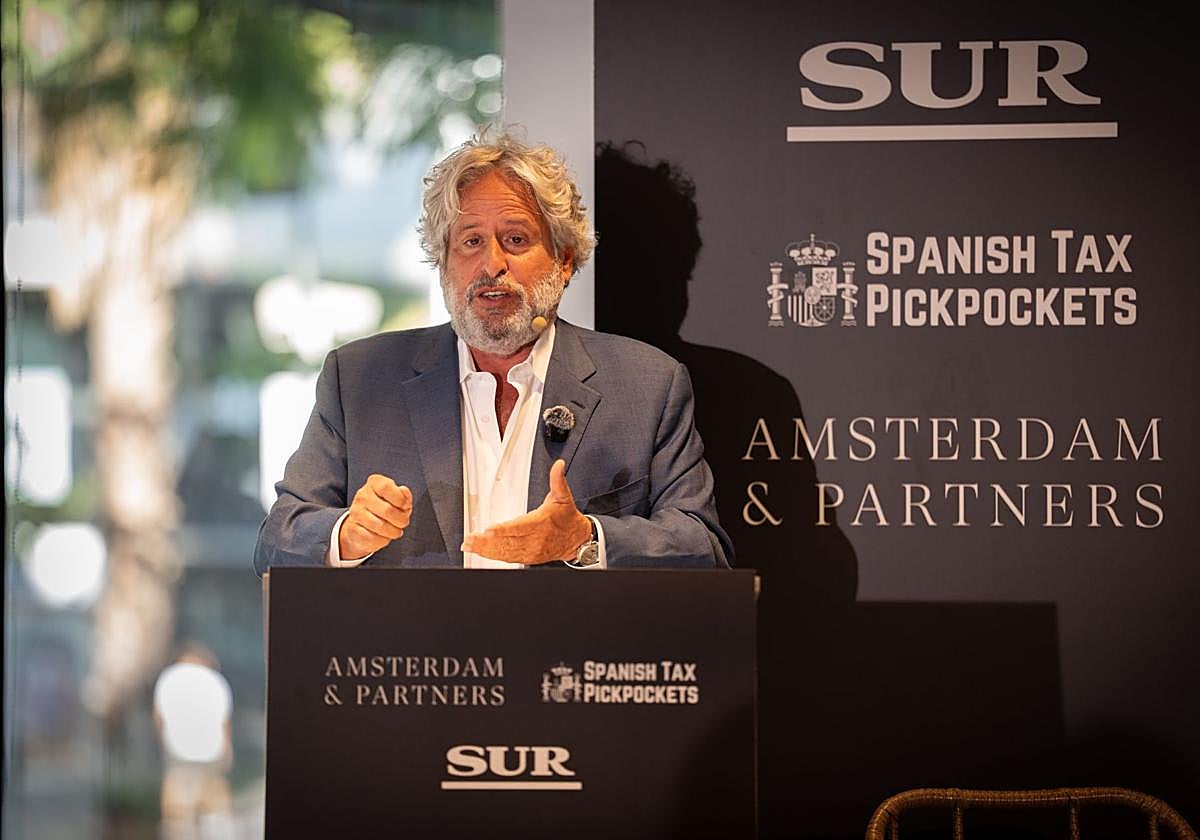
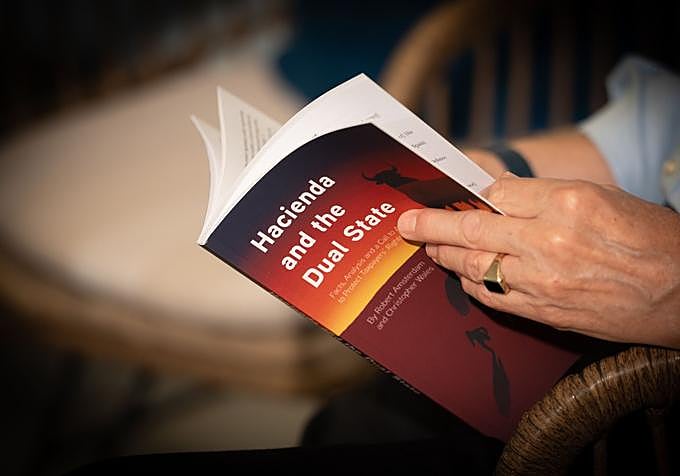
The boundaries of democratic governance are rarely shattered overnight; instead, they are quietly eroded from within. This was the sobering thesis presented at a recent gathering in Marbella, where American international human rights lawyer Robert Amsterdam and British public policy expert Christopher Wales introduced their new book Hacienda and the Dual State (Hacienda y el Estado Dual)
Focused explicitly on the contemporary legal and political climate of Spain, the authors spoke at an event in front of lawyers and businessmen and delivered a blistering, emotionally charged critique of what they describe as a profound institutional crisis that extends far beyond the realm of simple tax disputes.
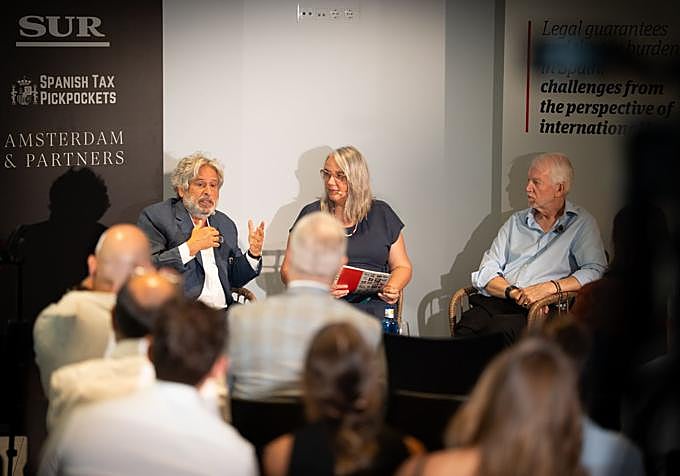
"I want to be very clear: we're not holding back any punches," Amsterdam declared early in his address, setting a fiercely adversarial tone. "The rule of law in Spain today is under siege. This country is standing by while its institutions are going down the sewer - and I'm not kidding."
For Amsterdam, a lawyer with four decades of international experience tracking authoritarian regimes, the current political landscape in Spain is nothing short of shocking.
"The level of political corruption in Spain, I would only compare to, I don't know, Congo's Mobutu, maybe Papa Doc Duvalier’s Haiti," he stated, expressing utter disbelief at the European Union's silence. "I am in shock that the EU is standing by while the Prime Minister's brother, wife, God knows, probably even his dog, are investigated... We are talking about a situation where the heads of the police are being investigated, where warfare is being conducted - it appears - by the Prime Minister against judges. Do you understand the institutional erosion and danger to democracy that you in Spain are living in day by day?"
At the theoretical core of their argument is the concept of the "dual state" - a political framework first articulated by legal scholar Ernst Fraenkel in his analysis of 1930s Germany. As Christopher Wales explained during the presentation, a dual state consists of two parallel systems operating within a single country. The first is the "normative state," where normal legal structures appear to function as intended: contract law is upheld, employment systems operate predictably, and everyday life looks deceptively stable from the outside.

Running parallel to this, however, is the "prerogative state." This parallel system knows no legal boundaries, constantly pushing the limits of its power. In Spain, Amsterdam and Wales argue, this unchecked prerogative power is embodied by the state tax agency, Hacienda. Wales noted that while "everything out there is perfectly normal," an investigation beneath the surface reveals "something unusual is happening, something that allows a part of government to go beyond the normal limits."
Amsterdam argued passionately that this administrative overreach turns citizens into subjects, rendering fundamental democratic guarantees of proportionality and equality before the law virtually meaningless.
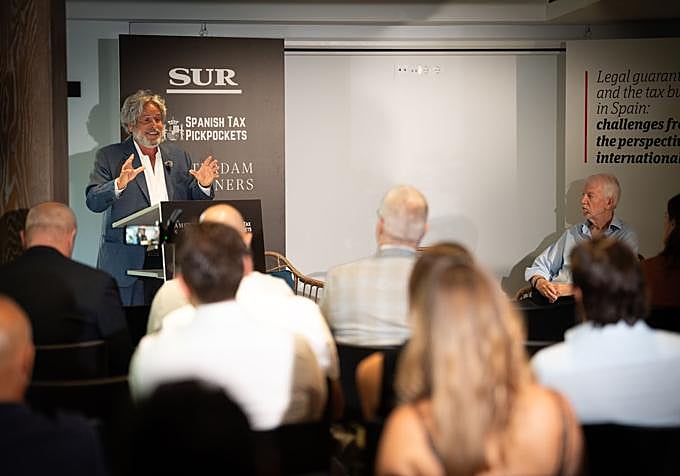
He reserved fierce criticism for María Jesús Montero - until March the Finance Minister - and the political class, stating, "the very people like Montero, who argued that Hacienda were the defenders of Spain against fraud, are engaged in the commission of fraud. They arer using your hard-earned money to engage in bid-rigging, to engage in payoffs involving a former Prime Minister (Zapatero) who was apparently shuttling back and forth to Caracas.
"What an outrage that the most punitive tax system in the world is taking that money and giving it to people without a hint of moral fibre! I'm outraged - I don't know why you're not!"
The presentation underscored a wider, more alarming trend: the total lack of an "equality of arms" between the individual and the state. When a citizen faces an audit, the standard presumption of innocence is effectively reversed by the "presumption of veracity." Amsterdam warned that the system is "modeled on the justice of Naples under the Mafia," referring to the tax agency as a "Mafienda" that aggressively forces citizens into settlements.
"They are willing to make you an offer you can't refuse," he roared. "They will give you a discount if you don't tell anybody, and you don't appeal, and you make all of this go away... because they know that if you actually appeal - if you live that long and you appeal - you're going to win. So they will give you a discount while they squeeze your, you know what, for God knows how many years."
What shocked Amsterdam most, however, was the palpable sense of fear paralyzing the local legal community. "When I first came to Spain, seeking some courageous lawyers to work with us, I was told by people I had known for decades: 'Hey Bob, could you come to our office through the back door? Because we don't want to have anything to do with your efforts. Because if we do, Hacienda will go after me, my wife, my kids, my clients.' How outrageous is that? This isn't Stalin's Russia; this is Sánchez's Spain."

The authors concluded with a stark warning about the integration of advanced, undisclosed AI algorithms into state surveillance and tax enforcement. Without immediate, targeted political reform to eliminate internal auditor bonuses - they are paid according to how much tax they raise giving them an incentive to tax first and ask questions later - and the oppressive "pay-to-play" model where all disputed taxes have to paid first before you can appeal, Amsterdam warned, the remaining bastions of the rule of law in Spain will completely collapse.
"Right now, you are not in a rule of law system," he concluded. "You need to make it your life's work to go to the political party, whichever one you want, and say, 'if you want my vote, get rid of pay-to-play and get rid of the bonuses.'"
![[]](http://static.vocstatic.com/voc26/latest/assets/images/favicon/surinenglish/apple-touch-icon-57x57.png)