
Inland
Tell the time in Antequera with a new sundial that also shows the equinoxes and solstices
The installation in Plaza Fernández Viagas consists of three sections designed specifically for the square
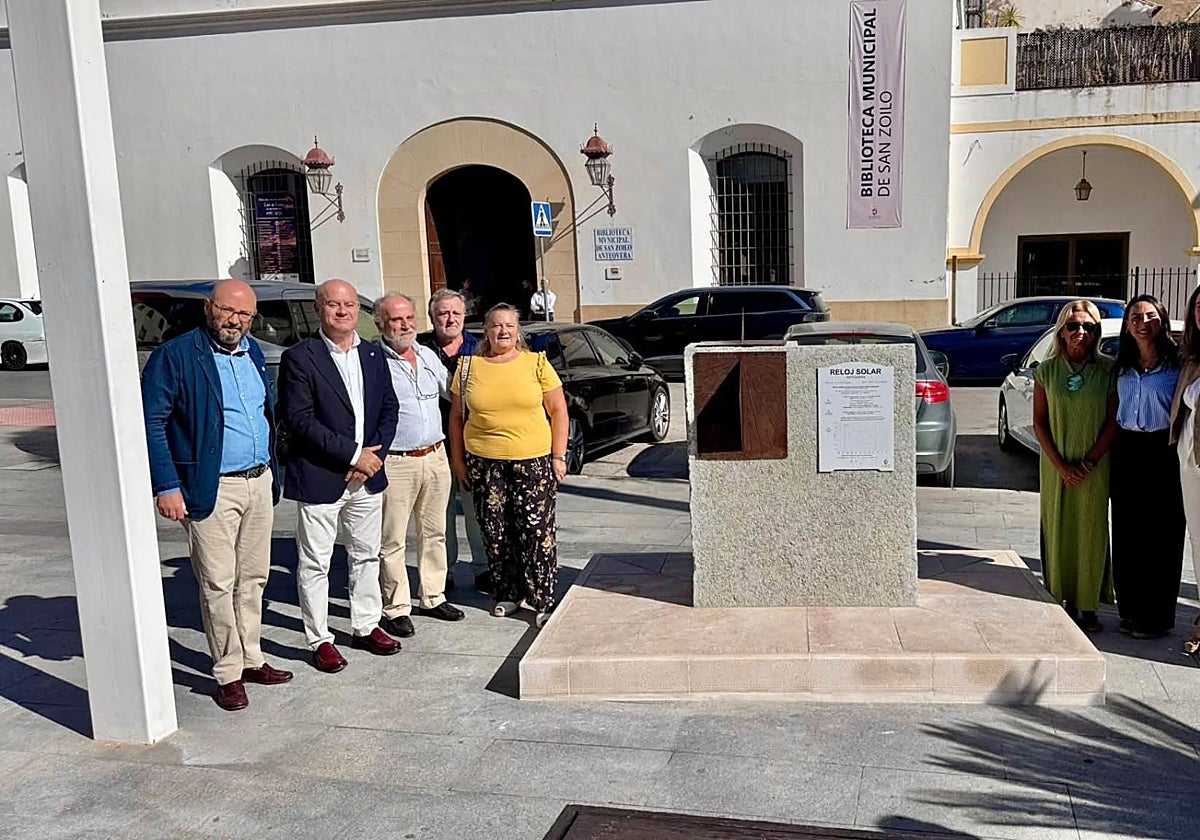

There is no need to check your phone to see what time it is in Antequera's Plaza Fernández Viagas anymore. Just follow the shadows.
The Malaga town has unveiled a new sundial made up of three sections that can mark the hours and half-hours, as well as indicate the equinoxes and solstices. The installation also serves an educational purpose.
Antonio Madrona spearheaded the project with support from the town hall and its historic heritage team. Rather than installing a standard sundial, Madrona designed all three sections around the square's exact geographical coordinates. He used a total station and mapping from Spain's IGN (national geographic institute) to calculate the position of the sun and the shadows it casts, allowing the sundial to make the different measurements.
The sundial also marks the culmination of a project that began as a personal initiative. María Sierras was one of the first municipal officials to hear about Madrona's proposal, after which the project moved forward with the culture and historical heritage departments.
Technicians from the municipal heritage office, including Justo Muñoz and Rafa Ruiz, also helped develop the project and find a suitable location for the installation in the public square.
The installation brings together hours, half-hours and the seasons, offering passersby a glimpse of a way of measuring time that people have used since antiquity. The dials include markers showing the times of year when the equinoxes and solstices occur, turning the installation into a small-scale educational tool for observing how the sun's path changes over the course of the year.
The sundial's accuracy depends on its exact location. The designers based their calculations on the square's geographical coordinates and used both a total station (a precision instrument for topographical surveying) and mapping from the IGN. As a result, the installation does more than serve as an ornamental feature: it functions as a working instrument specifically designed for the conditions at this site.
The education department plans to include the sundial in future school visits, giving pupils the chance to learn in practical terms how light and shadow can be used to measure the passage of time. Madrona has also offered to take part in these activities and explain the principles behind the installation to students.
The sun as a guide
During the presentation, Mayor Manolo Barón linked the project to one of the expressions traditionally associated with the town, "Que salga el sol por Antequera" (roughly, "Let the sun come up over Antequera"). He highlighted the project's scientific and educational value.
The installation also has a personal story behind it. Madrona dedicated the project to the memory of his wife, Mercedes, and thanked his family, friends and the municipal technicians who helped make the installation possible.
Plaza Fernández Viagas now has a new feature combining astronomy, education and public space. From now on, anyone who wants to check the time in Antequera can simply look at the shadows.
![[]](http://static.vocstatic.com/voc26/latest/assets/images/favicon/surinenglish/apple-touch-icon-57x57.png)