
Extra Schiller
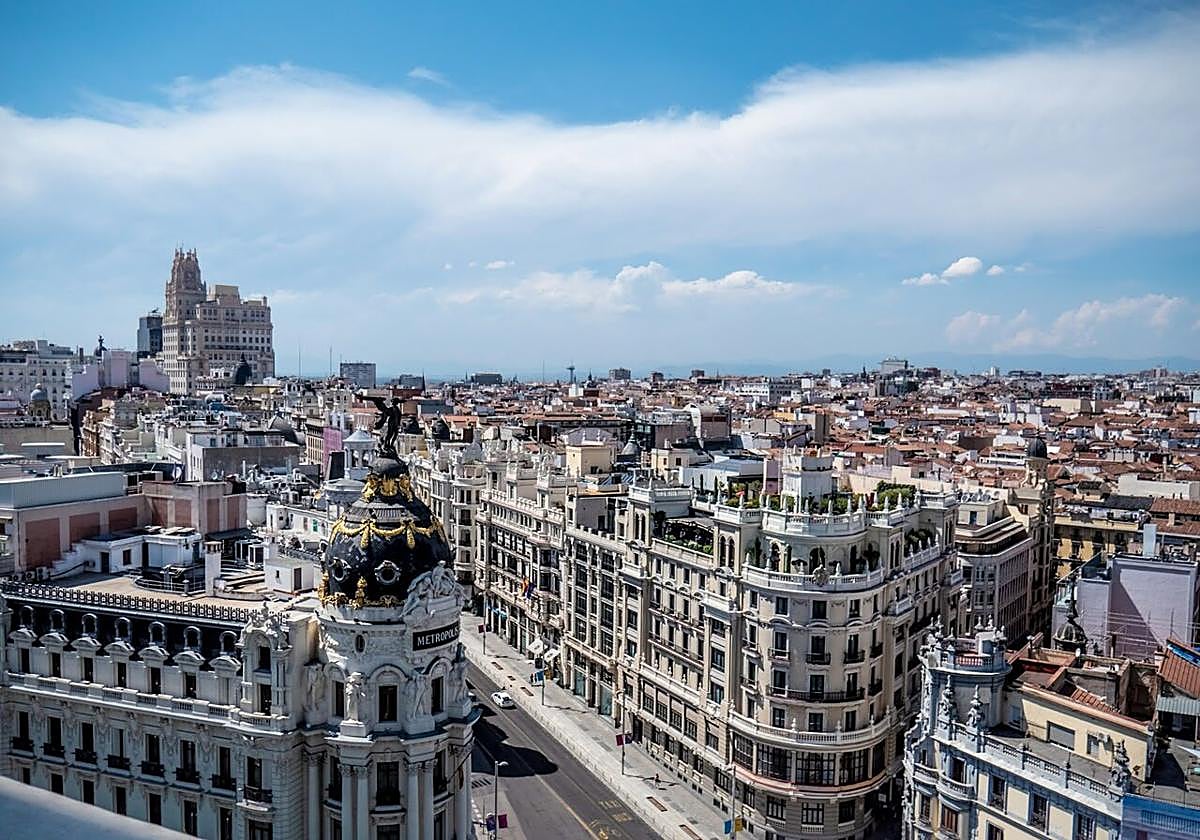
Why Madrid is an ideal destination for an international education
Academic prestige, economic opportunity and an unusually open civic culture complements its academic offering
SUR in English
Madrid
Global mobility used to be an incredibly powerful asset on a CV. But in 2026, it's becoming more of a baseline. In the World Economic Forum's Future of Jobs Report 2025, "global citizenship" is ranked as one of the most stable skills employers expect to need over the next five years. This isn’t about the fleeting trend of Digital Nomadism, but a durable requirement. Not in spite of the climate and geoeconomic fragmentation, but because of it.
Plus, for the jobseekers, having a wider pool of potential jobs is only going to help with maximizing salary and progression. SaaS and AI have connected countries more, even if the world feels like it’s moving away from globalism. In fact, turning away from US dependency may soon increase Europe interconnectedness - and potential associate members, like Canada.
An international outlook with intercultural knowledge is coming closer to an expectation. For anyone weighing a degree in international relations, diplomacy or global organisations on that basis, the real question isn't whether to study abroad. It's where.
A two-decade head start
Spain has been the most-chosen destination for Erasmus students since 2001. Within Spain, Madrid is the preferred city, which is a position the Comunidad de Madrid attributes to academic prestige, economic opportunity and an unusually open civic culture.
They tell a clear story with the numbers. The region's universities host 22,500+ international undergraduates and over 11,400 in official master's programs. These are spread over 6 public and 8 private universities offering 70 undergraduate degrees taught in English alongside 831 official master's programs overall, on top of the ~70,000 international students Madrid drew a couple of years back.
It’s an upward trend that has been lasting for over two decades now - long enough that plenty of investment has gone into the maturing of infrastructure for international students, be it housing or language support to a broadly international community.
An American-accredited campus
For students specifically targeting a US-style, English-language education without leaving Europe, an American university in Madrid solves the practical problems.
Schiller International University's Madrid campus is just minutes from Plaza Cibeles and the Paseo del Prado UNESCO World Heritage site. It’s 20 minutes from Madrid-Barajas Airport, yet has 3,000m² of teaching space.
Importantly, it has ACCSC accreditation along with dual-degree partnerships with the University of Roehampton in London and Dublin Business School. In other words, a Madrid-based degree can convert into recognised standing in two other countries without a second application process.
The route into diplomacy
Within that campus, the Master in International Relations and Diplomacy actually has institutional links backing it rather than just a syllabus. It’s a 12-month, 36-credit program and runs evening classes four days a week. It’s delivered in partnership with UNITAR, the UN's own training and research institute, covering the likes of international law, conflict and peace strategies, international organisations and human rights, along with an optional fellowship track that ends in a graduation ceremony in Geneva.
Students can also transfer between Schiller's Madrid, Paris, Heidelberg and Tampa campuses after just four months, meaning the degree itself isn’t just all-talk about the promise of international mobility, it delivers it itself. This is useful for those not yet certain which country they want their career to be based in.
Why the setting is as important as the syllabus
What makes Madrid unusually great for these studies is that it’s host to 125 resident embassies, meaning there’s a ton of official diplomatic representation permanently based in the capital from around the world.
It also headquarters an actual United Nations agency, UN Tourism, founded in 1975 and now representing 160 member states. It has been based in the city for half a century now and studying diplomacy in Madrid means the embassies, delegations and multilateral staff a graduate might eventually work alongside are just a beat away. They’re a metro ride from campus. For the whole length of the degree, available for guest lectures and internships, that’s a big deal and the kind of informal contact that a diplomacy program needs to offer.
Whether it actually pays off
Of course, the only thing that matters is the job that comes after it. But the evidence here is strong. Research on Italian graduates found that those who studied abroad had around a 23 percentage point higher probability of being employed than those who didn't - and this was three years after graduation, which is great data.
It shows that there is a real impact on career for those who study oversees, and for a student looking towards international relations or diplomacy, this is all the more important. Going with Madrid isn't so much about getting life experience abroad (and the sun, food, social scene…) but it’s the whole package: A campus surrounded by history and real diplomatic infrastructure. A master's with an actual UN institution behind it.
![[]](http://static.vocstatic.com/voc26/latest/assets/images/favicon/surinenglish/apple-touch-icon-57x57.png)