
Antequera uncovers part of 52-metre Roman theatre at Singilia Barba
New excavations have revealed exceptionally well-preserved stone blocks from the spectator seating
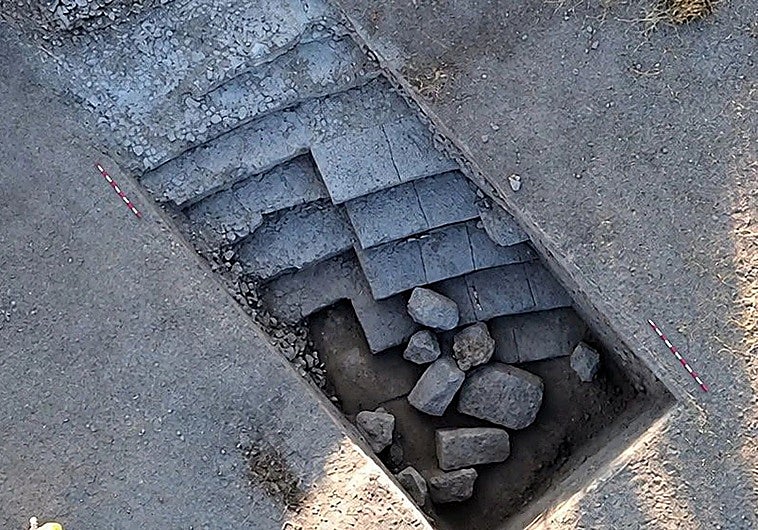

Singilia Barba has once again revealed another part of its past, as new excavations at the ancient Roman city near Antequera have uncovered part of ... the middle seating section of its theatre.
The monumental building measures about 52 metres in diameter, and the condition of the remains has surprised the research team. The excavation also marks the return of systematic archaeological campaigns to the site after more than three decades.
The team has unearthed large stone blocks belonging to the cavea, the area where spectators sat. Their state of preservation is particularly significant because the upper sections of Roman theatres are usually among those most affected by collapses, looting and the reuse of building materials over the centuries.
According to the Complutense University of Madrid (UCM), the results of this initial intervention have exceeded expectations.
Excavations resume
The theatre was not previously unknown. Excavations carried out between 1985 and 1991 had already documented part of its upper seating, but much of the structure remained buried.
Now, the latest research is allowing archaeologists to investigate areas that have remained hidden since those earlier campaigns and gradually build a more complete picture of one of Singilia Barba's major public buildings. The UCM estimates that the theatre could have held around 2,000 spectators.
The remains are located at what is now the Cortijo del Castillón, about seven kilometres north-west of Antequera and a short distance from the River Guadalhorce.
The ancient city was of Turduli origin and is documented from at least the third century BC. It later came under Roman control and was granted the status of a municipium during the Flavian period. Its importance was reflected in an urban complex that included a forum, theatre, circus, residential areas and a necropolis.
Much of the city remains underground
Considerable archaeological potential remains buried beneath the site. The research project indicates that much of the city's urban layout remains underground and proposes combining traditional excavation techniques with ground-penetrating radar, magnetometry, photogrammetric surveys and three-dimensional models.
For the theatre, the current campaign is only a first step. Further interventions will be needed to establish its layout, chronology and development in greater detail.
Currently, the team aims not only to uncover more structures but also to reconstruct how the Roman city functioned and restore Singilia Barba's archaeological importance after excavations were interrupted in the early 1990s.
![[]](http://static.vocstatic.com/voc26/latest/assets/images/favicon/surinenglish/apple-touch-icon-57x57.png)