
Education
Almost 100 Malaga province schools implement digital tool to detect dyslexia and support students' learning needs
Based on artificial intelligence and games, Dytective, enables early detection and personalised support for students
Cristina Pinto
Technology joins forces with inclusion in Malaga province's classrooms. A total of 98 primary schools have incorporated Dytective into their teaching methodology: a cutting-edge digital platform designed for the early detection and treatment of dyslexia.
Thanks to a strategic agreement between Fundación 'la Caixa' and the Change Dyslexia organisation, this tool is free of charge for schools, which removes economic barriers to addressing learning difficulties.
The implementation in Malaga is part of a rollout across Andalucía. The region already has 474 registered schools.
Director of EduCaixa María Espinet is very familiar with what children need in school. "I was a teacher myself and I immediately connected with the tool. For a teacher, it's frustrating not being able to adequately support children with dyslexia," she said.
Espinet highlighted that this software is not intended to overburden teachers, but rather to provide professional support. "We saw it clearly: it doesn't burden the teacher, it supports them. It allows them to focus on the emotional and pedagogical aspects while the system takes care of the repetitive and technical training."
One of Dytective's greatest strengths is its screening test: a way to quantify the difficulty level compared to a private diagnosis that can cost up to 600 euros, a price that many families in Malaga cannot afford.
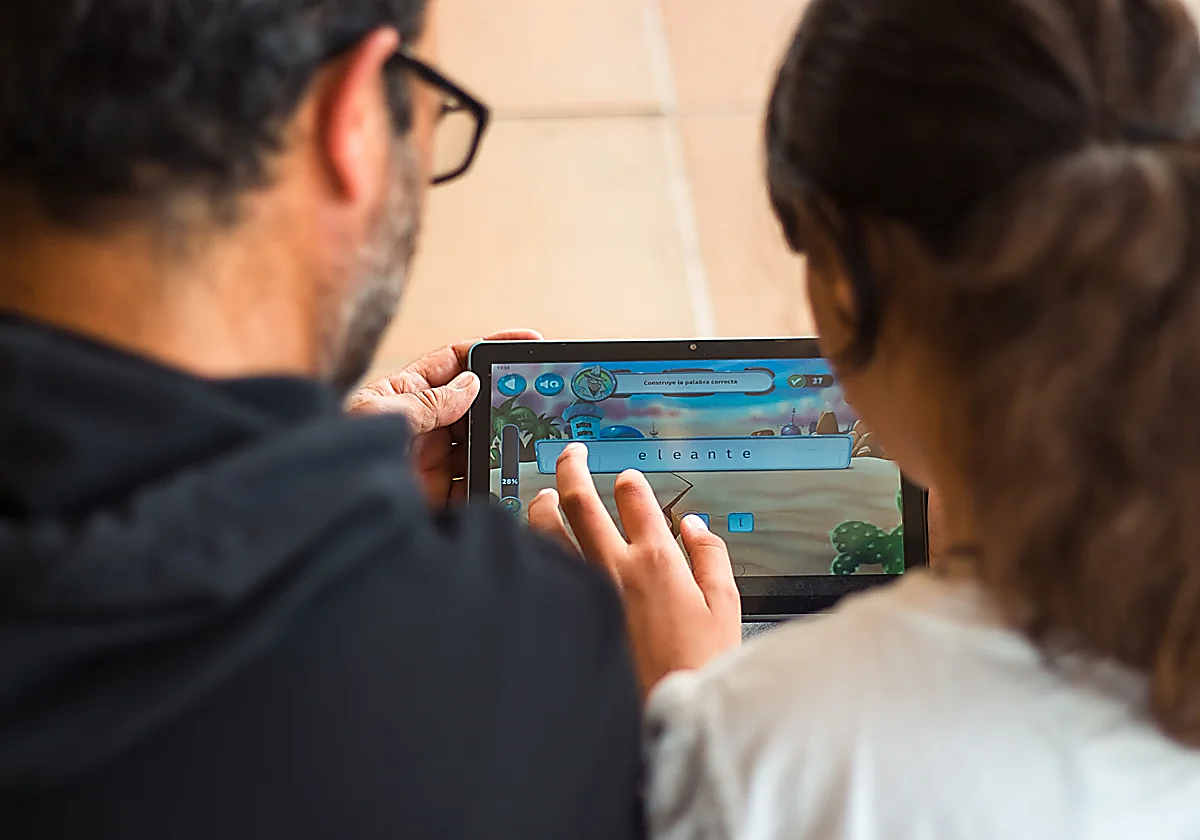
The tool works through fun sessions of up to 15 minutes a day where students become "detectives" solving challenges in environments like the jungle or underwater. In each session, they work on reading comprehension, semantics and coding skills.
One of the most innovative aspects is the use of artificial intelligence (AI) as a microscope that allows to see the invisible. The software analyses error patterns and, if it detects specific problems in phonological decoding, it automatically recalibrates the exercises to address that weakness without the child feeling like they are failing.
In turn, the teacher generates detailed reports to monitor each student's progress and level, enabling massive personalisation that was previously unthinkable in classes of 25 or 30 students.
The initiative been a success in Malaga, as data shows. The province has the second-highest number of participating schools in Andalucía, joining a national network where one in four primary schools already uses the system.
"What amazes us most is that it has proven to have a real impact. Schools that use it show better reading comprehension than those that don't," Espinet said.
Although the programme is for primary school students (especially those in grades 1-4), its use is expanding to some secondary schools due to its flexibility. It can be used in language arts classes or assigned as homework.
"We've even made it available to social service organisations, so that children in vulnerable situations can use it in the afternoons," Espinet said. The average usage rate demonstrates the enthusiasm of students and their families.
Malaga is at the forefront of more inclusive education. As Espinet stated: "Families are more motivated because they finally feel they can support their children in a process that was previously a source of worry and helplessness."
![[]](http://static.vocstatic.com/voc26/latest/assets/images/favicon/surinenglish/apple-touch-icon-57x57.png)