
Water
Acosol is to put out to tender a ‘desalination plant’ to use reclaimed water for watering gardens and golf courses
Reverse osmosis plant will be incorporated into the Guadalmansa wastewater treatment works, attracting strong interest from Marbella, Estepona and Benahavís
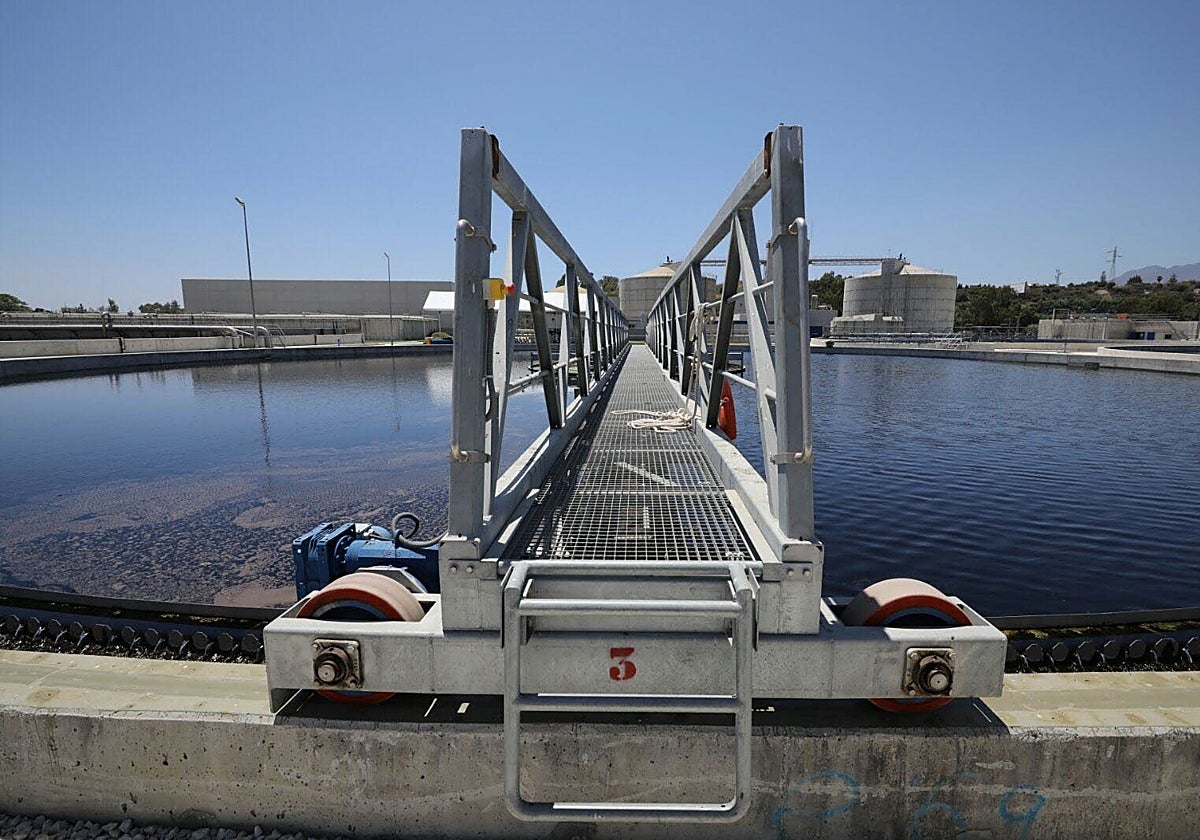

For decades now, golf courses on the Costa del Sol have been irrigated with wastewater that has undergone tertiary treatment.
The effluent is converted into ... reclaimed water. Since the last drought, thanks to the expansion of the tertiary treatment plant at Málaga’s second largest wastewater treatment works - the Peñón del Cuervo plant - 9 hm3 per year has been supplied for agricultural irrigation in the Axarquía region.
These are the main uses at present, alongside the refurbishment of the Guadalhorce treatment works in the city. In the future, the aim is to use Guadalhorce's 30 cubic hectometres of water per year for irrigating golf courses, agricultural land, and public gardens, whilst continuing to cool the combined-cycle power station at Campanillas. Recharging aquifers is another core objective of the project.
Related story
-

Desalination plant
Eugenio Cabezas
The province’s potential is much greater because production capacity is very high. However, bureaucracy and strict health regulations governing new uses make it difficult to capitalise on this capacity.
The level of water purity required for street cleaning or golf course irrigation differs significantly from industrial standards. Similarly, irrigating crops where fruit contacts water requires higher safety measures than for non-contact crops.
Consequently, ultrafiltering the water to eliminate salt and harmful compounds is vital. This is precisely what Acosol, the public water company of the Western Costa del Sol Association of Municipalities, is addressing as part of its sustainability initiative.
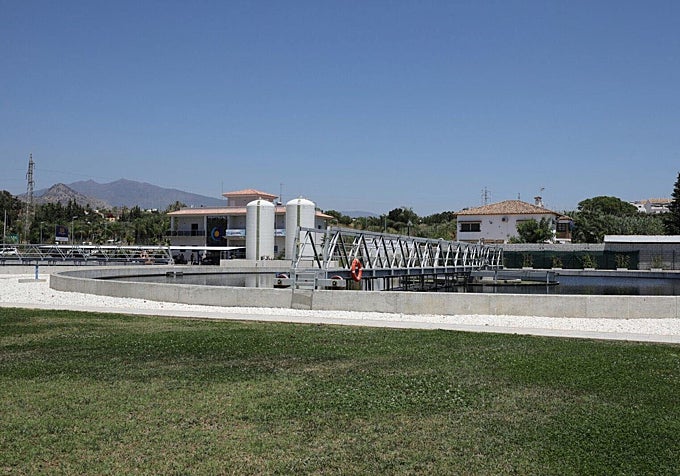
At present, the public utility produces over 40hm3 of reclaimed water annually, but sells only between 7 and 10hm3. Any increase in utilisation directly saves drinking water resources, including the La Concepción reservoir, local wells, aquifers, and the Marbella desalination plant.
To maximize usage, Acosol plans to put out to tender in the coming months a project for a reverse osmosis plant at the Guadalmansa wastewater treatment works - functioning as a specialized 'desalination plant' for reclaimed water - to supply high-quality water to private gardens and golf courses. Municipalities showing the strongest interest include Marbella, Estepona, and particularly Benahavís.
“There are regulations we must comply with. We have used reclaimed water on golf courses routinely since 2008 without incident, as well as in some public parks. However, we are now required to make technical adjustments and formulate risk management plans, for which we have issued a tender. The Regional Government of Andalucía requires these risk management plans to grant final authorisations. All of this covers public irrigation, street washing, and golf courses, which require standard-quality reclaimed water,” explained Matilde Mancha, Managing Director of Acosol.
30
hm³ of reclaimed water per year.
The primary production target for the upcoming expansion of the Guadalhorce wastewater treatment plant.
“We are taking this a step further. Our current project focuses on meeting demand for private water supplies, which requires a higher quality standard and dedicated facility investments. We selected the Guadalmansa plant as our benchmark due to strong private irrigation demand in Benahavís, where extensive green spaces exist on private land.
"Some residential estates there already feature dual-pipe networks designed for reclaimed water. The local council wants to utilise this infrastructure, and Acosol will support the project with targeted investment,” Mancha added.
The proposed reverse osmosis plant will drastically reduce water conductivity and salinity: “We are finalising the preliminary design ahead of our 31 August milestone. Following discussions with the local councils of Marbella, Estepona, and Benahavís, we will issue a tender this autumn for the design and construction of the reverse osmosis plant at Guadalmansa," she added.
“We have taken Guadalmansa as a reference point, because there is high demand for private irrigation water there, particularly in Benahavís. There are a great many green spaces there, mostly private ones”
Mancha views the expansion of reclaimed water infrastructure as vital to easing pressure on municipal drinking water supplies: “Very few places in Spain have implemented reclaimed water for private irrigation. We intend to lead the way.”
The project will mark the first facility of its kind in Malaga and the wider region of Andalucía. While Spain lacks a unified public register detailing treatment plants using reverse osmosis for water reclamation, advanced tertiary membrane treatments (combining ultrafiltration and reverse osmosis) are operating across key water-stressed regions, Mediterranean basins, archipelagos, and major metropolitan areas.
“This will put us on the map in terms of sustainability at a level that does not exist in Andalucía. Very few places in Spain have a reclaimed water system in place for private irrigation”
In the Valencian Community, plants such as the Benidorm wastewater treatment plant use ultrafiltration and reverse osmosis processes to treat significant volumes of water for reuse.
On islands such as Tenerife, recent pioneering water reclamation initiatives using reverse osmosis in Adeje-Arona are particularly noteworthy.
Canal de Isabel II, in Madrid, applies advanced treatments using ultrafiltration and reverse osmosis at treatment works such as Arroyo Culebro (Cuenca Media Alta) to produce ultra-high-quality reclaimed water for industrial use.
The Villapérez WWTP (Oviedo) has incorporated ultrafiltration and reverse osmosis lines. For its part, the Catalan Water Agency (ACA) uses advanced membrane technology systems (ultrafiltration and reverse osmosis) in the metropolitan area to ensure high-quality water supplies and aquifer recharge.
![[]](http://static.vocstatic.com/voc26/latest/assets/images/favicon/surinenglish/apple-touch-icon-57x57.png)