
Review
World Press Photo show
Winners in the different categories in the 2026 edition of the international awards are on display in Barcelona
Kate Rayner
"The prizes go to the photographs that depict violent conflicts, climate change and abuse in all its forms,” state the judges of World Press Photo 2026. This year there are 42 winners in the categories of individual photographs, photographic reports (four to ten shots) and long-term projects (24 to 30 images), all being exhibited at the Contemporary Culture Centre in Barcelona until 13 December.
There are, of course, harrowing war-related photographs such as starving Gazans at risk of being shot at food distribution points (Saber Nuraldin) or that of a woman scarred by fire at her displacement camp during Civil War in Sudan (Abdulmonam Eassa), and the result of violent attacks by Russia on residential buildings in Ukraine (Evgeniy Maloletka).
Forest fires, in Southern California, where a blaze lasted for over three weeks (Ethan Swope), and here in Spain, in Galicia (Brais Lorenzo) figure among the winning photographs related to climate change. With the Arctic Ocean warming at three times the rate of the rest of the world, one of the most astonishing winning shots in this category (Roie Galitz) shows a female polar bear feeding on a gigantic dead and decomposing sperm whale in the Norwegian archipelago of Svalbard.
Abuse covers harm to animals as well as human beings. For centuries for families in part of the Solomon Islands the killing of dolphins (Matthew Abbott) has formed part of their culture: a source both of food and commerce.
It took half a century for the civil defence patrollers who had raped Maya Achi women in Guatemala to be sentenced to 40 years each for rape and crimes against humanity (Victor J . Blue).
It is shocking to see images of severely sick and dying children in Argentina due to Milei's policy of treating crops with harmful pesticides, particularly glyphosates, which cause leucemia, cancer and miscarriages, as well as embryonic malformations (Pablo E.Piovano); or the so-called ”moon dust”, which is actually from a cement factory, in Alexandría, Egypt, leading to irreversible respiratory problems (Mohamed Mahdy).
In October 2025 a deadly police operation caused mayhem in the favelas of Rio de Janeiro, officially against organised crime - Comando Vermelho (Red Command) criminal organisation - but in fact, although 122 were shot, few of the leaders were arrested (Eduardo Anizelli).
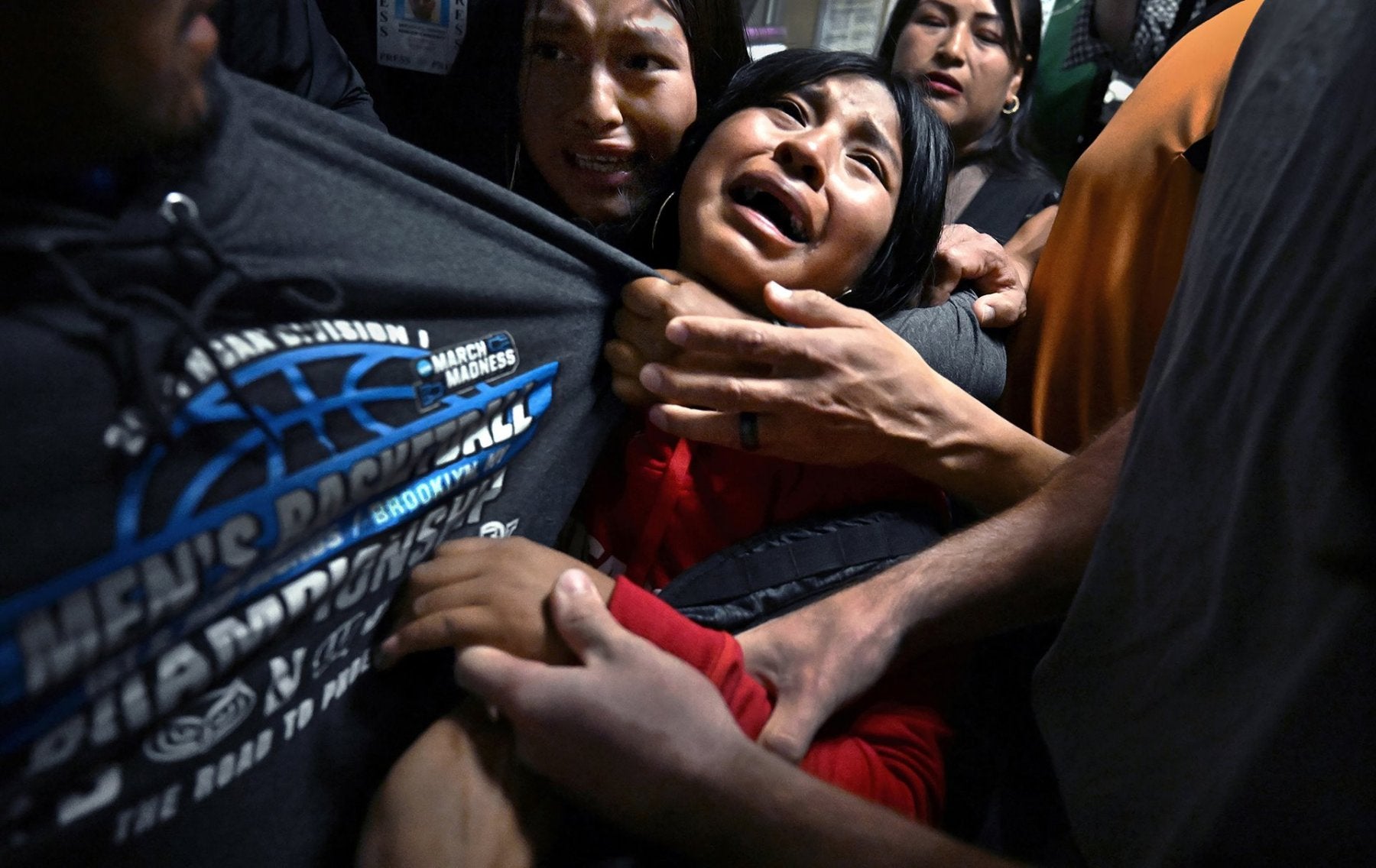
However the top photo of the year, taken by Carol Gozy for the Miami Herald, throws the viewer headlong into abuse of a different but equalling disturbing kind as it depicts, in close-up, the trauma of three children, seven, 13 and 15, and their mother being separated from Luis, an immigrant from Ecuador and the sole breadwinner for his family, by US Immigration and Customs Enforcement (ICE).
