
Gardening in southern Spain
Tulbaghia violacea
Tulbaghias are elegant plants with airy blooms reminiscent of small agapanthus
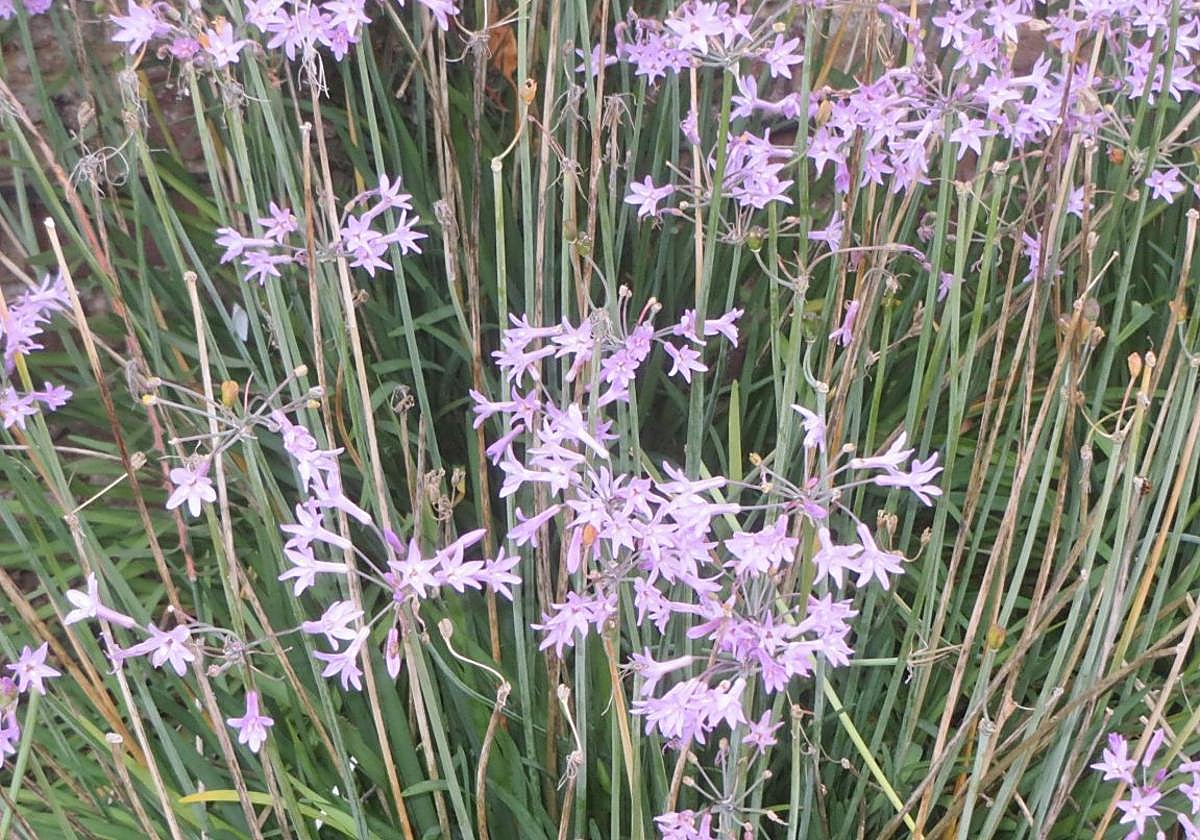
Denise Bush
South Africa accounts for ten per cent of the world's flowering plants, and among these are Tulbaghias, elegant plants with airy blooms reminiscent of small agapanthus.
The most widely grown ornamental species is Tulbaghia violacea, commonly known as wild garlic or society garlic. Named after Ryk Tulbagh, governor of the Dutch Cape Colony from 1751 to 1771, the species name violacea refers to its violet-coloured blooms. It is native to a region stretching from the Eastern Cape through KwaZulu-Natal and Limpopo to Zimbabwe.
Society garlic forms clumps of narrow, strap-like, grey-green leaves arising from fat tuberous rhizomes. The plant typically reaches 50 to 60cm in height and spreads to around 30cm wide. From mid-summer through early autumn, tall stalks bear clusters of up to 20 tubular flowers that open into six-pointed star shapes. While the flowers emit a sweet fragrance similar to hyacinths and attract bees and butterflies, the foliage and roots have a pungent garlic aroma when bruised, which lingers on the skin after handling.
This tough perennial thrives in hot, sunny conditions and copes well in poor, well-drained soils, making it ideal for rockeries, borders, path edges and ground cover. Although it can tolerate drought once established, regular watering through the growing season will produce the best floral display. It can tolerate some shade although flowering may be reduced.
In areas with cold winters, T. violacea may die back to the ground. It will survive short periods of frost if the crown is mulched or can be grown in a container that can be moved to a sheltered spot in winter. Tulbaghia require only light pruning and the removal of spent flowers or damaged foliage to keep the plant tidy.
Propagation is achieved by seed sown in spring or by dividing clumps. Division yields quicker results, whereas seed-grown plants generally take two to three years to flower.
Both the leaves and flowers of the plant are edible, offering a mild garlic flavour. Zulu tradition incorporates the leaves and flowers as a spicy seasoning for meat and potatoes or eaten as spinach.
In traditional medicine, infusions are made from the boiled rhizomes to treat coughs, colds, fevers and asthma. It was also once used to treat tuberculosis and intestinal worms. Crushed leaves are applied to relieve sinus headaches, and their antibacterial and antifungal qualities are the subject of ongoing study.
The crushed foliage acts as an effective repellent against fleas, ticks and mosquitoes, while planting it around homes is traditionally believed to deter snakes and moles.
![[]](http://static.vocstatic.com/voc26/latest/assets/images/favicon/surinenglish/apple-touch-icon-57x57.png)