The ship Isabela, the undercover sale of slaves and a questionable priest: Squanto's arrival in Malaga
The provincial archive has a record of the bizarre transaction that allowed Hunt to earn 400 'reales' for each of the 25 'Indians' he kidnapped

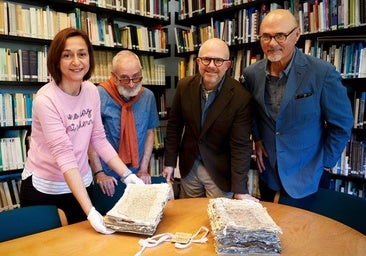
Squanto's life has been the subject of several documentaries and a film. But the American tourists who have been in Malaga researching in the historical archive maintain that it would make for a Netflix series. They may not be wrong: his crucial role in the arrival of the first English settlers in Massachusetts and his role in the first Thanksgiving feast in history are just two episodes in the exciting life of this member of the Patuxet tribe, probably born in 1580.
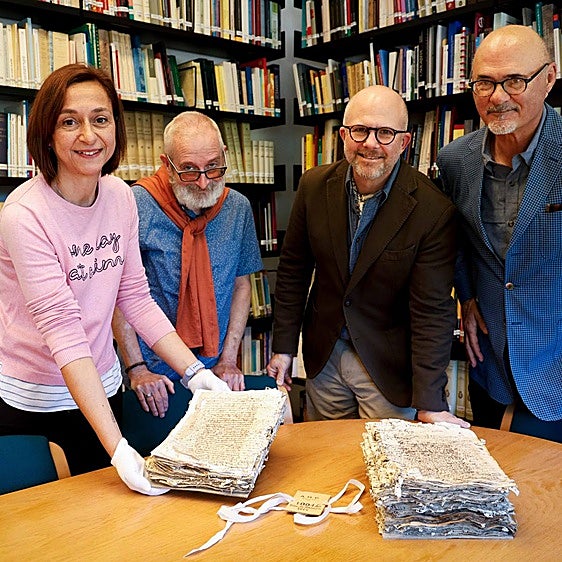
In order to play this role of interpreter and mediator between settlers and natives, Squanto lived another series of adventures worthy of a film. Historian Purificación Díaz García recounts them in an article published in 2023 in the Boletín de la Sociedad de Amigos de la Cultura de Vélez-Málaga, following research carried out after the discovery of Squanto's deed of sale.
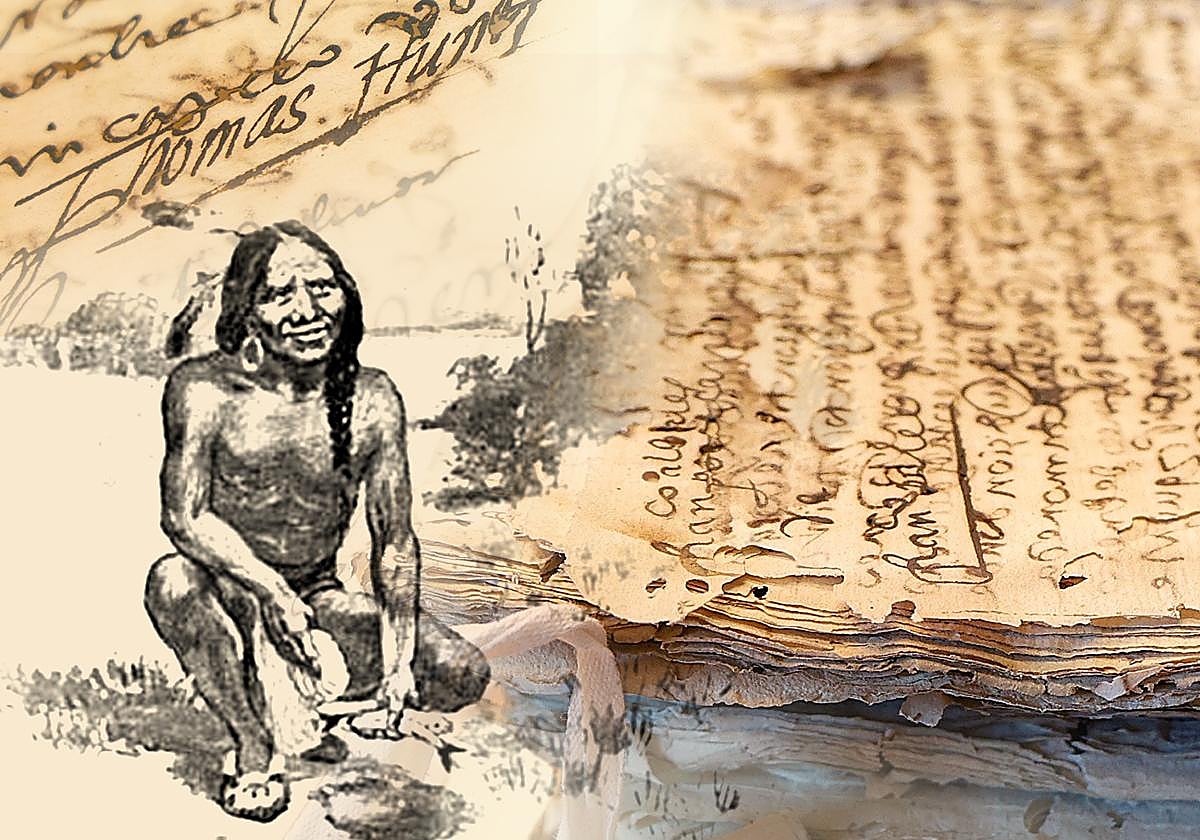
This record shows that on 22 October 1614, an English merchant made a transaction with a clergyman who was a beneficiary of the Church of the Santos Mártires in the city of Malaga. "The English trader's name was Thomas Hunt, and his ship named La Isabela, from London, docked in the port of the city; he brought with him twenty-five 'Indians', and carried out a strange transaction with Juan Bautista Reales, beneficiary of the Santos Mártires, worthy of careful analysis. It looked like a sale, but it was not," Ruiz García writes in her article.
Thomas Hunt argues in writing why he had kidnapped Squanto and his companions: according to him, he was fishing for cod on the beach when the "savages of the land" came out to "disturb him with their armed canoes", so he was forced to seize 25 of them.
Out of "Christian piety" he decided not to throw them into the sea and took them to Europe to be evangelised. His intention was to reach Great Britain, but storms prevented him from doing so and, after a confusing episode in Gibraltar (according to him, they wanted to make them slaves there and he prevented it), he landed in Malaga. There, he handed them over to Juan Bautista Reales, a "clergyman" who was the beneficiary of the church of the Santos Mártires, so that "by his hand he could distribute them among Christian people of good opinion and satisfaction, who would treat them well, so that they could catechise them in the faith of Jesus Christ, making them serve for as long as they saw fit so that, once they were Christians, they could achieve their freedom in full".

Newfoundland
1605. Kidnapped in Patuxet (Massachusetts), and taken to London.
1614. He is taken back to Patuxet, but he is captured again and taken to Malaga to be sold as a slave. He lives in Malaga for two years after being freed.
1618. He travels to London, tries to return to Patuxet via Newfoundland (Canada), but is captured again and sent back to London.
1619. Finally he returnd to Patuxet..
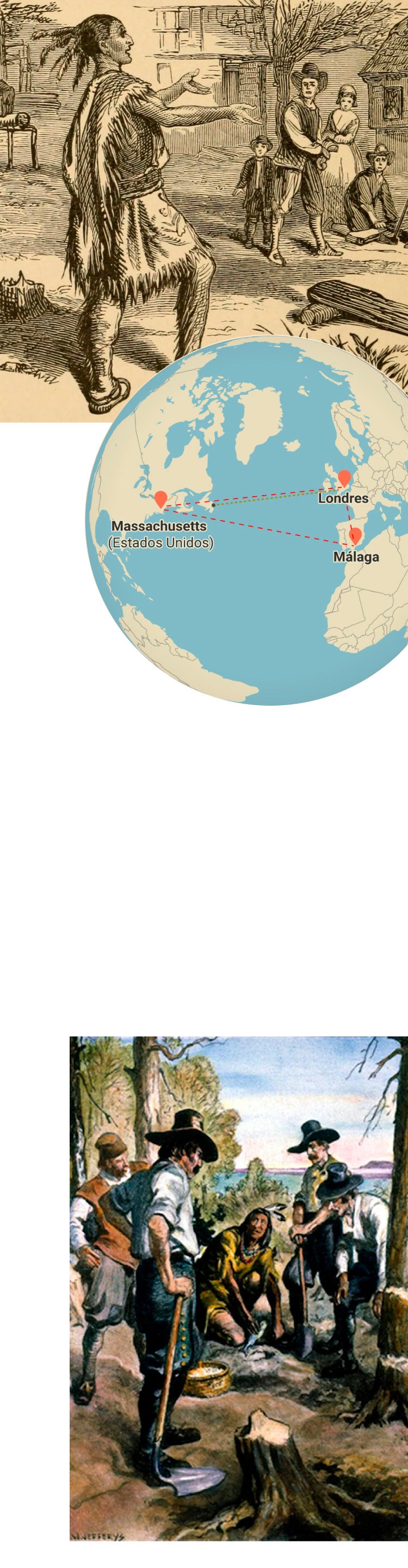
Newfoundland
1605. Kidnapped in Patuxet (Massachusetts), and taken to London.
1614. He is taken back to Patuxet, but he is captured again and taken to Malaga to be sold as a slave. He lives in Malaga for two years after being freed.
1618. He travels to London, tries to return to Patuxet via Newfoundland (Canada), but is captured again and sent back to London.
1619. Finally he manages to return to Patuxet.
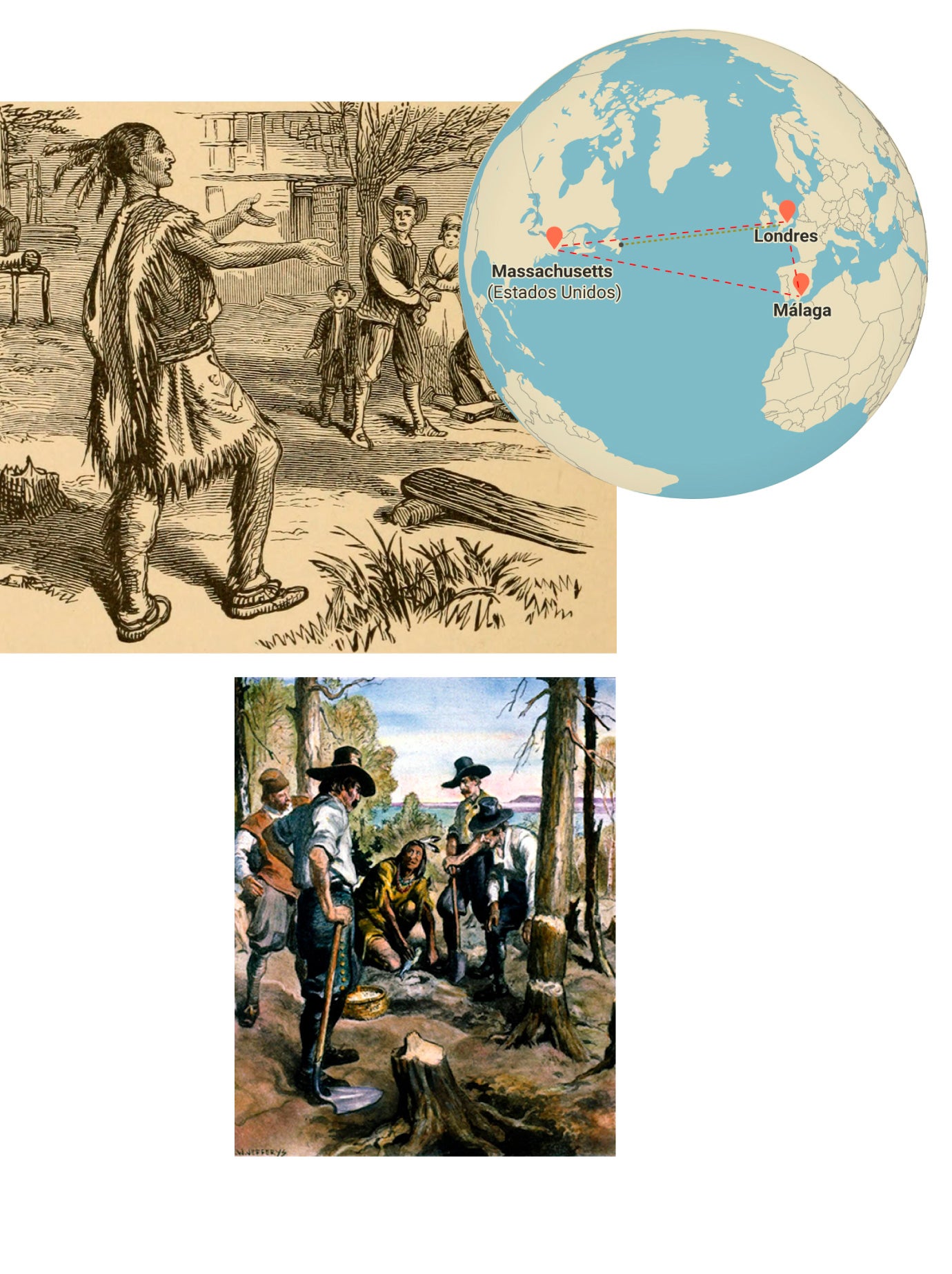
Newfoundland
1605. Kidnapped in Patuxet (Massachusetts), and taken to London.
1614. He is taken back to Patuxet, but he is captured again and taken to Malaga to be sold as a slave. He lives in Malaga for two years after being freed.
1618. He travels to London, tries to return to Patuxet via Newfoundland (Canada), but is captured again and sent back to London.
1619. Finally he manages to return to Patuxet.
Reales gave Hunt 400 reales for each of the hostages. How was this justified, if it was not supposed to be a sale of slaves? The deed states that this payment was to compensate for the expenses that the "savages" had caused the English captain during their captivity. A cynical explanation that was exposed when, years later, Squanto himself revealed his story: Thomas Hunt tricked them into boarding the ship and kidnapped them, tried to sell them unsuccessfully in Gibraltar and finally did so in Malaga, placing them in the hands of "some friars", as he put it.
"Hunt never imagined it would be so difficult to sell them as slaves, disregarding the laws inherited from Isabella the Catholic regarding the treatment to be given to the inhabitants of the newly discovered world, as well as those respecting the order of Pope Paul III, who in 1537 had proclaimed that the Indians were true men and should not be deprived of their freedom and reduced to our service like brute beasts. When he came face to face with the problem and with the authorities preventing him from completing his business, he arranged a covert sale with Juan Bautista Reales, placing them under administration, without slavery, for a period of eight years, after which they would be free,” explains the researcher.
It was not eight years, but two, according to Ruiz García, that Squanto spent in Malaga. He left the city when he managed to embark, "in a way that was still not very clear", on an English ship that took him to London, where he was employed in John Slaney's shipyard for four years. Once he had learned English, he was sent to the colony of Newfoundland to work as an interpreter. While there, Squanto contacted a ship's captain named Thomas Dermer, who had worked with Captain John Smith, Pocahontas' friend.
Dermer asked him to help mediate with the natives of the Patuxet and Nauset tribes, who were furious with the English because of Captain Hunt's outrages. The two embarked on a thousand-mile journey to discover that all the members of their tribe had died of the plague.
Squanto then settled with the Wampanoag Confederacy and interpreted at the historic meeting between their chief Massasoit and the English settlers who arrived in Plymouth, Massachusetts, in 1620 aboard the Mayflower.
The peaceful relationship established there allowed the Pilgrim Fathers to survive and prosper. And Squanto would soon become an integral member of the Plymouth colony, translating and negotiating between its governors and tribal leaders. He also taught the immigrants how to make better use of natural resources: for example, how to catch eels and plant corn using fish as fertiliser.
At the end of November of that year in 1621, the Pilgrim Fathers thanked God for the good harvest obtained through Squanto's intercession, and celebrated in style among Indians and settlers, thus giving birth to the first Thanksgiving Day. Squanto died the following year, in 1622, of an illness.
The historian also researched Juan Bautista Reales, the Malaga-born figure at the centre of that sale that was not a sale.
"He was constantly engaged in trade at the city’s port, providing guarantees or entering into numerous contracts with shipowners and merchants. He owned estates in Churriana, Campanillas, Benalmádena and El Arreijanal, where he had a sugar mill in partnership with another owner, Francisco Solimán, a house and warehouses in Malaga, a drying shed in Los Percheles and a main residence on Calle Ancha de los Percheles, now Calle Ancha del Carmen,” explains Purificación García in her article, based on the inventory of assets drawn up by his heirs following his death.
Among them, incidentally, were three illegitimate sons by two different mothers. The clergyman obtained permission from the Crown to bequeath his fortune to them. What did he do with the 25 Native Americans he received from Captain Hunt: did he free them as a good Christian, or did he exploit them for his business? That remains a mystery.
¿Tienes una suscripción? Inicia sesión