On the Malaga trail of Squanto, the Native American who saw the birth of Thanksgiving
Three American historians embark, with the help of the provincial archives, on an exciting search for 17th-century documents that prove that a key figure in the colonisation of North America was in Malaga
It was Friday 20 March and less than an hour before the Archivo Histórico Provincial was due to close its doors when three gentlemen who looked like they had stepped out of a Harvard cloister burst into the foyer. Round glasses, tweed jackets, Fedora hats.
They were not lost. They were Alan Cornett, Tom Ruby and Gavin Bledsoe, three American historians who knew exactly what they were looking for: a deed of sale of 25 slaves of Amerindian origin, signed in Malaga in 1614, by an English captain named Thomas Hunt to a priest named Juan Bautista Reales.
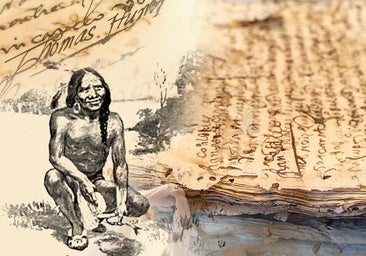
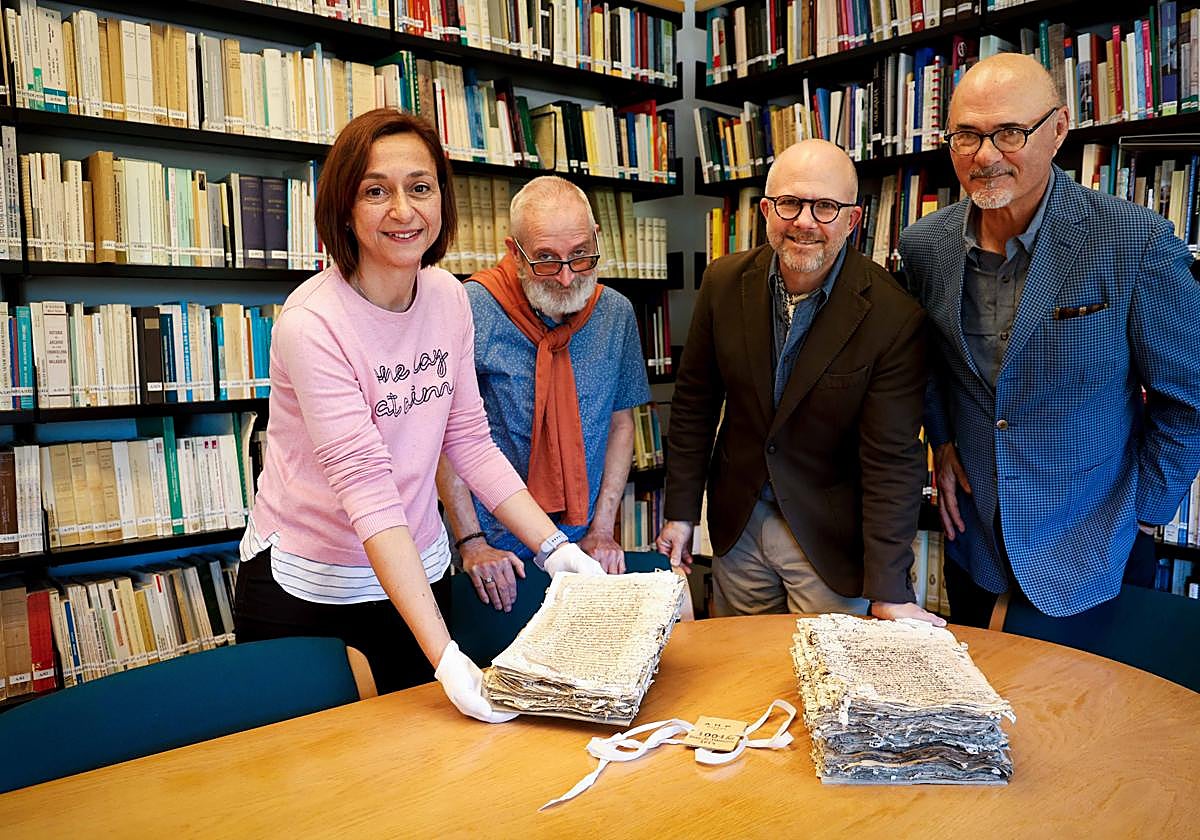
This was the beginning of an exciting adventure shared by three American visitors and the head of information and research at the provincial archive, Carmen Jurado. Together they formed an improvised team in search of traces of Squanto: a Native American who lived between the 16th and 17th centuries and became a key figure in the collective American memory by helping the Pilgrim Fathers to settle in Plymouth (New England) and trade with indigenous tribes.

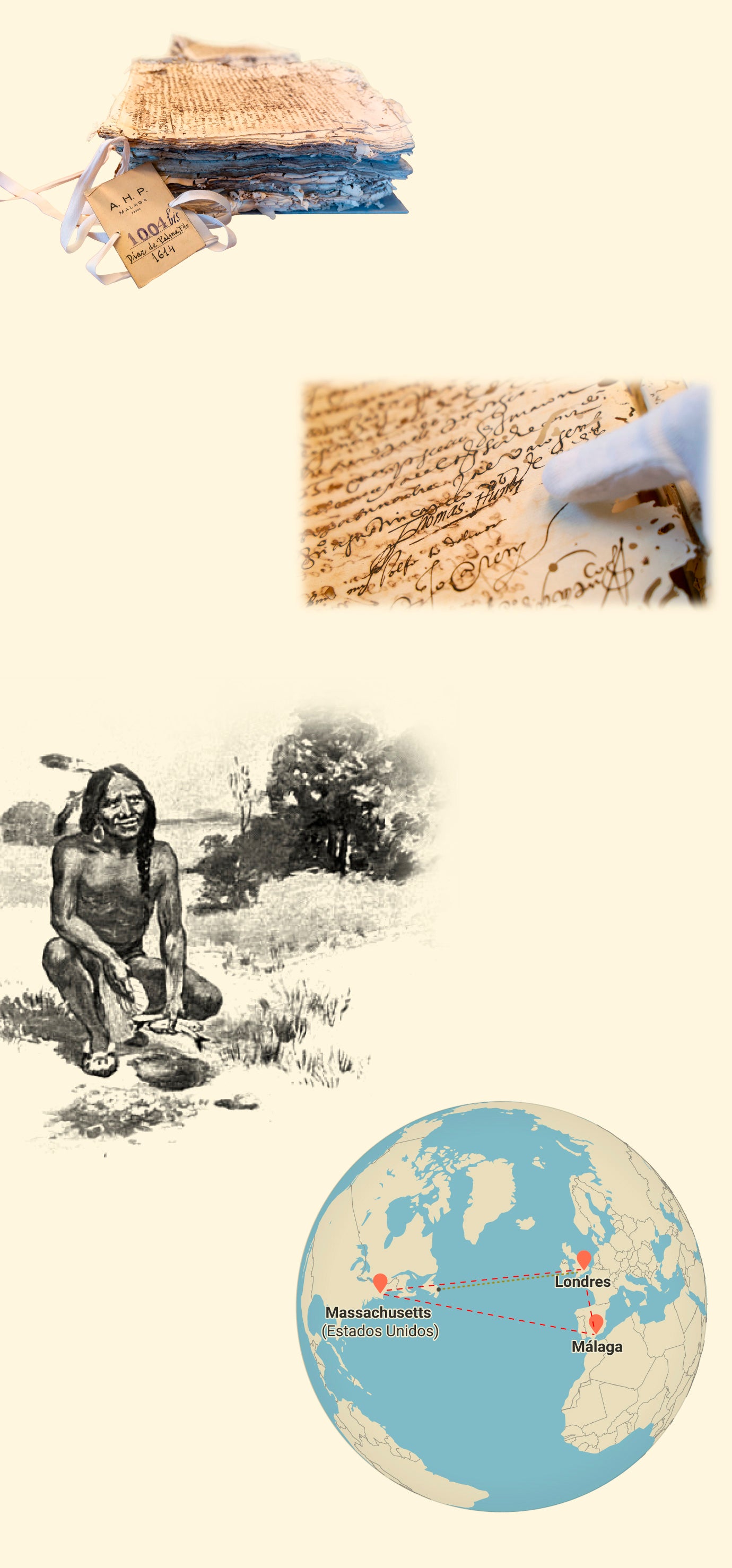
Notary tome from 1614
The provincial historical archive preserves 29 notary tomes from the year 1614. These were the volumes where each notary left written evidence of all events, operations or testimonies the dealt with throughout the year. They are not digitalised and their state of conservation is fragile: the ink and the passing of time has corroded the paper, which practically disintegrates when you touch it.
Thomas Hunt
He was the captain of the English ship that kidnapped Squanto and other Patuxet natives with the intention of selling them as slaves in Europe. He landed with them in Malaga, but as the Crown did not allow the sale of Native Americans, he carried out a concealed transaction in which they were placed “under the protection&rdquo of a priest named Juan Bautista Reales, who paid 400 reales for each of them.
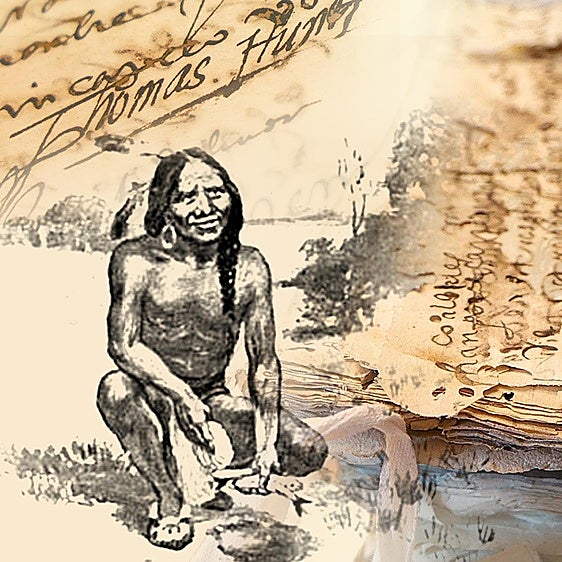
Squanto or Tisquantum
Squanto or Tisquantum: a key figure in the colonisation of North America, considered the protagonist of the first Thanksgiving. He was a member of the American Indian Patuxet tribe, located in the current territory of Massachusetts, who was kidnapped by Captain Thomas Hunt along with around 20 other natives to be sold as slaves. In Malaga he gained his freedom and stayed for two years, during which it is possible that he converted to Catholicism.
Later he went to London, where he lived for four years before returning to his homeland, where he played a fundamental role acting as a translator and mediator between the first English colonists and the Native Americans. To show appreciation for the help of native like him, the Pilgrim Fathers held the first ever Thanksgiving banquet.

Notary tome from 1614
The provincial historical archive preserves 29 notary tomes from the year 1614. These were the volumes where each notary left written evidence of all events, operations or testimonies the dealt with throughout the year. They are not digitalised and their state of conservation is fragile: the ink and the passing of time has corroded the paper, which practically disintegrates when you touch it.
Thomas Hunt
He was the captain of the English ship that kidnapped Squanto and other Patuxet natives with the intention of selling them as slaves in Europe. He landed with them in Malaga, but as the Crown did not allow the sale of Native Americans, he carried out a concealed transaction in which they were placed “under the protection&rdquo of a priest named Juan Bautista Reales, who paid 400 reales for each of them.
Squanto or Tisquantum
Squanto or Tisquantum: a key figure in the colonisation of North America, considered the protagonist of the first Thanksgiving. He was a member of the American Indian Patuxet tribe, located in the current territory of Massachusetts, who was kidnapped by Captain Thomas Hunt along with around 20 other natives to be sold as slaves. In Malaga he gained his freedom and stayed for two years, during which it is possible that he converted to Catholicism.
Later he went to London, where he lived for four years before returning to his homeland, where he played a fundamental role acting as a translator and mediator between the first English colonists and the Native Americans. To show appreciation for the help of native like him, the Pilgrim Fathers held the first ever Thanksgiving banquet.
Notary tome from 1614
The provincial historical archive preserves 29 notary tomes from the year 1614. These were the volumes where each notary left written evidence of all events, operations or testimonies the dealt with throughout the year. They are not digitalised and their state of conservation is fragile: the ink and the passing of time has corroded the paper, which practically disintegrates when you touch it.
Thomas Hunt
He was the captain of the English ship that kidnapped Squanto and other Patuxet natives with the intention of selling them as slaves in Europe. He landed with them in Malaga, but as the Crown did not allow the sale of Native Americans, he carried out a concealed transaction in which they were placed “under the protection&rdquo of a priest named Juan Bautista Reales, who paid 400 reales for each of them.
Squanto or Tisquantum
Squanto or Tisquantum: a key figure in the colonisation of North America, considered the protagonist of the first Thanksgiving. He was a member of the American Indian Patuxet tribe, located in the current territory of Massachusetts, who was kidnapped by Captain Thomas Hunt along with around 20 other natives to be sold as slaves. In Malaga he gained his freedom and stayed for two years, during which it is possible that he converted to Catholicism.
Later he went to London, where he lived for four years before returning to his homeland, where he played a fundamental role acting as a translator and mediator between the first English colonists and the Native Americans. To show appreciation for the help of native like him, the Pilgrim Fathers held the first ever Thanksgiving banquet.
Squanto (or Tisquantum) played this crucial role in history for one reason: he could speak English. He learned the language before the events that made him go down in history; he had been kidnapped along with other members of his tribe, the Patuxet, by an English captain who took them to Europe to sell them as slaves.
There were references in some historians' articles to Squanto being bought and freed by Franciscans in Malaga. And what Alan, Tom and Gavin wanted to find was the documentary evidence of what happened.
The Malaga-US research team's investigations have paid off and the Americans have returned home with a treasure trove. There are no chests full of jewels or magical objects in the style of Indiana Jones: the booty is made up of a handful of digitised pages from a notarial tome from 1614, some certainties about Squanto's exciting life, new questions... and an indelible memory of this trip.
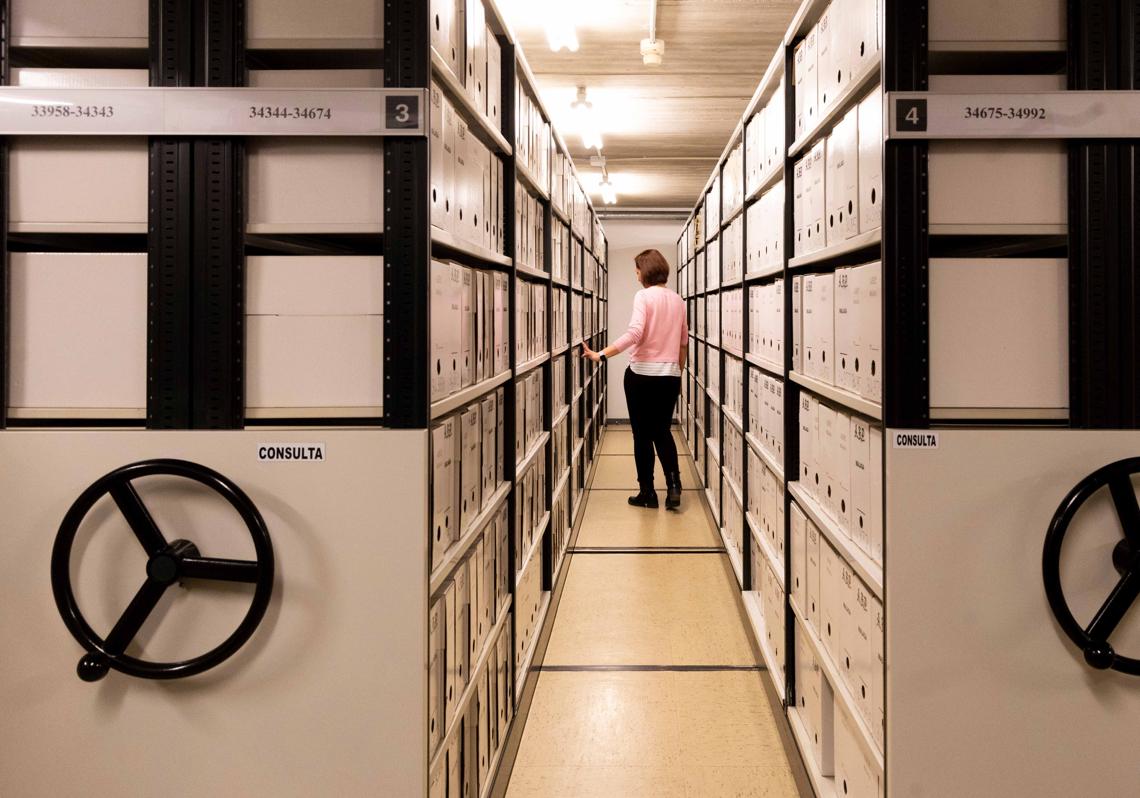
"Squanto is a very important figure in American history. He is studied in schools and is at the origin of the Thanksgiving tradition," said Tom Ruby, CEO of a company in Kentucky. His colleague Alan Cornett is a history educator and hosts the podcast 'Cultural Debris'. They share a passion for history and travel, which led them to found Cultural Debris Excursions, an agency that offers small group tours to European cities.
"It's possible that there are people in Malaga with the DNA of any of the Patuxet natives who travelled with Squanto," suggested Alan Cornett
This story starts when the Americans had just arrived in Malaga, the first stop on a fortnight-long tour of Andalucía.
"We were at the bus station buying tickets for excursions when a mutual friend wrote to us: he had seen on social media that we were in Malaga and proposed a challenge: to locate the deed of sale of Squanto," said Cornett. They didn't think twice. Half an hour later he, Ruby and Gavin Bledsoe (a participant in the tour) were trying to explain what they were looking for to the astonished security guard at the Archivo Histórico Provincial.
It didn't look hopeful: the guard didn't speak English and they didn't speak Spanish. While figuring out what to do with them, he 'confined' them to a waiting room.
"We escaped and saw a man in a white coat: an archivist. We went for him," Ruby recounts. This time, with the help of Google translator, they made themselves understood.
"He told us it wasn't possible to find what we were looking for, but that's when Carmen appeared: our heroine!" they explained.
That was the key. Carmen Jurado, who has been in charge of research at the archive for less than a month, was infected by the contagious curiosity of the tourists.
"It was twenty to two on a Friday... anyone else would have sent us packing," said Tom Ruby. She didn't: she found out that from 1614, the year they were looking for, there were 29 notarial tomes stored in the provincial archive... the bad news was that they have not been digitised and are very deteriorated. Without knowing the name of the notary it was impossible to find the one they wanted.
The key: a local historian's research
At that point, a desperate search began. Carmen dug around in her databases; the Americans, on the internet. And Gavin found a line to pull: an article published in 2022 by the historian Purificación Ruiz García in a bulletin of the Sociedad de Amigos de la Cultura Veleña cultural society entitled Malaga, Squanto and Thanksgiving.
She reported that, while researching another matter, she had stumbled across a deed in the provincial archives that caught her attention: an English merchant (Thomas Hunt) made a "strange transaction" with a clergyman beneficiary of the Church of the Holy Martyrs of the city of Malaga (Juan Bautista Reales). She photographed the pages in question and kept them for further study. Eight years later she discovered that the transaction was a disguised sale of "25 Indians" who came aboard Hunt's ship (La Isabela) and that among them was none other than Squanto.
Ruiz García attached to her article a small photo of the deed where the notary's name appeared, almost illegibly. After a long time with the magnifying glass, the archivists managed to decipher it: they knew which volume it was.
Carmen "literally ran to look for it," said Ruby. And she found it, but when she saw it, she knew it was not going to be easy to locate the document. Because the book is no longer a book: it is a pile of loose pages that practically fall apart when you touch them. Ink and the passage of time have punctured the paper as if mice had nibbled at it. It was going to take gloves, a magnifying glass, care and a lot of patience.
So the three Americans left the archive on Friday empty-handed and with a promise from Carmen: she would find the deed and send it to them digitised. By the following Monday evening they had it in their email and on Tuesday they were able to see and touch the original file in the archive.
"It is a very important document to complete Squanto's life story and will be of interest to many researchers in our country," said Alan Cornett, who reiterates his thanks to the Malaga archive and, in particular, to Carmen.
She, for her part, maintains that she has only done "her job", although she confesses the personal interest that this story has awakened in her. "They conveyed so much passion that it was impossible not to be curious," she said.
Many questions arise when imagining what Squanto's life was like during the years he spent in Malaga. What did the clergyman do after taking him in: free him, use him as an undercover slave or sell him under the table again?
Did he convert to Catholicism here? Did he escape to London or was he free by then? And what became of his 24 compatriots?
"There may be people in Malaga with DNA inherited from one of the patuxet who arrived with Squanto," Cornett suggested. He and his travelling companions flew back to Kentucky on Monday hoping that Jurado and her team will continue to pull the threads of the story of Squanto in Malaga. "There must be more documents that will allow us to follow his trail," said Ruby.
Purificación Ruiz García herself, in her article, highlighted the difficulty of the challenge: "We are presented with the enormous task of researching all the notarial protocols of Malaga for at least a decade, which exceed 200 volumes," she explained. "Only a coincidence could shed some light," the researcher concluded.
Coincidence, serendipity or "providence" - as Ruby believes - whatever has brought about this great little historiographical adventure, the result is that Malaga has earned an unexpected place in one of America's founding stories.
¿Tienes una suscripción? Inicia sesión